












Bus companies say recommended 40-cent fare isn’t enough, citing lower ridership, maintenance costs
Cuenca’s bus companies claim the 40-cent bus fare recommended by a University of Cuenca study is not enough to keep city buses operating. “The suggestion was made without considering all the operational costs and ignores the fact that the number of passengers is declining,” says Urban Transport Union president Diego Idrovo.
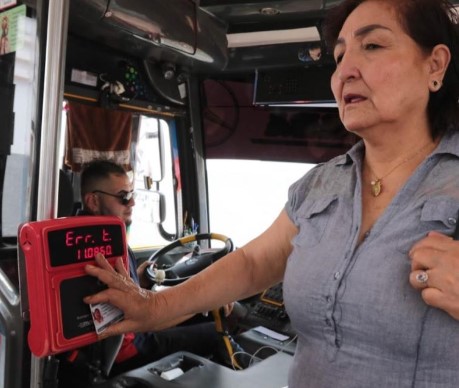
Cuenca bus riders have not seen a fare increase in almost six years but a new fare will go into effect this year.
He adds: “The study even acknowledges that a fare of between 44 cents and 57 cents might be necessary under future scenarios but those scenarios exist today. If we are not paid what the service costs, we cannot continue operating. Carriers have been operating at a loss for five years,”
Idrovo wants a fare of at least 45 cents but says 50 cents is “more realistic” based on inflation and other factors.
Currently, city bus fare is 30 cents for most riders and 15 cents for students, the elderly and the disabled. The city provides another 1.5 cents per fare to bus companies as a subsidy.
Idrovo claims a drop in bus ridership since the Covid pandemic has hit bus companies hard. The transport union reports ridership has declined almost 25% since 2019. Pre-pandemic, the union says, buses carried, on average, 730 to 740 passengers a day. That number is currently 550 to 560 per day, it says. “Based on numbers from January and February, we may not even reach 500 riders a day in 2025,” Idrovo says.
The decline in riders is the result of tranvía service, which began in 2020, and other changes in personal mobility, Idrovo says. “We cannot ignore the increasing numbers of motorcycles and cars on city streets as well as the growing use of bicycles. He also says pedestrian traffic has increased in the city.
Among the costs Idrovo says the university study did not consider is the fact that 8% to 10% of the 475-bus fleet is in maintenance at any given time. “Having these units out of service costs the owners money, as does the maintenance and repair work,” he says.
While bus owners complain about the amount of the recommended fare increase, the municipal council is deciding which riders will receive a subsidy.
Currently, the city offers an across-the-board subsidy but under the new plan, subsidies will be applied only to the poorest passengers. “We are changing to a needs-based application of the subsidy,” says city mobility director Alfredo Aguilar, adding that $3.5 million has been allocated for the subsidy. “Once the new fare goes into effect, most riders will pay full price.
According to Aguilar, recipients of the subsidy will be determined by data provided by the Social Registry. The information was expected in January but administrative changes and confidentiality requirements have delayed the process. “Once we receive it, the municipal council will move forward to make a final decision on the new fare.”
According to three municipal council members, tranvía fare will increase with the bus fare, at which time municipal transport debit cards will apply to both services.