















Carbon sinks collapsed in 2023, a stark warning of climate changes to come, scientists say
By Audrey Garric
There’s alarming news on the climate front: land carbon sinks, made up of forests and soils, fell massively in 2023. They captured very little CO2, due to the effects of gigantic fires and long, repeated droughts. If such a decline were to continue, it could cause a runaway climate.
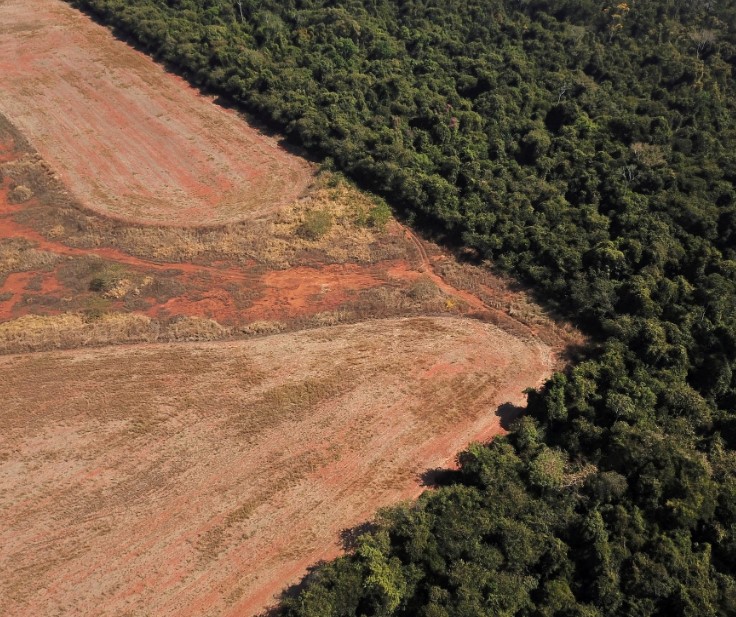
Deforestation and drought in the Amazon and other regions of the world is a primary reason for the reduced capture of CO2 in 2023.
These results, from the work of a team of some 15 researchers, were presented on Monday, July 29 at an international conference on the carbon cycle held in Brazil. They had been published on July 17 as a preprint – in other words, they have not yet been peer-reviewed.
Climatologist Philippe Ciais, one of the study’s authors, doesn’t hide his significant concern. “If this collapse were to happen again in the next few years, we risk seeing a rapid increase in CO2 and climate change beyond what the models predict,” said the research director at the Laboratory for Climate and Environmental Sciences.
“This study is based on the most advanced climate models and satellite data,” said Australian climatologist Josep Canadell, executive director of the Global Carbon Project – a consortium of around 100 scientists – who was not involved.
2023 was the hottest year on record, marked by a string of deadly extreme events hitting every continent. It also saw a very sharp rise in the concentration of CO2 in the atmosphere, the increase of which compared to 2022 (+86%) constitutes a record since observations began in 1958. Yet fossil CO2 emissions, driven by the burning of coal, oil and gas, have risen little in 2023 – between +0.1% and +1.1%.
Only one explanation remains: the fall in natural carbon sinks, which absorb almost half of human emissions – at a rate of around 25% for oceans and 20% for land.
The scientists were “greatly surprised” by the results of their work. Terrestrial sinks only absorbed between 1.5 and 2.6 billion metric tons of CO2 in 2023, far behind the 9.5 billion metric tons of CO2 in 2022, or the 7.3 billion metric tons of CO2 averaged each year over the last decade.
This is the lowest level since 2003. “That’s almost nothing, only a quarter to a third of the usual,” said Ciais. These figures are given on a net basis, in other words including carbon destocking caused by changes in land use, such as deforestation.
________________
Credit: Le Monde



Hogar Esperanza News

Fund Grace News

The Cuenca Dispatch

Week of September 20

Ecuador turns to industrial power cuts to protect Mazar and keep homes from going dark.

Ecuador raises its 2026 growth forecast, but El Niño could spoil the outlook next year.

Cuenca retirees challenge medical and therapy changes at IESS senior center.
Fabianos Pizzeria News
