











COLA, cash, and the sting in the tail
There are certain advantages to receiving an American pension while buying an Ecuadorian almuerzo, and the forthcoming Social Security increase may provide yet another illustration. 
Washington has announced a 3.6 percent Social Security cost-of-living adjustment (COLA) for 2027, which means that from January your Uncle Samuel will send eligible nephews and nieces a little more money, without requiring them to explain whether they intend to spend on Big Macs or Whoppers in Florida or at an almuerzo in Cuenca.The announcement has, let us say, not produced universal rejoicing in the United States, where many retirees regard the increase as a small mop and bucket being offered after the kitchen floor has already flooded knee-deep. For those of us spending American retirement income in Ecuador, however, the same increase doesn’t look so bad.
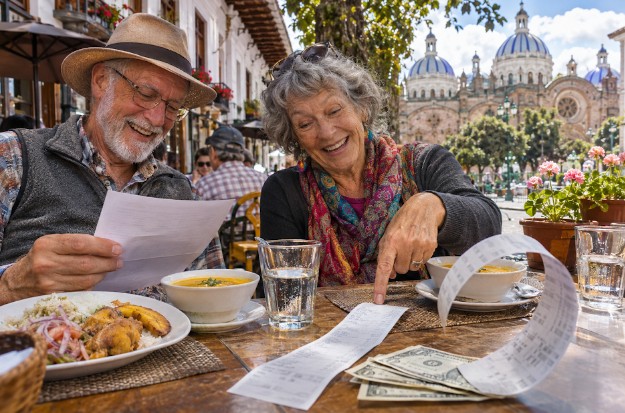 COLA, (the Spanish word for ‘tail’) despite sounding like something that should arrive with ice and a slice of lemon, stands for cost-of-living adjustment. The Social Security Administration says the increase will add about $75 a month to the average retirement benefit. Someone receiving $2,000 a month will gain $72, while a beneficiary receiving $2,400 will gain $86.40, bringing the gross monthly payment to $2,486.40. Over a year, that latter increase amounts to $1,036.86, which is a useful sum.
The American response is understandable. In a survey published with its reaction to the announcement, AARP reported that 76 percent of adults aged 50 and over thought a proposed 3.5 percent adjustment would fail to keep up with rising prices. The question concerned the lower figure anticipated before the final announcement, but the result hardly suggests that an extra tenth of a percentage point would have had everyone dancing in the streets.
AARP also noted that one in five older Americans has no retirement savings. For someone in that position, Social Security is the money that pays the bills, rather than a useful contribution towards them, and an increase can be welcome without feeling adequate. A fatter check does not restore yesterday’s thinner prices, while a modest national average offers limited consolation when your own car insurance renewal or rent increase brings tears to the eyes.
The adjustment is calculated using an American price index that always compares the third quarter with the same period a year earlier. It is therefore a response to inflation that has already occurred, rather than a promise that next year’s expenses will be covered. But the fact that it takes no special account of the fact that some beneficiaries have moved somewhere with cheaper almuerzos and the Tranvia.
That is where Ecuador enters the calculation. The latest official figures available at the time of writing, for September 2026, show annual inflation of 1.34 percent, with prices up 1.65 percent since December. Against that recent annual rate, a 3.6 percent increase in Social Security looks reasonably generous, although comparing last year’s price increases with next year’s pension adjustment cannot guarantee what will happen next.
There is also the matter of the currency. Ecuador uses the US dollar, so a dollar added to a Social Security payment remains a dollar when it arrives here. There is no exchange-rate movement between the pension currency and the local currency to swallow the increase before it reaches the shopping basket, although bank transfer charges may still nibble at the edges.
Before we declare victory over the cost of living, however, it is worth remembering that nobody actually purchases the national average. We buy eggs, tomatoes, internet service and whatever else our household requires, usually while wondering how we managed to finish the previous supply so quickly. INEC recorded a 1.14 percent rise in food prices during September alone, including increases of 5.07 percent for eggs and 14.23 percent for tomatoes. (On the other hand I bought a kilogram of delicious tomatoes yesterday in Supermaxi for 99 cents, so how much does this matter?)
We are talking about monthly changes here, not annual ones, but they do show how a shopping trip can feel considerably more inflationary than the headline figure.
One point residents should probably take into account is that imported brands like European beers and cheeses, Scotch Whisky, Heinz tomato ketchup. or Smuckers jam might accelerate faster than local products and brands.
Nor should anyone assume that a landlord in Cuenca has consulted the national index before deciding to hike the rent. The latest figures do not give me a verified annual percentage for Cuenca rents alone, and a furnished apartment advertised as suitable for gringos is not necessarily representative of the wider rental market. This means that someone with an unchanged rent and modest local expenses may find the COLA goes a long way, while someone moving into a more expensive apartment may have already spent it before they have unpacked the toaster.
Electricity bills require similar care. INEC attributed part of June’s national price increase to the end of temporary electricity credits in three coastal cities, which returned bills to their usual amounts. That is a real change in what households pay, but it is not the same as an across-the-board tariff increase, and it does not tell us that Cuenca experienced the same change.
Then there is Medicare, which has a habit of attending the pension celebration with an invoice. As of November 2, the final standard Part B premium for 2027 has not been announced. The Medicare trustees project $209.50 a month, compared with $202.90 in 2026, an increase of $6.60. If that estimate holds, someone receiving $2,400 in gross Social Security would keep $79.80 of the $86.40 monthly increase after the additional standard Part B deduction, before any other changes. Higher-income premiums and separate drug or supplemental plans can produce different results, while beneficiaries who do not pay for Part B would have no such deduction from their increase.
For Ecuador residents receiving US Social Security, the outlook is therefore reasonably cheerful, provided we resist turning a favourable comparison into a universal promise. The COLA does not increase an Ecuadorian pension, a British pension or the cash under the mattress, and households whose income comes from several sources will see a smaller percentage increase in their total income.
Still, an extra $72 or $86 a month can make a useful difference to a Cuenca budget without financing any particularly extravagant behaviour. It can help with groceries, meals out, taxis or the occasional unexpected bill, and leaves open the pleasing possibility of putting something aside.
Retirees from the US may understandably look at their increase and wonder whether it will catch up with their expenses. Some of their counterparts in Cuenca may be able to look at the same percentage and order a gourmet lunch at the Paccari restaurant with confidence and the expectation of change from $10. The waiter will probably not congratulate us on our improved purchasing power, but he may ask whether we would like the soup or the roasted pear starter.