


















Dating in Cuenca
A few days after returning to Cuenca from several weeks of traveling, my phone buzzed with a WhatsApp message from a lady I had not seen in some time. She wondered if I would like to meet her for breakfast one morning. Five years ago I would have smiled, accepted immediately and looked forward to catching up. My first reaction this time surprised even me. I felt a distinct sense of dread.
It was not because I disliked her. She was intelligent, attractive and enjoyable company, which made the dread worse rather than better. Experience had conditioned me to wonder what might arrive after the coffee and scrambled eggs. Had someone’s rent fallen overdue? Was a grandmother in need of surgery? Had a brother lost his job, or a child’s school fees gone unpaid? I found myself mentally rehearsing a request that might never come, before I had even replied to her message.
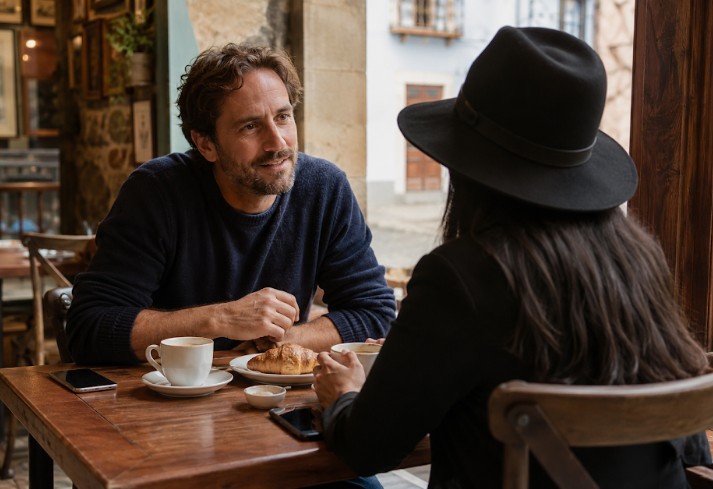 It struck me that I had lived in Ecuador long enough for suspicion to arrive before curiosity, and I was not entirely sure whether that counted as wisdom or simply as cynicism with better manners.
One of the first surprises awaiting foreigners in Cuenca is that meeting people is remarkably easy. That sounds odd in an age when newspapers run endless stories about loneliness, dating apps and young professionals declaring that modern romance has broken down entirely. British and American magazines are full of attractive, successful people insisting the dating market no longer functions.
Newcomers to Cuenca often find something different. People are friendlier, conversations start more naturally, and introductions happen almost by accident. Before long there are WhatsApp messages, invitations for coffee and perhaps the beginnings of something. Compared with London, New York or Toronto, it can feel refreshingly uncomplicated.
Then, sooner or later, comes the conversation that leaves foreigners wondering whether they misunderstood everything. A relative needs an operation. The landlord wants the rent. A washing machine has broken down. A child needs help with school expenses. Sometimes the request arrives directly, but more often it gets woven gently into conversation, leaving you to decide whether to offer help before anyone actually asks. That is the point at which foreigners start asking one another the same question: was the relationship genuine from the start, or was financial help always part of the plan?
The uncomfortable truth is that nobody really knows. Some stories are undoubtedly genuine, others almost certainly invented, and most probably sit somewhere in the wide gray area between the two. A financial problem can be entirely real while the decision to mention it at a particular moment is also carefully timed. I have gradually come to suspect that truth and strategy are not necessarily opposites. Human relationships are rarely that tidy. Financial need does not cancel genuine affection, and genuine affection does not make financial need disappear.
The numbers make the gap harder to ignore than most visitors expect. Ecuador’s national minimum wage for 2026 is $482 a month, and the median income across the country sits closer to $400. A retired American living on the average Social Security check, which reached roughly $2,080 a month in 2026, is not wealthy by US standards. He is, however, taking home five times the wage that a great many Cuencanos are working forty hours a week to earn. That arithmetic does not make either party’s feelings less real, but it explains why the subject of money surfaces so often and so early, and why it would be strange if it did not.
Living in a country where wages run at a fraction of North American levels inevitably complicates relationships. A retired foreigner on Social Security may think of himself as comfortable rather than rich, carefully watching his monthly budget and grumbling about the price of imported cheddar cheese or peanut butter. Viewed through Ecuadorian eyes, he can look remarkably fortunate all the same. That difference in perception was brought home to me recently by an unexpected conversation with a six-year-old.
Children ask the questions adults are too polite to raise. Looking around my apartment, this particular child asked how I could afford to live all by myself in such a large place.
Before I had time to answer, she asked something even more revealing: if I had two daughters, where was my wife? Both were perfectly logical questions from a six-year-old’s perspective. In many Ecuadorian households, several generations live under one roof, and a foreigner occupying a spacious apartment alone probably does look extravagant. I could not help wondering whether those questions began entirely with a child, or whether she was simply repeating something she had overheard from the adults around her. Children often provide the clearest window into what the grown-ups nearby are actually thinking.
What makes the picture more interesting is that Ecuador itself has changed. The old stereotype of a young woman simply looking for a husband belongs increasingly to a previous generation. Many women now complete university, build careers, support themselves, travel and enjoy an independence their mothers and grandmothers could scarcely have imagined. Marriage has become one possible future among several rather than life’s central objective.
Ironically, that brings Ecuador closer to Britain, Canada and the United States than most people assume. Newspapers in those countries are full of successful young women complaining they cannot find suitable partners despite careers, education and every advantage. They no longer need a husband to survive, and that gives them room to be selective about whom they choose.
That may be one reason dating in Cuenca can feel so puzzling to newcomers. Many foreign men assume that because Ecuador remains a developing country, relationships here will follow the patterns of the past. Instead they meet women independent enough to stay single if the right person fails to appear, women who may also carry family responsibilities far heavier than anything typical in North America or Europe. Helping parents, siblings or grandparents is regarded here as an obligation rather than a choice, and that obligation does not vanish because a woman also holds a job and an opinion of her own.
Retired foreign men, meanwhile, usually arrive with different priorities. Most have already lived through careers, marriages, children and perhaps divorce. They are not looking for someone to transform their finances or advance their careers. More often they simply miss company. Unfortunately, company and financial security have a way of tangling together in ways neither person fully understands, and pretending otherwise helps no one.
It is easy to grow cynical after hearing enough stories. Foreigners swap tales of requests for rent, operations, cosmetic surgery, business investments and every conceivable family emergency, and every expatriate community builds its own folklore around them. Cuenca is no exception. The danger is that cynicism becomes just as misleading as naivety once was. I have also met couples married happily for decades, raising families and building lives every bit as genuine as those of couples who met in Yorkshire or Florida.
As for my breakfast invitation, I accepted it. We spent a pleasant couple of hours talking about my travels, her work and mutual friends. Toward the end of the meal there was, indeed, a financial request. It was neither outrageous nor unexpected, and whether it had been the reason for arranging breakfast in the first place, or simply something she eventually found the nerve to mention, is something I will probably never know.
That is the real lesson about dating in Cuenca. Meeting people here is remarkably easy. Understanding the tangled mixture of affection, obligation, generosity, hope and self-interest that runs through every human relationship is considerably harder, and no amount of local experience shortens the distance between the two. After several years here, I have concluded there is no simple answer to the question foreigners ask each other over coffee. There never was one anywhere else, either.



Hogar Esperanza News
Property Manabi

Fabianos Pizzeria News

Fund Grace News

The Cuenca Dispatch

Week of September 06

U.S. sinkings of Ecuadorian fishing vessels trigger court scrutiny after 28 crew members are released.

Cuenca targets a November launch for its first new international link to Chiclayo.

Exports hit a quarterly record, but Ecuador’s import bill is rising even faster.