
















Diana and me
There are many kinds of religion, and not all of them involve a deity, a pulpit, or the smell of furniture polish on wooden pews. Some arrive through a transistor radio held to the ear beneath bedclothes, some through a jukebox glowing in the corner of a youth club, and some, most convincingly of all, through a bass line so insistent that resistance feels not merely futile but faintly ridiculous. Tamla Motown was that kind of religion.
It did not announce itself with thunderbolts or choirs of angels, although choirs there certainly were, but with something far more practical and therefore more persuasive: songs constructed with the efficiency of a well-run workshop, delivered with emotional force, and powered by a rhythm section that understood human physiology at a level normally associated with cardiology. The body responded first, the intellect followed later, and the soul, if one insists on the term, arrived breathless but smiling.
 Unlike the guitar-driven swagger of much British beat music, Motown’s engine room sat elsewhere. The house band, those anonymous magicians later known collectively as The Funk Brothers, laid down grooves of such precision that even a hesitant dancer could locate the beat as reliably as a lighthouse. Hand claps cracked like polite thunder, tambourines shimmered at exactly the right moment, and the drums pushed everything forward with the gentle authority of a train that had no intention of stopping at your particular station.
Across the musical landscape, another current flowed from Stax Records in Memphis, rawer, earthier, with horns that sounded less arranged than summoned. If Motown wore a tailored suit, Stax rolled up its sleeves. The contrast was not rivalry so much as dialect: Detroit’s sleek propulsion beside Memphis’s deep Southern grain. Between them,
they defined a spectrum of soul that still feels astonishingly complete.
And then there were the voices. Before Princess Diana grabbed the headlines between 1980 and 1997, there was only one Diana. Diana Ross and her sidekicks the Supremes were Motown royalty. The Marvelettes, bright and yearning. Martha and the Vandellas, bringing something closer to joyous insistence. These girl groups were precision ensembles of mood and movement, delivering songs that sounded at once effortless and meticulously engineered.
At the centre of it all stood artists of improbable range. Marvin Gaye, whose voice could suggest tenderness, urgency, and melancholy within the space of a single phrase. Stevie Wonder, who seemed less a performer than a force of nature, prodigiously musical, rhythmically fearless, already hinting at a future that would stretch well beyond the neat boundaries of pop.
Elsewhere in the sonic universe, Phil Spector was constructing his celebrated Wall of Sound, layering instruments into vast, echoing cathedrals of pop. Spector’s productions overwhelmed by scale and grandiosity; Motown persuaded by groove. Both sought transcendence, though by different engineering philosophies. One built monuments, the other built motion.
Who could forget Veronica Bennett before she became Mrs. Ronnie Spector, stepping forward with the epic “Be My Baby,” a record that seemed to detonate from the radio speaker: drums like a declaration, vocals like a plea wrapped in confidence. That “Be my baby, don’t say maybe” rhyme was on a million lips. Produced in Hollywood featuring a studio ensemble known as the Wrecking Crew, it was not Tamla Motown, yet it belonged unmistakably to the same emotional universe, where rhyming teenage longings were treated not as trivial but as momentous.
Behind Motown’s miracle stood a small army of craftsmen, none more formidable than the Holland–Dozier–Holland songwriting team, who penned hits with a consistency that would shame most manufacturing industries. “Stop! In the Name of Love,” “You Can’t Hurry Love,” “Reach Out I’ll Be There,” each one a miniature architecture of hooks, lifts, and emotional payoffs. The listener did not so much hear these songs as inhabit them.
All of this unfolded against a backdrop that was anything but harmonious. The Vietnam War flickered nightly across television screens, a distant conflict rendered strangely intimate by the slow accumulation of names and casualty numbers. Civil rights marches, protests, uneasy conversations at kitchen tables, history unfolding with uncomfortable immediacy. Stop in the name of love, indeed! But for all that, in the years leading up the to the Civil Rights Act, Motown was noticeably apolitical, although later some songs like Marvin Gaye’s “What’s Going On”, inspired by conversations with his brother who had just returned from Saigon, did delve deeper into social themes of the time.
Yet for the most part on the radio, love was still all you needed, heartbreak still resolved itself within three minutes, and the beat remained stubbornly optimistic. The records did not deny reality so much as offer temporary shelter from it. A groove, a chorus, a shared floor, these became small acts of resistance against anxiety and the peculiar solemnity of the age.
Decades later, in Cuenca, I sometimes hear those same records drifting from a taxi window or a café speaker, the clientele too young to regard them as anything other than pleasantly rhythmic background. The effect is disorienting in the most agreeable way. One is briefly seventeen again, then abruptly reminded by the mirror that one is not.
What made Tamla Motown extraordinary, looking back from the protective safety of a half a century, was its refusal to choose between commerce and art. These were records designed to sell–unapologetically so–yet built with a level of musical intelligence and emotional truth that rendered cynicism pointless. If this was mass production, it was mass production of excellence.
For those of us who first encountered it in small rooms, on modest equipment, in lives that had not yet widened into anything resembling adulthood, Motown offered something a bit radical. It suggested that sophistication and accessibility need not be enemies, that polish need not erase feeling, and that joy, properly arranged, could be both communal and deeply personal.
Of course, one’s teenage self did not analyse Tamla Motown this way at the time. One danced to it, fell in and out of love to it, suffered minor catastrophes to it, and carried its melodies into later life like fragments of French learned in high school and never entirely forgotten.



Hogar Esperanza News

Fund Grace News

Fabianos Pizzeria News

The Cuenca Dispatch

Week of September 20
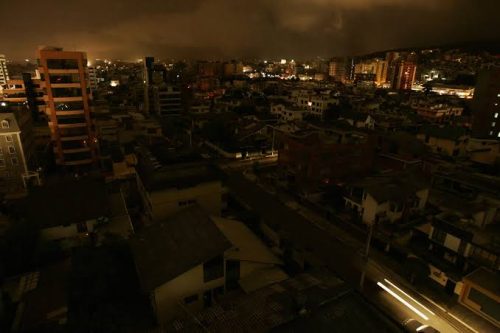
Ecuador turns to industrial power cuts to protect Mazar and keep homes from going dark.

Ecuador raises its 2026 growth forecast, but El Niño could spoil the outlook next year.

Cuenca retirees challenge medical and therapy changes at IESS senior center.