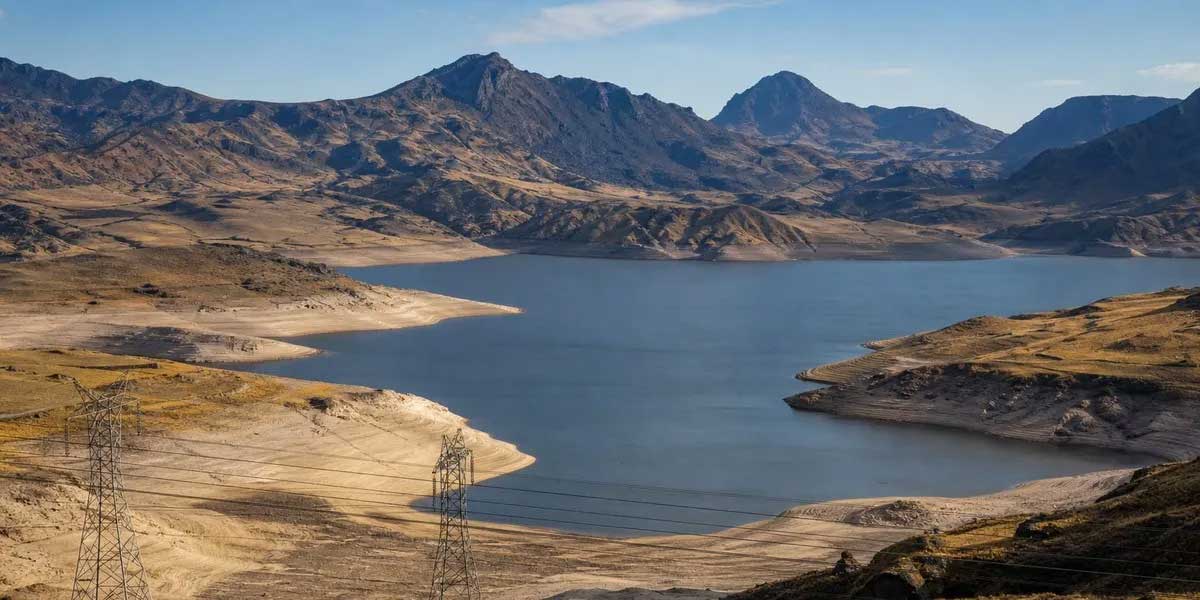












Drought and blackouts are replaced by floods and landslides in Cuenca and southern Ecuador
Within a matter of weeks, Ecuador has transitioned from one of the worst droughts in its history to one of the rainiest periods in recent memory. December set a record for rainfall totals in Cuenca and January is beginning at a record-setting pace.

Mudslides triggered by heavy rain have restricted traffic on dozens of area roads.
The months-long crisis of power blackouts has been replaced by a transportation crisis as highways are closed or restricted by mudslides. Almost-dry rivers that could be crossed on foot in November are now the scene of high-water rescues.
“It is a radical change and an example of how quickly the weather can change in the tropics,” says retired meteorologist Jorge Nicolalde. “We desperately needed the rain after more than two years of drought conditions and although I cannot say the drought is entirely over, conditions are favorable for a full recovery since the traditional rainy season begins in a few weeks.”
Nicolalde adds that the most dramatic weather turnaround is in southern Ecuador, especially in the area near Cuenca. “This is the area that has received the most rainfall, on the eastern slope of the Andes as well as in the central valley. This is fortunate since this region has the capacity to produce half of the country’s hydroelectricity.”
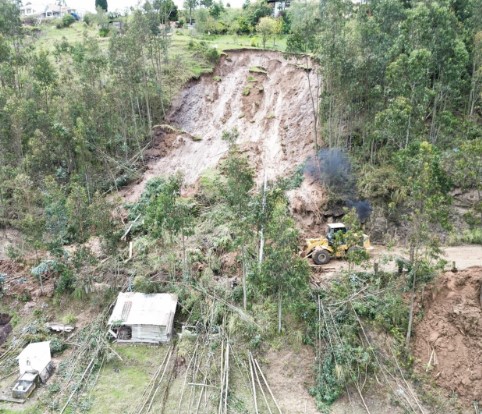
A Friday morning landslide in Turi has cut service for about 2,000 customers of the Nero water system. (El Mercurio)
He points out that the reservoirs at the Paute-Mazar hydroelectric complex northeast of Cuenca are filling up at the rate of two meters a day and could reach maximum capacity within three weeks. “The remarkable thing is that the three generation stations at Mazar have remained mostly idle the past two weeks because the country’s other hydro plants, especially Coca Coda Sinclar, are generating at high capacity.”
The downside of the rain is the landslides on the highways and in some residential areas of Cuenca. Traffic on the Cuenca-Molleturo-Guayaquil highway is restricted to one lane in three locations due to landslides. Transportation Ministry officials worry that new slides could destroy a 50-meter section of the roadway at kilometer marker 53. On Friday, workers cut out a section of mountainside to extend the roadway and keep traffic moving.
Several other traffic stoppages have occurred on the Pan American highway north and south of Cuenca, as well as in Misicata and Patamarca.
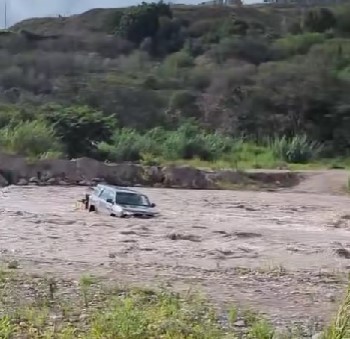
The driver of an SUV attempting to cross the Rio Rircay near Santa Isabel was rescued by firefighters Thursday.
At least four neighborhoods in the mountains surrounding Cuenca have suffered landslides that threaten houses and streets, the most serious in Yanaturo Alto. In Turi, a Friday landslide cut water lines serving 2,000 residents in the Punta Corral, El Cisne and La Paz neighborhoods.
Officials of Cuenca utility company ETAPA are warning residents to stay away from unstable river banks. On Wednesday, two students were rescued by passers-by when a Rio Yanuncay bank collapsed.
Southeast of Cuenca, firefighters and residents of Santa Isabel rescued the driver of an SUV who attempted to cross the Rio Rircay.