














Ecuador declares ‘red alert’ emergency for El Niño
Ecuador declared a nationwide red alert on Saturday as ocean-atmospheric conditions associated with the evolving El Niño continue to develop. The red alert triggers expanded preparations and emergency response measures across the country.
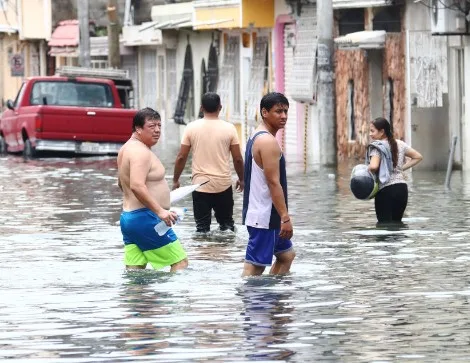
Ecuador’s National Emergency Operations Committee expects flooding and landslides later in the year from El Niño.
The National Secretariat for Risk Management (SNGR) said the declaration is intended to strengthen preparedness and allow authorities to anticipate potential risk scenarios and activate mechanisms to protect the population.
Under the measure, provincial and municipal Emergency Operations Committees (COE) will be activated to coordinate preparedness and response efforts. Local governments have also been instructed to implement their existing action plans for El Niño.
The resolution provides for preventive evacuations, response protocols, the mobilization of resources and measures to protect people in areas that could be affected.
COE chief Carolina Lozano said about 1.3 million people could be exposed to the effects of El Niño across 17 provinces that had previously been under an orange alert. The chief dangers, she said, were flooding and landslides in the low-lying regions of the country. Drought is expected at higher elevations, which could disrupt the country’s hydroelectric generation facilities.
The government has allocated $650 million across different state ministries and agencies for measures related to the phenomenon, Lozano said. About 70% of the funds are earmarked for prevention, while the remaining 30% will support response efforts.
Authorities have already reported initial impacts on the artisanal fishing sector, according to the SNGR, which says that ocean water temperature near the coast are at record levels. The agency said state institutions have been coordinating measures since February to address the effects of El Niño and reduce its potential impact on the population.
The SNGR said it will continue monitoring conditions and coordinating with different levels of government to strengthen preparedness and response efforts.
“Preparation is a shared responsibility, and for that reason, permanent monitoring, planning and coordination efforts remain in place to respond in a timely manner to any eventuality,” the agency said.



Hogar Esperanza News

Property Manabi

The Cuenca Dispatch

Week of August 23

Ecuador’s economy grew 2% during the first half of 2026 compared with the same period a year earlier, according to new Banco Central del Ecuador data.

Cuenca gets a prime view of next week’s deep partial lunar eclipse.

Ecuador’s economy grows 2% in the first half of 2026.
Property Kuralt

Nice apartment banner

Fabianos Pizzeria News

Fund Grace News
