









Ecuador loses ‘most dangerous’ country ranking; New emergency is declared in seven provinces and three cantons; Ecuador and China share good tidings
Ecuador is no longer the “most dangerous” country in Latin America and, in fact, does not even rank in the top 10 for 2024. According to the global Armed Conflict Data and Location Initiative (ACLED), Mexico, Brazil, Colombia, Honduras and Venezuela top to the new list for “danger to citizens” in the region.
Ecuador held the notorious ACLED title of “most dangerous” in Latin America in 2023, a designation widely reported by the media.
According to ACLED, murders, crimes of physical violence and criminal extortion increased in Mexico in 2024 as the government “continued to lose control” of large parts of the country. It claimed the country ranked seventh in the world for most deaths caused by armed conflict in 2024, and second for civilian suffering and damage. Globally, ACLED said Mexico is more dangerous than Ukraine, Yemen, Haiti and Sudan.
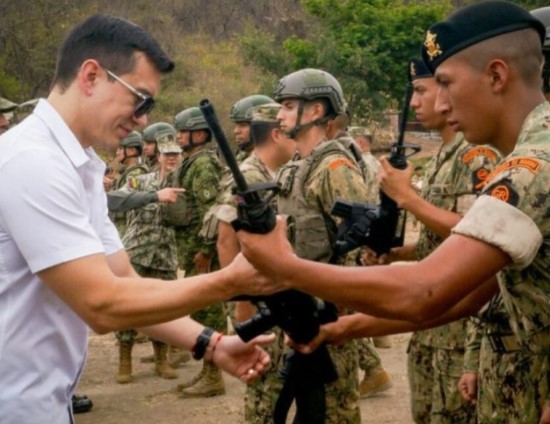
President Daniel Noboa has declared a new state of emergency in seven provinces and three cantons, the first in 2025. The emergency gives police and the military additional law enforcement authority.
The NGO, which tracks crime worldwide, said “similar disturbing trends” exist in Brazil, Colombia, Honduras and Venezuela and at least six other countries in Latin America.
In its notes about the new rankings, ACLED said Ecuador showed a “significant reduction” in murders in 2024 compared to 2023 and made gains in controlling its prisons and organized crime groups.
It added that crime in the country is concentrated in the coastal region and in areas with illegal mines, noting that most of the country remains safe.
New emergency declared in seven provinces
President Daniel Noboa has declared a new state of emergency in seven provinces and three cantons, the first such declaration of 2025.
According to the decree, the emergency responds to “situations of serious internal commotion and internal armed conflict” in Guayas, Los Ríos, Manabí, Orellana, Santa Elena, El Oro and Sucumbíos Provinces, and in the cantons of La Troncal, Camilo Ponce Enríquez and the Metropolitan District of Quito.
The emergency, which suspends constitutional rights of personal and home privacy, will remain in effect for 60 days, the president’s office said in a statement. It added that the national prison system will remain under joint military and police control during the emergency period.
Ecuador and China share good tidings
Chinese President Xi Jinping exchanged congratulatory messages with Ecuador President Daniel Noboa last week on the 45th anniversary of the establishment of diplomatic relations between the two countries. The presidents also acknowledged the trade agreement signed in 2023 that reduced and eliminated restrictions on thousands of agricultural and manufactured products.
“We stand ready and willing to work with the government of Ecuador in 2025 as a new starting point for continuing the traditional friendship, deepening exchanges and cooperation, as well expanding trade between our two nations,” Xi Jinping said in a statement released by China’s Foreign Ministry.
In his message, Noboa called China “a friend and valued partner as our countries grow together in the new year.”