















Ecuador will invest $117.6 million in renewable energy project in the Galapagos Islands
Ecuador will allocate $117.6 million to begin a transition to renewable energy in the Galapagos Islands over the next five years. The plan aims to make Galapagos an international example of sustainability, self-sufficiency, and resilience, with the support of the Green Climate Fund and several international entities.
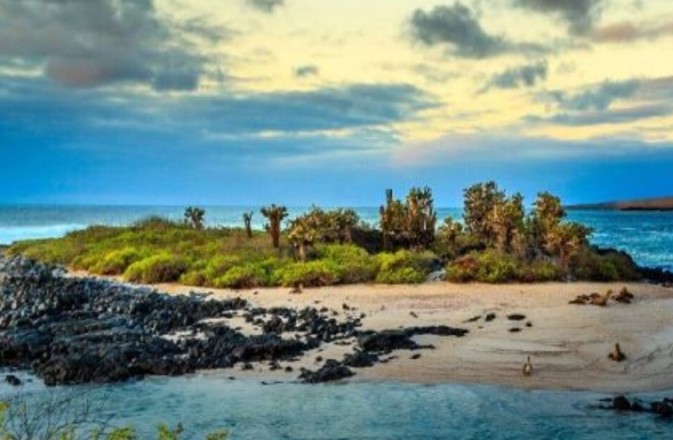 The Ecuadorian government, through the Ministry of Environment and Energy, has launched a program that focuses on non-conventional renewable energies. More than $15 million will be allocated in sustainable credits to strengthen economic activities that respect the natural environment in the islands.
The effort will benefit the islands’ more than 25,000 residents, promoting activities such as agriculture, artisanal fishing, and sustainable tourism.
Currently, the Galapagos rely on imported diesel for most of its electricity. The government’s strategy seeks to progressively replace diesel with solar, wind energy, and battery storage systems to ensure a constant supply of electricity without creating pollution.
The program, named “Climate Change: Galapagos’ new evolutionary challenge”, aims to transform the archipelago’s development model towards one that is more sustainable and low in carbon emissions. Among the highlights are the installation of non-conventional renewable energy projects, crucial for driving the transformation.
The Environment and Energy Ministry said that the Galapagos, beyond their biodiversity and worldwide renown, are home to thousands of Ecuadorians who need sustainable, responsible development with opportunities. According to a ministry spokeswoman, development will mean energy security, responsible production, and a tangible improvement in the quality of life of its inhabitants.
The project has the collaboration of international organizations such as the FAO and World Wildlife Fund of Ecuador, who will collaborate with the Ministry in its implementation. Additionally, the plan was approved by the Green Climate Fund in 2022, and in 2025 a financial agreement was formalized with the Development Bank of Latin America and the Caribbean.
Since 1978, the Galapagos have been recognized by UNESCO as a World Natural Heritage Site due to their extraordinary biodiversity, which once inspired Charles Darwin to develop his theory of evolution. With this initiative, Ecuador seeks to position the archipelago as a world model of insular sustainability, offering a replicable example for other isolated territories.
The government says the project reaffirms Ecuador’s commitment to decarbonization and the conservation of a natural environment vital for science and global ecological balance.



Hogar Esperanza News

The Cuenca Dispatch

Week of September 20

Ecuador turns to industrial power cuts to protect Mazar and keep homes from going dark.
Ecuador raises its 2026 growth forecast, but El Niño could spoil the outlook next year.

Cuenca retirees challenge medical and therapy changes at IESS senior center.
Fabianos Pizzeria News

Fund Grace News