













Ecuadorians are more optimistic about the future; Other candidates want one-on-one debates; Why don’t we hear more about money laundering?
In a January survey, 69.7% of Ecuadorians said they have “positive” expectations for the future. According to Giovanna Peñaflor, director of the consulting firm Imasen, which conducted the survey, the improvement in public sentiment is due to several factors, including “election fever.”
Peñaflor says there is a widespread perception that the country is on right path following the end of power blackouts and a slight drop in crime rates. “Having the lights on again is a big factor, both literally and symbolically,” she said. “The other factor is that election campaigns always give people hope because the candidates are making promises of improving peoples’ lives.”
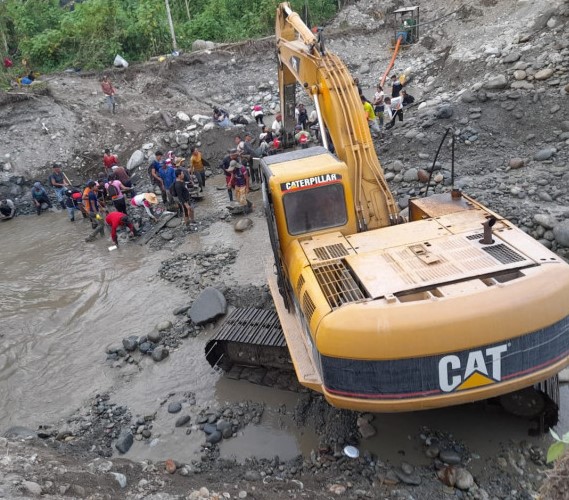
A government critic claims that legal and illegal mines are involved in large-scale money laundering operations.
Following elections, optimism typically remains high through the ‘honeymoon’ period for the president and the new National Assembly, Peñaflor says. “This happened after the cross death election in 2023 but then began to decline two or three months later.”
Politically, the country continues to experience a “Correista – anti-Correista divide,” according to Peñaflor. “This polarization, which affects a broad spectrum of the public debate, is especially evident in election campaigns. This has been the case in the last three national elections and will be again in February.”
The polarization, Peñaflor adds, centers around Rafael Correa, as much about his personality as his political positions. “In another [Imasen] survey, 38% of people said Correa was the best president Ecuador has ever had but an almost equal number said he was the worst. The Citizens Revolution movement has a strong and dedicated base but, because of the antipathy toward Correa, it faces a challenge of reaching a majority in elections.”
In response to the question about their biggest concerns, 47.5% of survey respondents listed crime while lack of employment was second at 21%.
Other candidates want one-on-one debates
Following Luisa González’s challenge to President Daniel Noboa for a one-on-one debate, three other candidates are demanding the same opportunity. “If he [Noboa] agrees to debate Luisa, then I want a debate too,” Henry Kronfle said Tuesday. “It would be a violation of electoral council rules if all candidates are not given equal treatment,” he said.
Besides Kronfle, Jimmy Jairala and Enrique Gómez have requested debates with Noboa.
On Wednesday, Luis Felipe Tillería (Avanza) asked for a” one-on-one discussion” with González about her bullet train proposal. “I want to talk to you about how this project will be funded after you reduce taxes,” Tillería said. “I await your response.”
What about money laundering?
While the government makes frequent pronouncements about its alleged success against criminal organizations, it says almost nothing about money laundering, according to one critic. “The purpose of the gangs and cartels is to make money and because they want to keep the money in U.S dollars, most of it is laundered in Ecuador,” says Kleber Ramirez, a retired banker. “One of the reasons we hear so little about the problem is that it involves powerful business interests and powerful people, namely the banks and large business owners.”
“What about street-front businesses that launder money?” asks Ramirez, who has written newspaper columns and given interviews on the issue. “This is happening right under our eyes but attracts little public interest. Why has there been a 200% increase in the number of pharmacies in Cuenca since 2019 when the population has grown 10% or 15%? The same in Ambato, where the number of pharmacies has doubled but the population hasn’t changed? Why isn’t the government looking into this. Why are the politicians ignoring it?”
He adds: “Of course, all the money from the pharmacies and other businesses passes through the banks.”
Ramirez claims the mining industry, legal and illegal, is also a big part of the laundering process, selling billions of dollars of gold and silver to countries like Saudi Arabia. “We hear a lot about efforts to shut down illegal mines, but these mines continue to produce — and sell — their product. Much of the illegally mined gold is sold through the authorized companies.”