















Education system is in crisis and was ignored during election campaign, former minister says
By Liam Higgins
Former Education Minister Milton Luna says Ecuador is suffering an education crisis every bit as extreme as the crime and energy crises, but no one is talking about it. “I was saddened that the subject received so little attention during the election,” he said last week in a television interview. “I heard no substantive plans for fixing our schools and improving the curriculum from the candidates. I heard only empty promises.”

Former Education Minister Milton Luna
To upgrade and correct the deficiencies in both k-through-12 and university education will require an “immense” investment by the country, Luna says. “Everyone is talking about fighting crime and putting criminals in prison but almost no one acknowledges the fact that many of those arrested are drop-outs from our failing schools.”
“An education system in crisis is a major contributor to crime, especially in our coastal provinces, and should be considered in tandem with efforts by police and the military,” Luna said. “We must recognize this connection and make immediate changes to our [educational] management models on a national scale.”
According to Luna, who served during the Rafael Correa and Lenin Moreno governments, the country’s public schools have fallen behind in preparing young people for life. “We are not providing the skills, the training and the knowledge that prepares them for the workplace of the future. We hear about the need to attract investment for new employment, but if our youth are poorly educated why would investors want to open businesses in the country? They will go somewhere with a better educated workforce.”
Specifically, Luna says training in emerging technologies is being ignored. “We read and hear every day about the revolution in computer sciences, such as artificial intelligence and quantum computing, but students are not exposed to this despite the fact that these fields will provide much of the employment of the future.”
More generally, Luna says the country’s schools do not teach critical thinking skills to students. “We recognized this problem 15 years ago. The emphasis then was on rote learning, which is the lazy way of teaching, and we made efforts to change it, to provide instruction that encouraged students to think for themselves. We required better training for teachers and attempted to change the mission of public education.”
He added: “We started from the premise that the function of the educational system was not to make life easy for the teachers, but to give students rigorous training.”
Unfortunately, Luna says, much of the improvement achieved in that period was funded by windfall profits from oil sales. When oil prices crashed, so did most of the educational improvements. “The education budget was slashed and has never recovered,” he says. “We have returned to the rote teaching model, which has created the crisis we have today.”
Luna recommends that the government elected in April make education a priority. “From the funding standpoint, it should be considered on an equal basis with the military and the police,” he says. “Even in hard economic times, it must receive priority attention and priority funding.”



Hogar Esperanza News

Fabianos Pizzeria News

The Cuenca Dispatch

Week of September 20
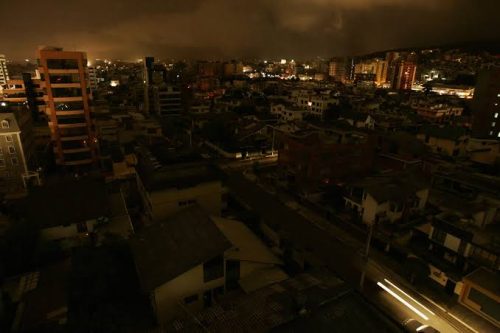
Ecuador turns to industrial power cuts to protect Mazar and keep homes from going dark.

Ecuador raises its 2026 growth forecast, but El Niño could spoil the outlook next year.
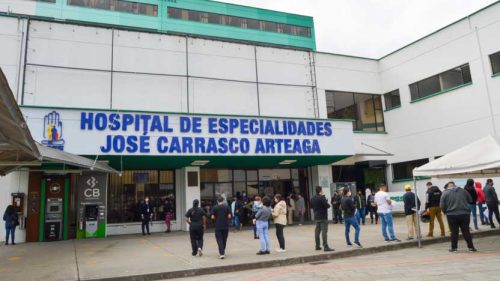
Cuenca retirees challenge medical and therapy changes at IESS senior center.
Fund Grace News