














El Niño is developing faster than expected and forecasters say Ecuador should begin preparations
Undated reports on the El Niño forming in the Pacific Ocean indicate its effects will be felt as soon as June and July. Previous predictions were that it would develop late this year with its full force coming early next year.
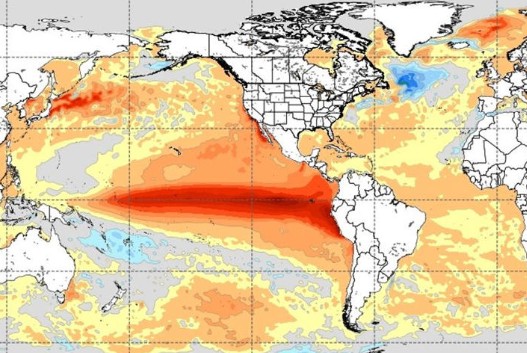
A U.S. National Oceanic and Atmospheric Administration (NOAA) indicates the area where sea water temperatures are above normal and where the El Niño is forming.
“All the data indicates a rapid rise in ocean temperature, which indicates this could be one of the strongest El Niños in years and it is coming sooner than we expected,” says Ecuadorian meteorologist Ronaldo Torres. “Coastal communities should be making preparations now and should expect the worst.”
On Tuesday, Ecuador’s National Risk Management office issued a “yellow alert” for the coast and all areas on the western slope of the Andes with elevations less than 1,500 meters.
Torres says it’s still too early call it a “Super El Niño” or to compare it to the 1997-1998 or 1877 events, which caused catastrophic damage to Ecuador, Colombia and Peru. The U.S. National Oceanic and Atmospheric Administration (NOAA) has already indicated that there is an 65% probability the system will develop into a Super El Niño.
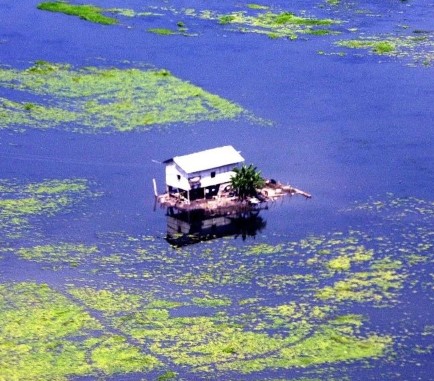
A house stands just above flood level in Daule, near Guayaquil, during the 2002 El Niño.
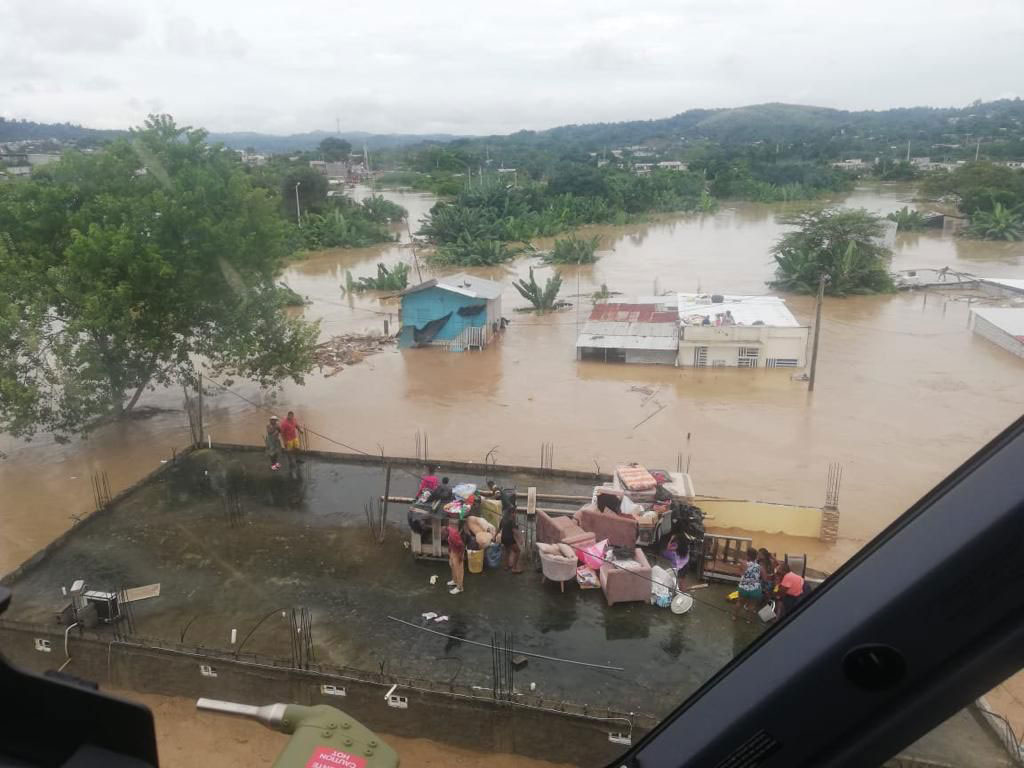
The 1997-1998, El Niño flooded Ecuador’s coast with the heaviest rain on record, destroying the coastal highway in more than 20 locations and washing away houses. As a result of the destruction, several towns were isolated for as long as four months as the highway was rebuilt, requiring airlifts of supplies by helicopter.
Floods and landslides from the 1997-1998 event also destroyed Ecuador’s railroad system that has not been rebuilt.
In the Andes, the 1997-1998 El Niño caused a prolonged drought, destroying crops and triggering wildfires.
If the new El Niño develops as projected, Torres says flooding rains should be expected on the coast and in the western foothills of the Andes Mountains. “The heaviest rain will fall at elevations up to 1,000 meters (3,300 feet) with elevations between 1,000 and 1,500 meters experiencing higher than normal amounts,” he says.
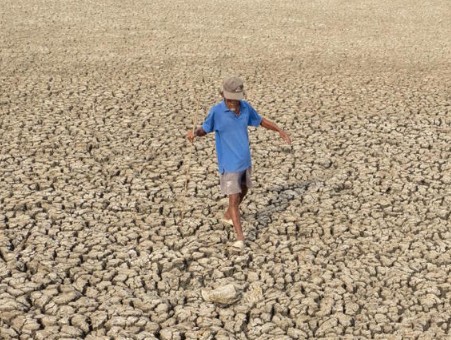
Some regions of the world could experience extreme drought as a result of El Niño.
“In the high mountain valleys, in Quito, Riobamba and Cuenca, we can expect a drying trend that could develop into a drought comparable to the one we experienced in 2024,” Torres said. “There is a high probability we will see another round of electric blackouts as the hydroelectric reservoirs are depleted.”
El Niño’s impact in the Amazon region, on the east side of the Andes, is more difficult to predict, Torres says. “We expect drier than normal conditions, but this depends on several factors that will develop in the coming weeks. The entire Amazon basis, all the way to the Atlantic Ocean, is seeing drought conditions unrelated to El Niño and this could be aggravated by its effects.”
Torres says the impact of El Niño will be similar in neighboring Peru and Colombia. “This is a regional phenomenon, and those countries could also experience coastal flooding and high-altitude drought.”
Torres cautions, however, against assuming we are facing a repeat of 1997 and 1998 disaster. “Obviously, we must be prepared for the worst but, on the other hand, it is far too early to make precise predictions.”