













Electricity shortage deferred by record rains but experts claim the crisis is worse than ever
President Daniel Noboa “enjoyed a year of good luck” in 2025 as heavy rainfall kept the country’s hydroelectric reservoirs full, but energy experts say his luck could soon run out. “He has made claims that the crisis is being solved but this is not true since he cannot take credit for the weather,” says electric engineer Pablo Arias.
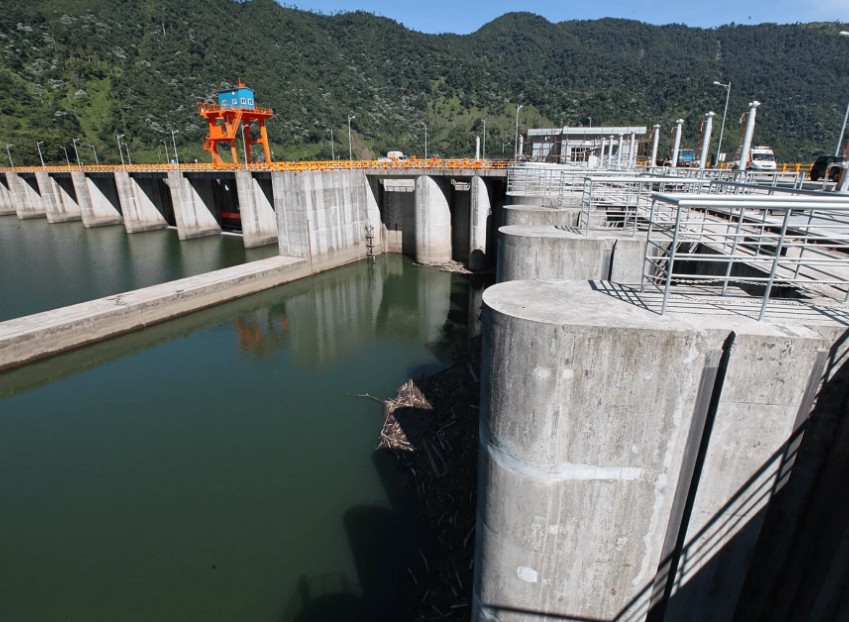
Coca Coda Sinclair hydroelectric plant in Napo Province.
Arias and others say the government’s recent statement that there is “sustained and verifiable recovery of the electricity system” is false. “A year ago, during the power crisis, the president promised to install an additional 900 megawatts of capacity by June of this year but five months later, the Energy Ministry admits that only 198 have been added,” Arias says. “This does not even cover the increase in power demand through October.”
He adds: “We have experienced record and near-record rainfall totals in the areas near the hydroelectric plants, especially in Azuay Province, and this is allowing for record generation totals. You can be certain that this will not continue and we will once again face power blackouts.”
Rodrigo Parra, former Energy Ministry vice-minister, says Noboa and his energy ministers have not admitted the “disaster” of the failed deal with U.S. mobile power unit manufacturers. According to Noboa, the new thermal units would have generated between 280 and 352 megawatts of power by early 2025. “It is still not clear what happened, since the government has not released a full explanation of the deal or why the units are not operating, but today the generators that have been delivered sit silent in Guayaquil and Esmeraldas while the two parties prepare for litigation.”
According to Parra, the fault lies with the government for rushing into a contract with Progen and Austral Technical Management without understanding critical details of the agreement. “They acted carelessly and did not do their homework,” Parra says. “Their primary interest was political, sending good news to the public, and now we know the PR was premature.”
According to the Ecuador Comptroller’s Office, the government lost $150 million in the Progen deal.
Parra adds that the contracts with a Turkish power barge company was also a bad deal. “One barge provided power for several months but the second one never functioned as promised and this cost the country almost $200 million.”
In addition to contractual problems, Arias says the government has failed to comply with its own Electricity Master Plan and recommendations by national electric company Cenace to stay ahead of power usage. “The rules, which Noboa endorsed last year, require that the government make infrastructure investments to increase generation 10% above the rate of usage, and so far in 2025, we are far behind that goal.”
He adds: “The bottom line is that we are going in the wrong direction.”
Parra claims that a “self-inflicted wound” by the government was its agreement with the Chinese Sinohydro Corporation to assume management of the Coca Coda Sinclair hydro plant in Napo Province. “They [Sinohydro] are the people who caused the trouble in the first place with bad engineering and bad construction,” he says. “It is like asking the fox to run the henhouse. Noboa and his ministers were strong-armed by the Chinese government to accept the arrangement in exchange for ending litigation that could have lasted for years. It was a bad deal.”
No matter who operates Coca Coda Sinclair, Parra says, the fact that the facility will cease to function in six to 10 years is being overlooked. “Every independent study has shown that erosion and siltation will soon put Coca Coda out of business and end the generation of 1,200 megawatts. The fact is being ignored.”