
















End of industrial blackouts will put the country’s rejuvenated hydroelectric capacity to the test
Two days before the country’s largest electricity users reconnect to the national power grid full-time, government energy officials and most experts say the short-term energy outlook is good. “We have had some rain at our hydroelectric plants and the prediction is that more is coming,” says electrical engineering professor Freddy Sanchez. “This is good news for the businesses that have suffered blackouts.”

Recent rain has added more than two-and-a-half meters to the Mazar reservoir.
Sanchez estimates that the end of the 72-hour weekly blackouts for industries, mines and large businesses will increase the national power demand by 600 megawatts, or about 15% of total demand. “At this time, we can handle the increase,” he says. “Conditions at the largest hydro stations have improved in the last two weeks. What we don’t know is how long the improvement will continue.”
As has been the case since the beginning of energy shortages in late September, the main focus is the Mazar-Paute hydroelectric complex and its three generation plants. “This is the backbone of our system, not only because of its generation capacity but because of its reliability,” says Carlos Onofre, National Electricity Operator (Cenace) systems engineer. “Coca Codo Sinclair is our biggest hydro plant but it suffers technical limitations, especially with siltation build-up at the intake pools. On Tuesday, we had to shut down for 14 hours to conduct cleaning operations.”
At 7 Friday morning, the Mazar reservoir stood at 2,123.31 meters above sea level, a gain of more than two-and-a-half meters from a week ago. “We are resting turbines at the Molino and Mazar plants to increase the water level but they will restart soon,” Onofre said. “Of course, we are hopeful the rains will continue.”
Despite the recent gain, the reservoir is still 30 meters below optimum level, Onofre adds.
As business reconnections begin, electrical systems researcher Juan Miller says the government plan depends on continuing rain. “We are totally at the mercy of the weather and continue to be in the position of supplicants, praying for rain,” he says.
According to Miller, the government agenda of celebrating the return to “business as usual” may be premature. “If it doesn’t rain, even if [President Daniel] Noboa stands on his head and spits nickels, there will be no energy. Those in charge must have plans for all possibilities and remember that November is the country’s driest month.”
Like Miller, Alejandro Jaya, assistant director of Energy Control S.A., is cautious in his outlook. “I worry that the energy planners are not considering recent trends in electrical usage, which has risen by almost 25% in three years,” he says. “While businesses were disconnected for three days, residential demand actually rose. We are in a crisis but this has not been communicated to the population.”
Jaya also worries that the government is not considering the shortage of diesel fuel to power thermal plants. “We hear that more diesel-powered generators are being added but the industrial and transportation sectors are already facing a fuel shortage,” he says. “How is this being resolved?”
He adds: “My worst fear is that industries will return to full power and full production but will be disconnected again in a few weeks.”



Hogar Esperanza News

The Cuenca Dispatch

Week of October 25

Ecuador heads into a four-day November holiday built around Cuenca’s Independence Day.
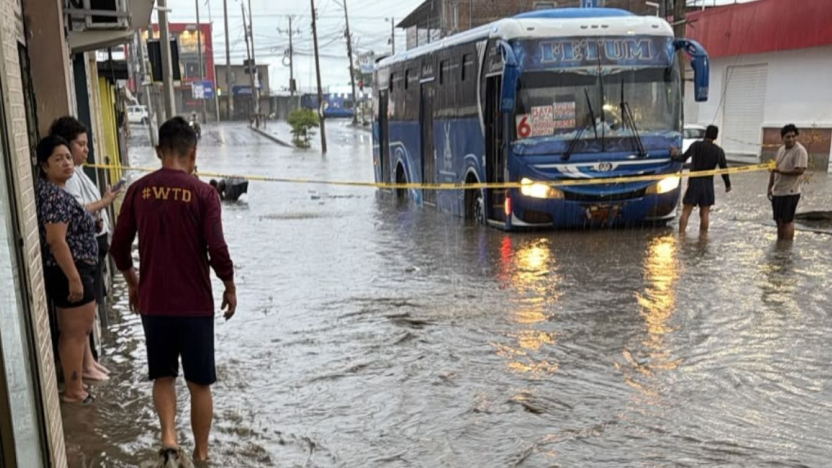
El Niño’s early rains have already affected more than 30,000 people across Ecuador.

Exporters press Constitutional Court to move three major trade agreements forward
Manabi property

Fund Grace News

Fabianos Pizzeria News