















Expat military veterans tour Cuenca’s Portete Artillery Brigade base, plan festivities for orphaned girls
By Stephen Vargha
English author and philosopher G.K. Chesterton said, “The true soldier fights not because he hates what is in front of him, but because he loves what is behind him.”
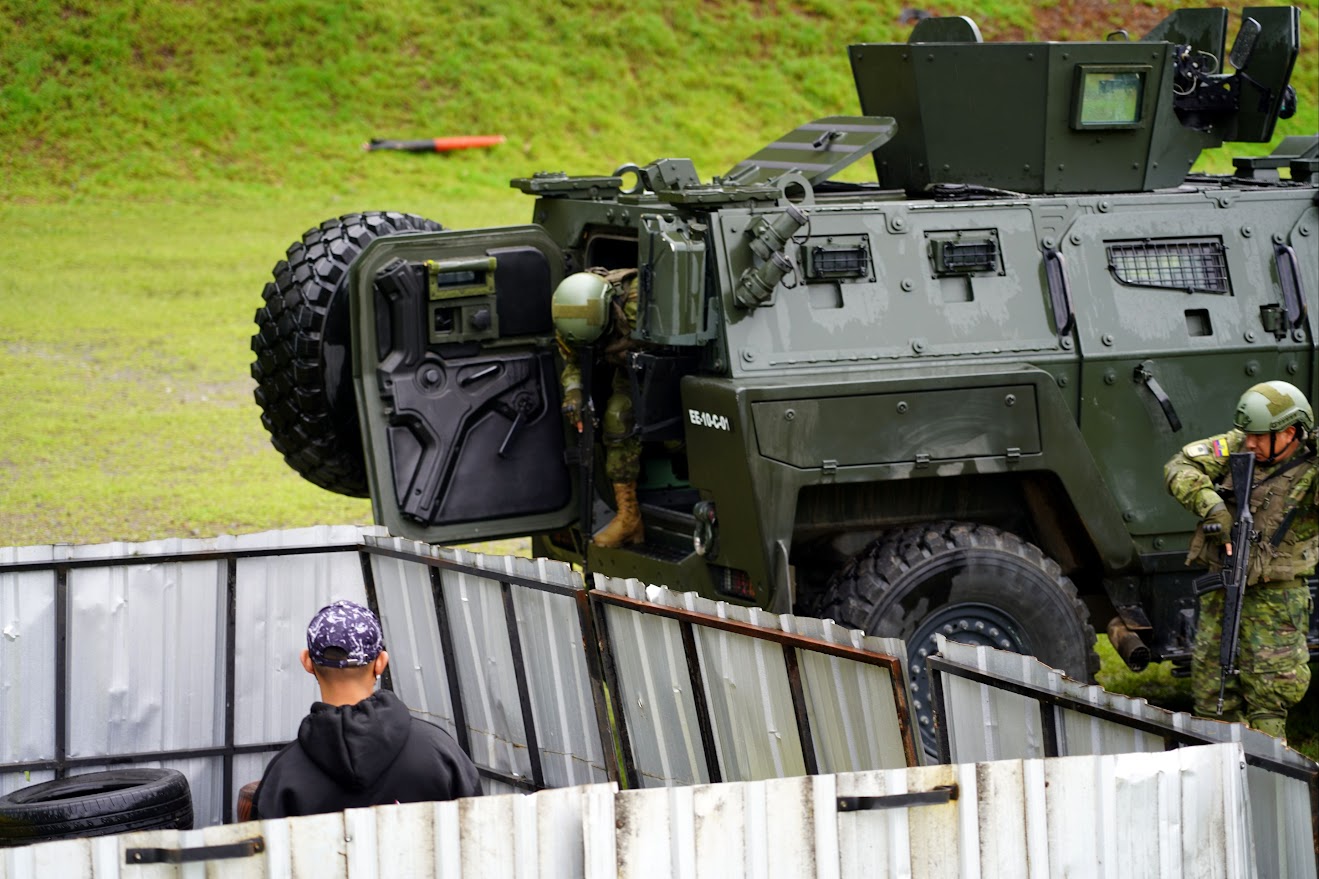
Soldiers deploying from a Turkish armored vehicle that was used to rescue hostages at the Turi prison.
The author of the fictional priest-detective Father Brown could have easily been talking about the soldiers stationed at La Brigada de Artillería N.° 27 Portete.
Located off of Antigua Panamericana, on the northeast side of the city, the military unit has been around for 202 years.
“Portete” is in honor of the Battle of Portete de Tarqui, which took place 15 miles south of Cuenca, on February 27, 1829, at Portete de Tarqui. The army of the Southern District of Gran Colombia under the command of Marshal Antonio Jose de Sucre defeated the Peruvian forces under José de La Mar.
The victory at Tarqui is considered the founding event of Ecuador’s armed forces, adding prestige to the artillery brigade’s name.
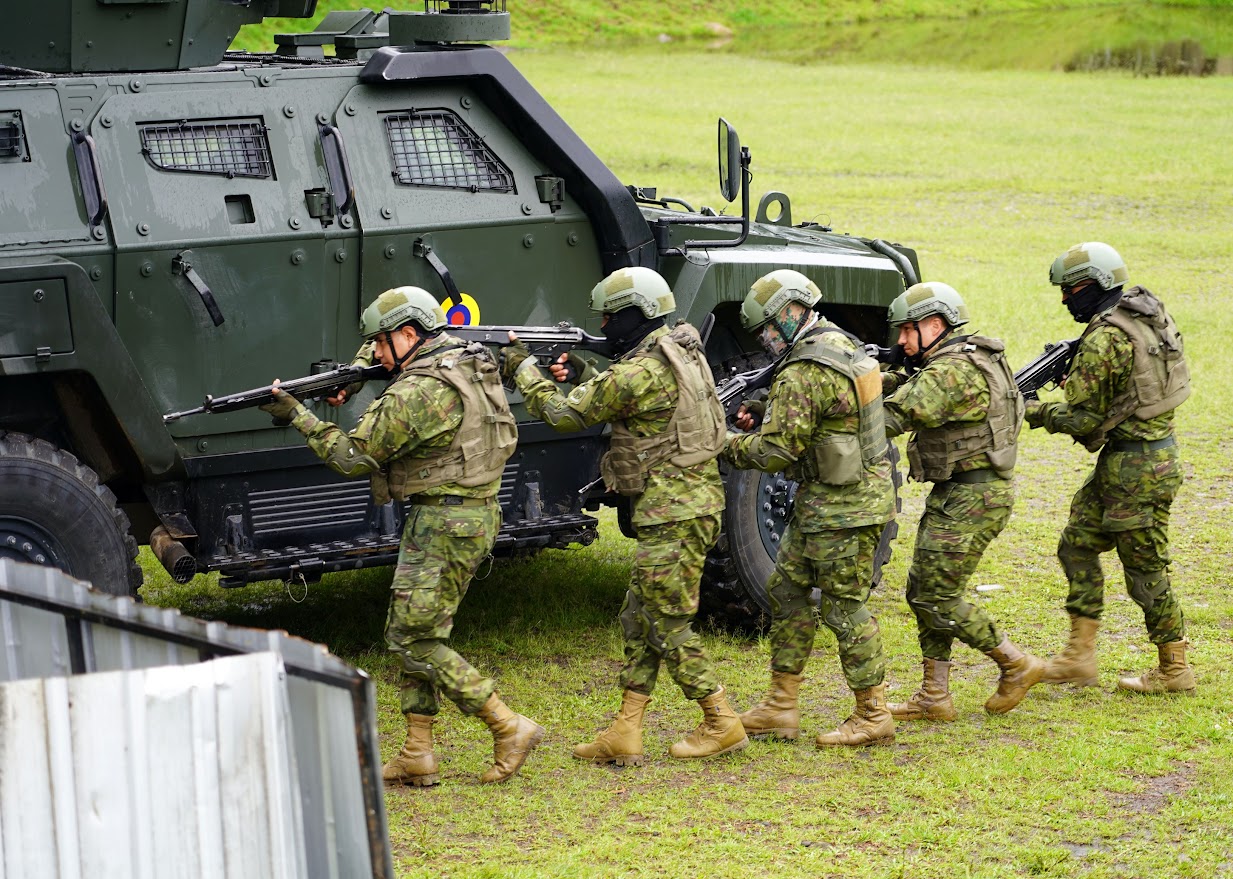
Combat tactics used by the La Brigada de Artillería N.° 27 Portete is similar to the U.S. military.
La Brigada de Artillería N.° 27 Portete is for internal purposes, Lt. Col. A. Flores told the Military Veterans of Cuenca (MVOC) on Saturday. MVOC is an organization of retired military expats dedicated to making a positive impact on the lives of underprivileged children and helping others in Azuay province.
Most of the members hail from the U.S., but there are retired veterans from Canada, and one from the Netherlands.
“This visit came about with the help of the former governor, Milton Benitez, who was an Army colonel. The head of the base used to serve under him. We were talking about military stuff, and he said, you should visit the base. He picked up the phone, called the commander and next thing you know, we had a tour,” said Clarke Brown.
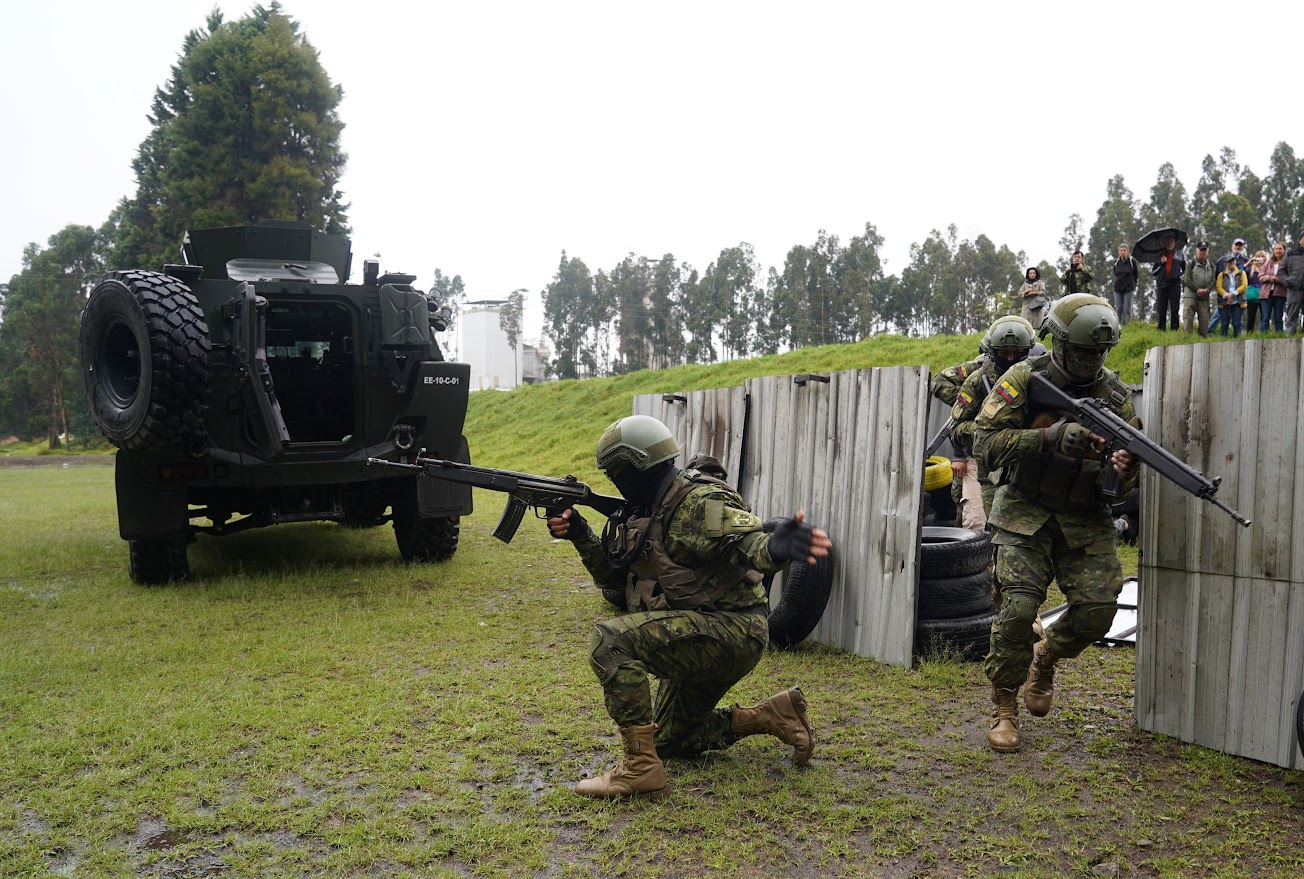
Ecuadorian soldiers reenacting their rescue operation at the Turi prison.
Brown leads the military vets group. He was in the U.S. was in the Air Force from 1980 to 1992 in various fields.
The Lt. Colonel showed a Russian BM-21 “Grad” 122mm Multiple Rocket Launcher that was used in January and February 1995 Guerra del Cenepa against Perú. It is also known as the Third Ecuadorian-Peruvian War that involved a disagreement over the border.
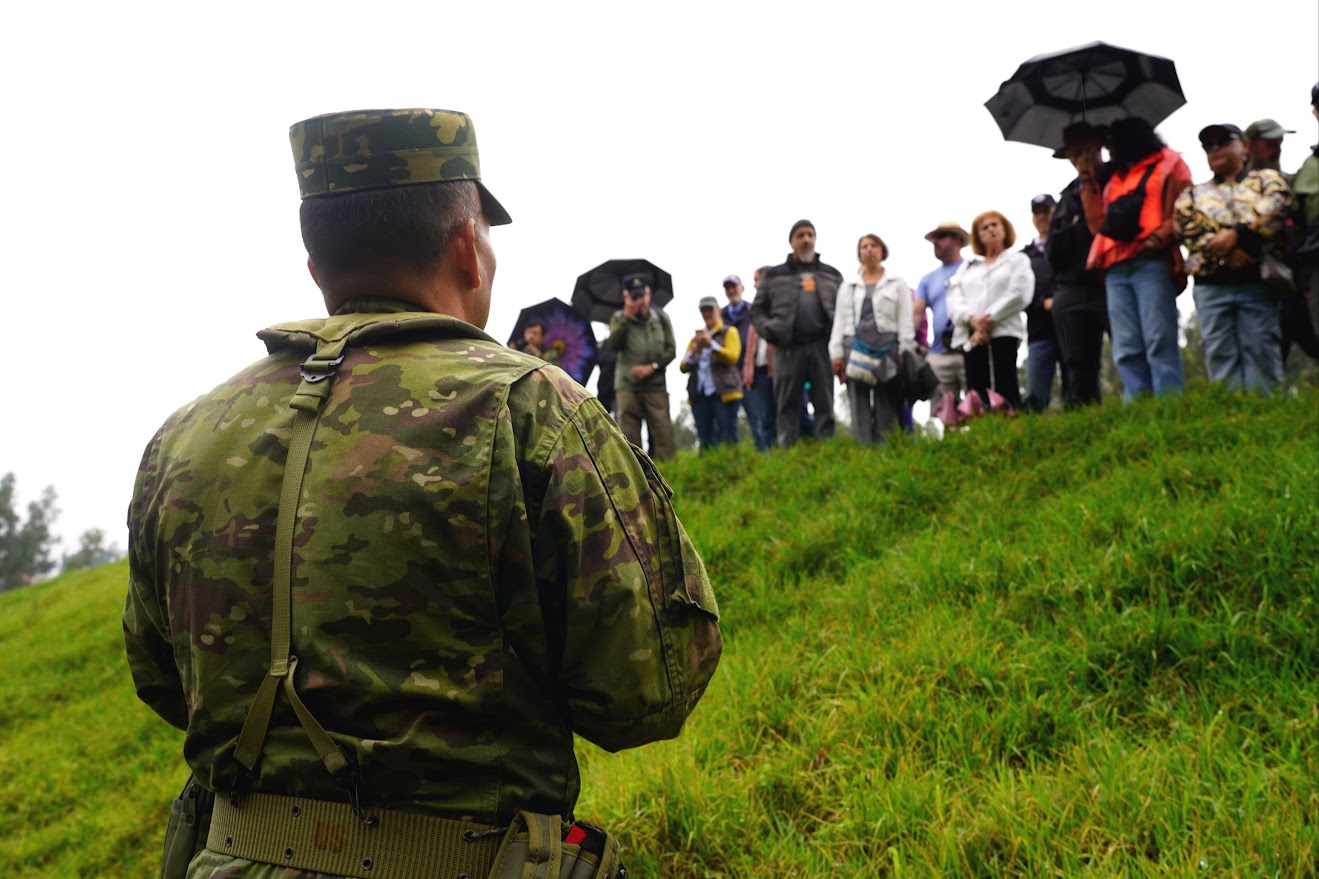
An Ecuadorian officer explaining to the group from MVOC what they are about to see.
The BM-21 is a relatively old design, first developed in the late 1950s. Because of the heat the rocket launcher creates, it has to move after firing as drones will quickly zero in on it.
Ecuador has learned to move it quickly from the war in Ukraine. Last month, Ukrainian special forces targeted and damaged 16 Russian BM-21s.
“Thanks to the precision work of the drone operators from the SBU’s Alpha special unit, these MLRS and their crews will no longer be able to destroy Ukrainian cities and villages,” the country announced on Telegram.
“It’s not surprising they have Russian equipment,” said Rick Daily. “They had a very socialistic country when it was purchased.”
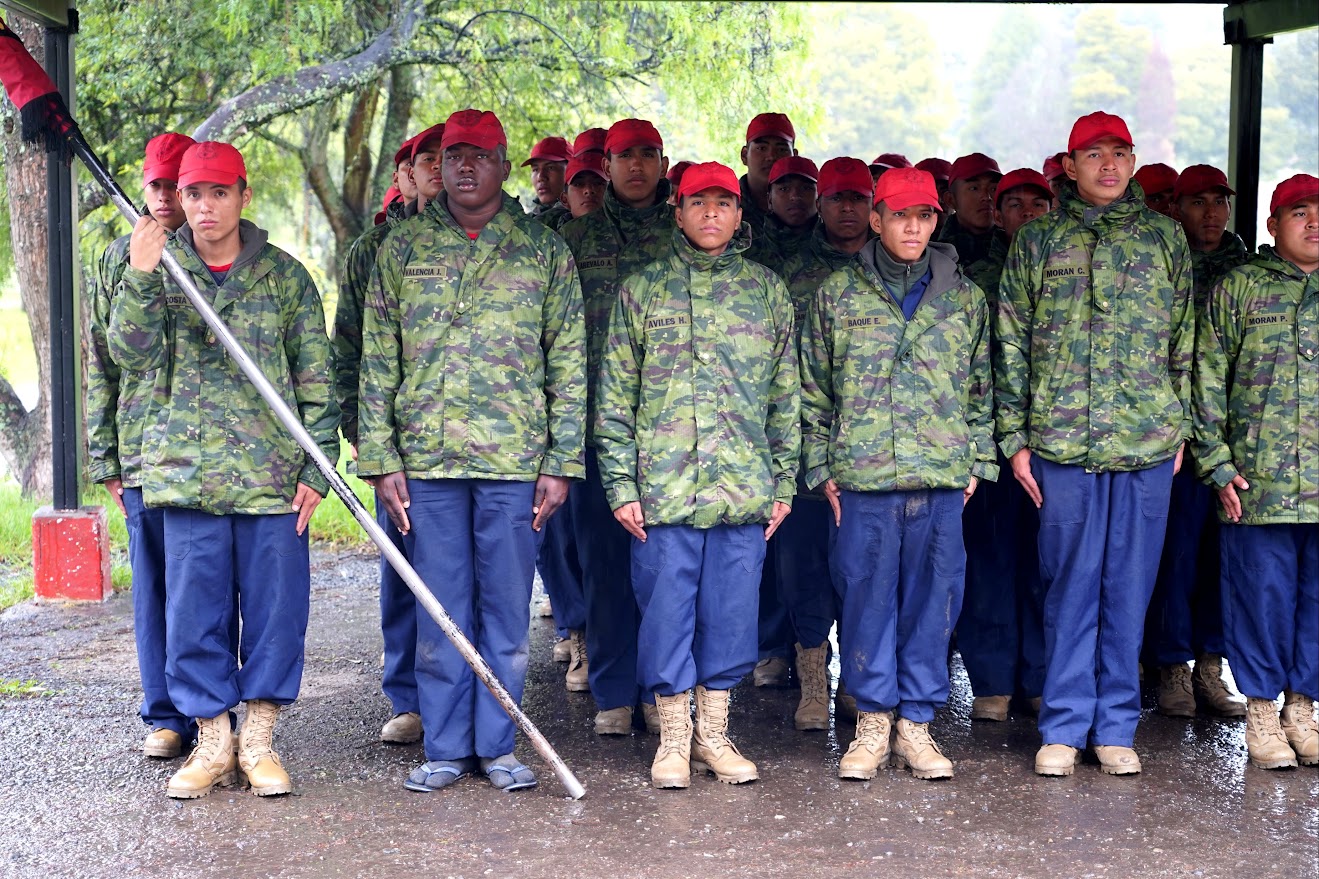
Young enlistees in formation. Volunteers to the Ecuadorian military commit to 25 years of service.
Dailey was part of the MVOC tour. He was a Master-at-Arms on the USS Enterprise from 1968 to 1972. A Master-at-Arms is the Navy’s equivalent to the Army’s Military Police. Jokingly, Daily said he was part of the “Gulf of Tonkin Yacht Club.”
During the three-hour tour, equipment from several countries were shown, including vehicles from China and the United States.
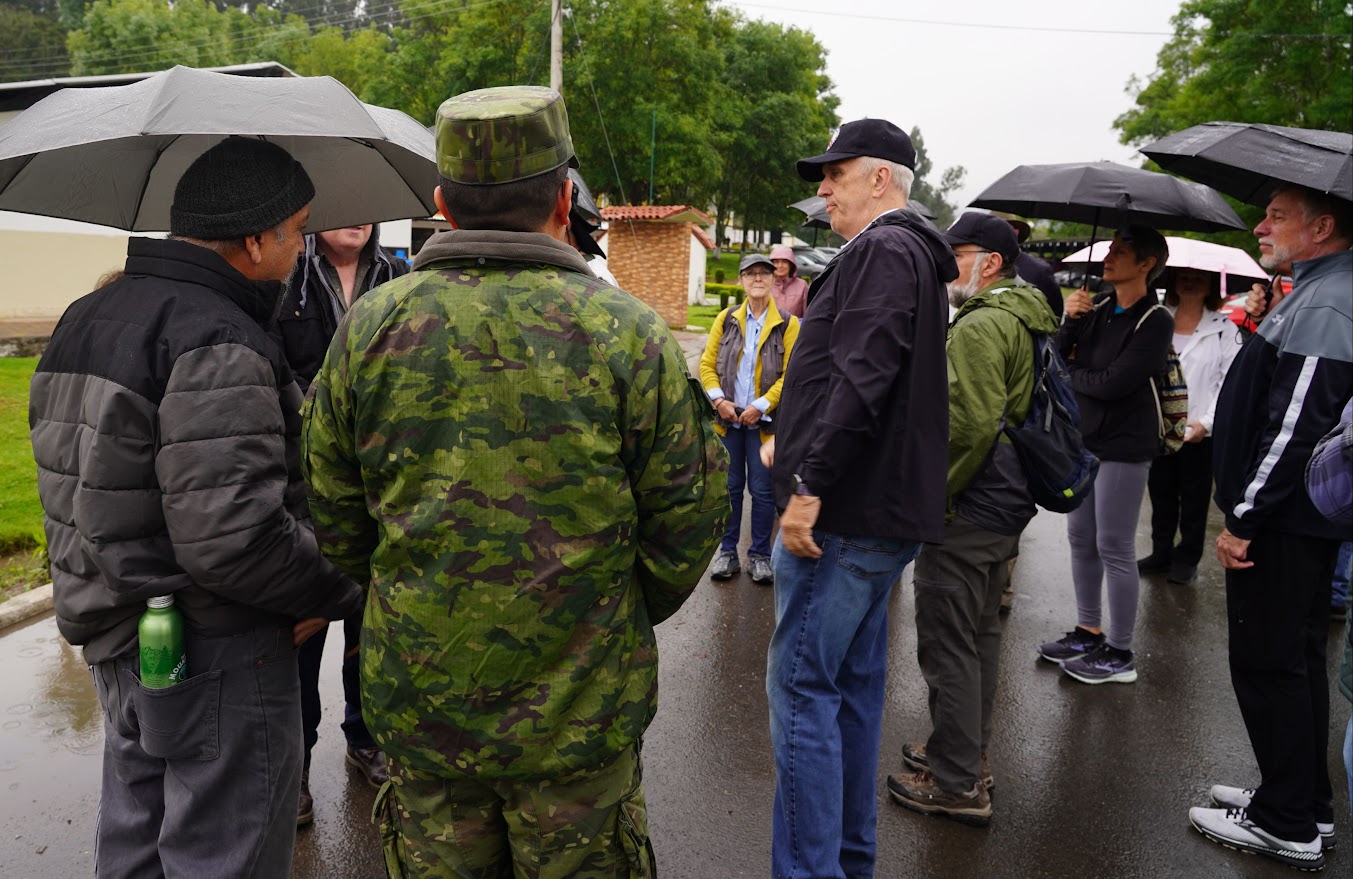
Military veterans met with the leaders of La Brigada de Artillería N.° 27 Portete for three hours to observe and exchange ideas.
Türkiye was represented, too, with an Otokar Cobra II. It provides greater ballistic and mine protection than the original that the Turkish Armed Forces have used since 1997.
In August 2023, Ecuador’s Armed Forces announced it had received 20 of these 4×4 tactical wheeled armored vehicles. President Guillermo Lasso stated the armored vehicles were purchased to strengthen the Ecuadorian Armed Forces’ operational capabilities against threats such as terrorism, drug trafficking, and organized crime groups.
One of the Otokar Cobra II vehicles was shown to the group. Inside were five soldiers of the brigade. Nearby was a representation of Centro de Rehabilitación Social “CRS Turi.” Most know it as the Turi prison, located a couple of kilometers south of the mirador overlooking Cuenca.
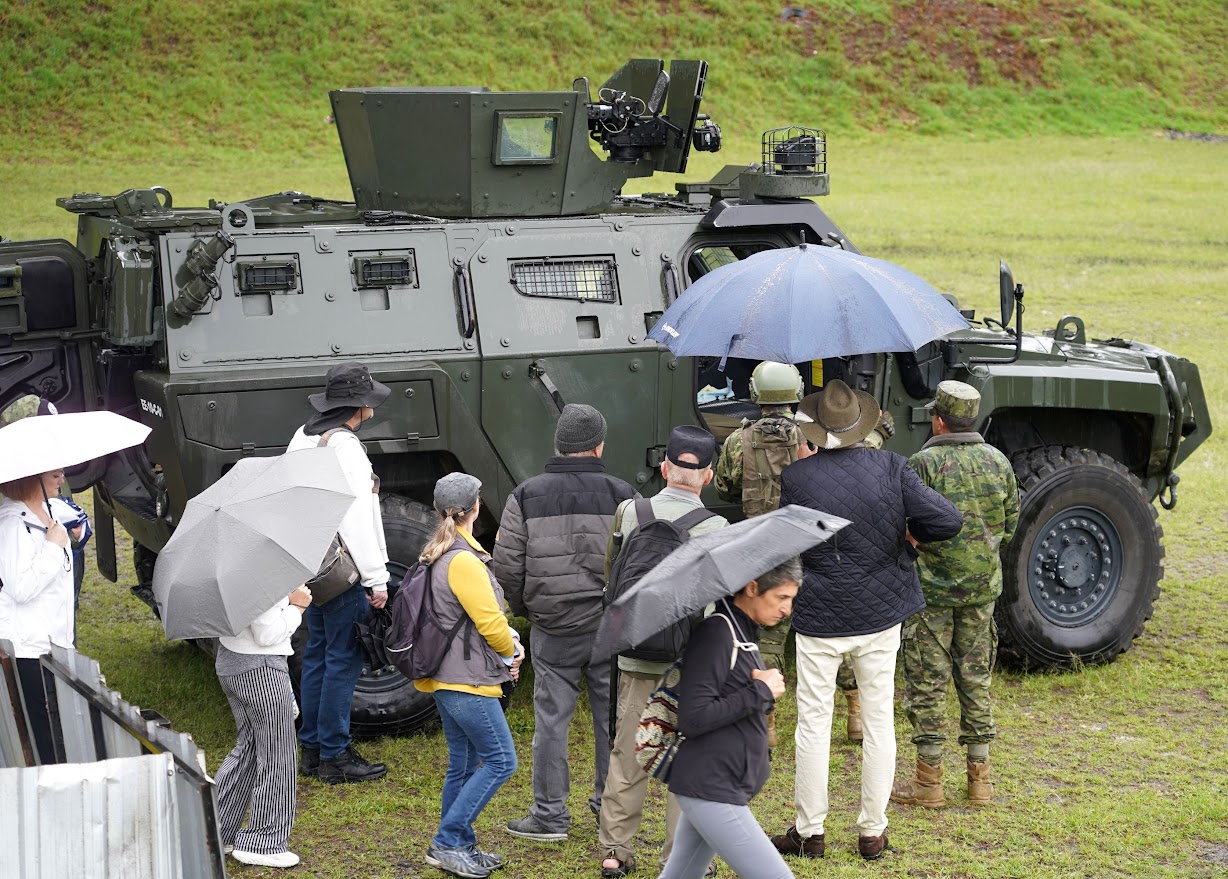
Members of MVOC check out a Turkish Otokar Cobra II, a 4×4 tactical wheeled armored vehicle, that the Ecuadorian military uses.
In front of the group of 30 from MVOC, the five soldiers systematically jumped out of the armored vehicle and got into position, protecting each other from possible danger.
They quickly kicked in the door of the room where a prison hostage was and rescued the person from the prisoners. The soldiers retreated with the hostage takers between them.
It was the same tactics used the night of January 13 when military troops rescued 133 hostages held for six days in seven national prisons including Turi, and in Cañar, Cotopaxi, El Oro, Esmeraldas, Loja, and Tungurahua provinces. All the hostages made it out alive and unharmed.
Since that rescue, soldiers from the brigade are rotated in and out as part of the prison’s security.
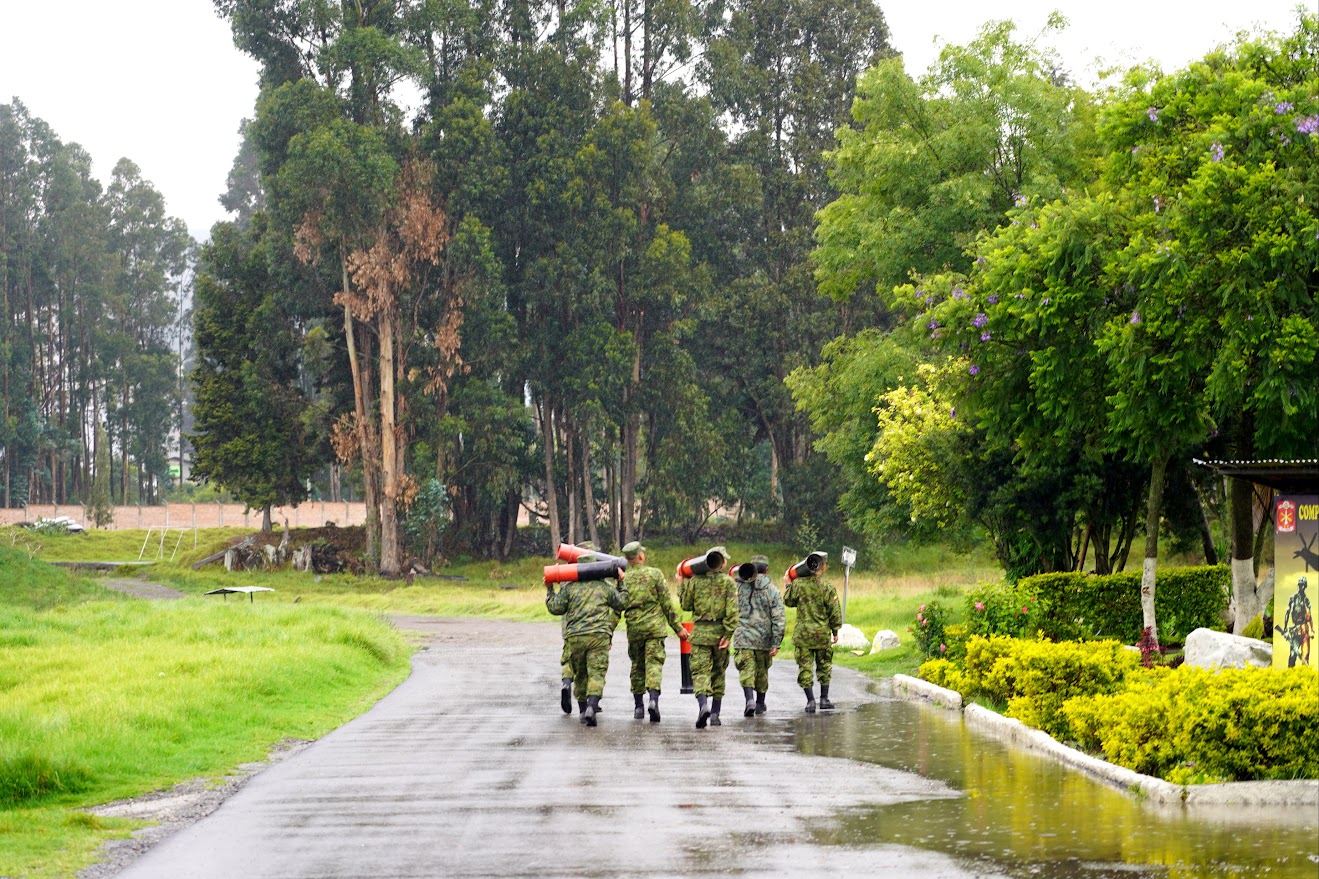
Soldiers of La Brigada de Artillería N.° 27 Portete transporting artillery shells down the road.
“I thought the presentation was awesome! They were very proud of what they do, were happy to show us and we were delighted to witness it,” said Brown. “I feel it went a long way to build great relations with Ecuador and the United States.”
“I had no idea what to expect,” said Daily. “The tactics they used are just like the United States. That is not surprising because if it works, do the same thing!”
Unlike the U.S., volunteers (Ecuador’s Constitutional Court ruled in June 2007 that compulsory military service was unconstitutional) in Ecuador serve more than four years.
Volunteers commit themselves to 25 years of service. After that time, they receive a monthly pension. If a volunteer leaves before the 25 years have been completed, there is no monthly pension.
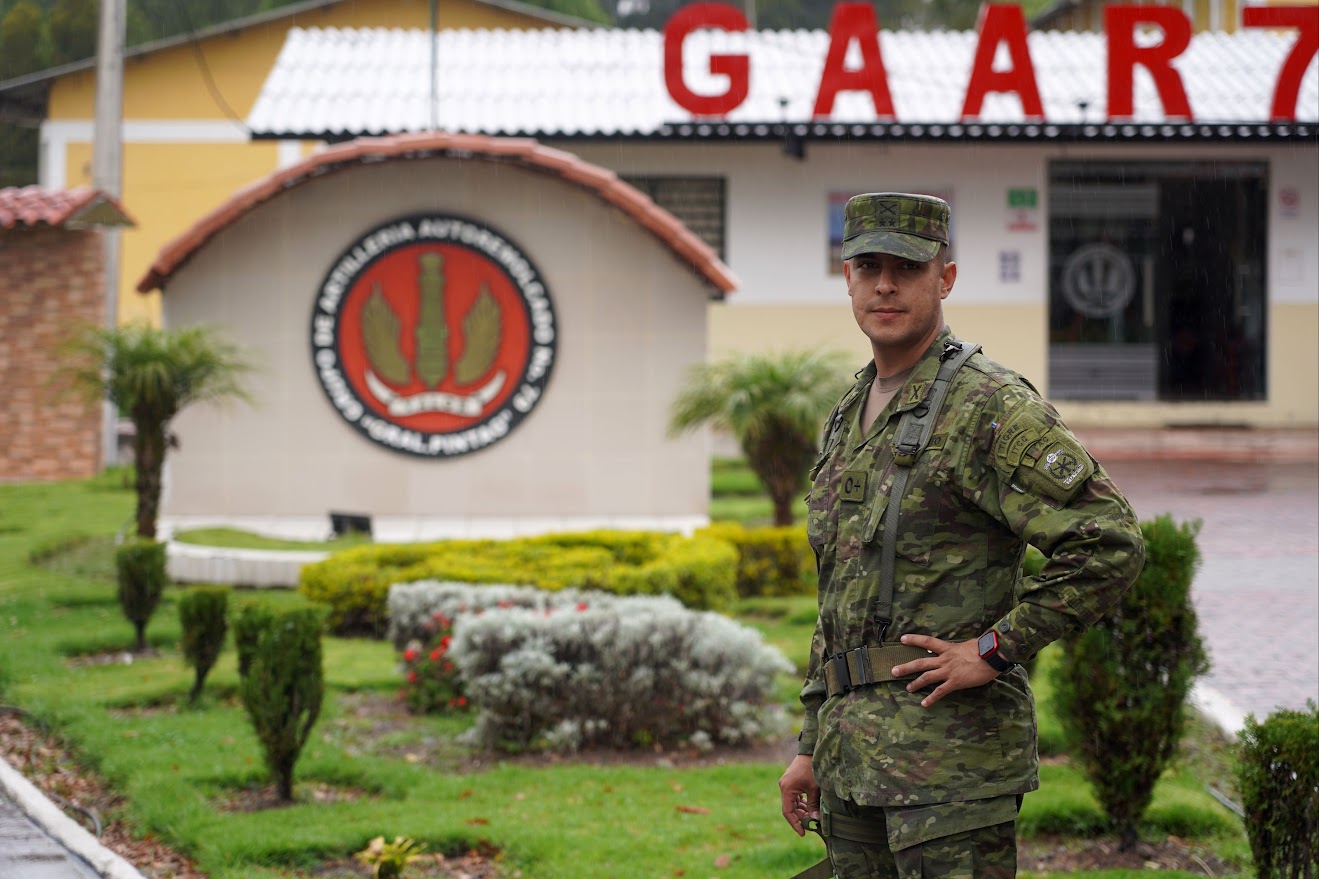
A soldier on guard duty at La Brigada de Artillería N.° 27 Portete.
The Ecuadorian Armed Forces consists of the Ecuadorian Land Force (Fuerza Terrestre Ecuatoriana), Ecuadorian Navy (Fuerza Naval del Ecuador), and Ecuadorian Air Force (Fuerza Aerea Ecuatoriana). There are approximately 56,000 members of Ecuador’s military, making it the 66th largest in the world.
One of the people observing and touring the brigade’s post was Lin Dailey from Washington state. Lin is involved with MVOC’s upcoming holiday festivities for some Cuencana girls. It is her second year doing this.
“On December 14th, we will have a Christmas party for the girls, ages six to 17, at the orphanage at San Sebastián,” said Lin. “A very dear friend of mine donated 20 handmade stretch bracelets so each girl could have one.”
MVOC also bought them hair ties, a personal makeup bag, and a pen with 10 different colors. One of the MVOC members will dress up as Santa Claus while his wife will be an elf.
The veteran’s organization has helped local children in other ways. They have taken as many as 50 children to see Club Deportivo Cuenca play at Alejandro Serrano Stadium.
They recently helped the firefighters who battled the numerous blazes in the mountains.
“We helped supply the firefighters for the wildfires,” said Lin. Many of them did not have any equipment.”
Money from MVOC was given to make fire paddles to extinguish small hot spots in the wildfires. The fire paddles were produced at a shop at La Brigada de Artillería N.° 27 Portete.
Because veterans’ health care services are not covered outside of the U.S., MVOC has created the Veterans HCA Medical Clinic. They are working with Dra. Kathryn Guillen Astudillo, a general practitioner who can handle many of the problems that veterans may be having.
The charitable kindness and military expertise of MVOC carried over to the Saturday tour of the base.
“I thought they were very generous and welcoming to our group of 30,” said Rick. “The welcoming was phenomenal.”
“At the end, they said kinda jokingly, come back in two weeks… which tells me they enjoyed hosting us and, by everyone laughing and saying yes, everyone enjoyed it,” said Brown. “It was a success!”
_________________
Military Veterans of Cuenca (MVOC), https://mvoc.ec/#HCA, Monthly meetings on the first Monday of the month at Sabatino’s Garden Restaurante, Roberto Aguilar and 3 de Noviembre (one block west of Otorongo Plaza), Cuenca
Photos by Stephen Vargha
Stephen Vargha’s second edition of his book about Cuenca, “Una Nueva Vida – A New Life” is available at Amazon in digital and hardback formats. His award-winning blog, “Becoming Cuenca,” supplements his book with the latest information and hundreds of professional photos by him.



Hogar Esperanza News

Fund Grace News

Fabianos Pizzeria News

The Cuenca Dispatch

Week of September 20
Ecuador turns to industrial power cuts to protect Mazar and keep homes from going dark.

Ecuador raises its 2026 growth forecast, but El Niño could spoil the outlook next year.
Cuenca retirees challenge medical and therapy changes at IESS senior center.