













Expats are lucky to live among self-sufficient people who are prepared to handle the coming adversity
 named Jadan, which translated from Quechua means “close to heaven,” is a typical Ecuadorian town. In the main square is, of course, the church, with a courtyard designed for sports (volleyball and football) and events. Each Sunday the streets are filled with vendors, some selling produce, others tortillas, others roasting chickens. Also on the edge of the central square is the local free clinic, for basic medical and dental care.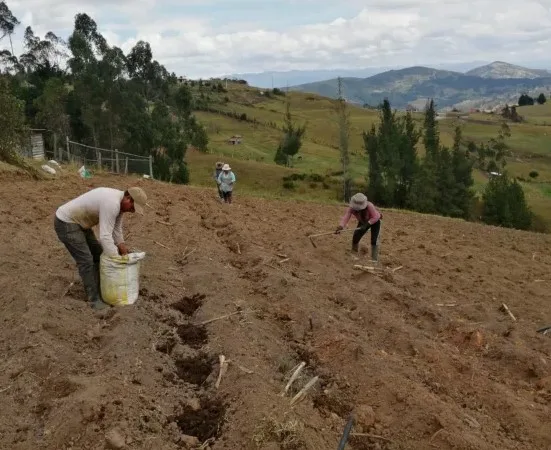
The strong, self-sufficient residents of Ecuador’s campo are well-equipped to handle natural and man-made disasters.
We are fortunate to have made several valuable friendships with residents of Jadan. Jorge Tigre owns a small aluminum and glass company, and we have used his services extensively over the past several years as we have developed our resort. Jorge Tigre became the mayor of Jadan this past year, an indication of how well respected he is by the people of Jadan. The local police have also become quite friendly with us. They announce their departure and arrival with a short siren each time they come and go from Jadan, letting us know they are around if we need them. Because my wife is quite keen on security, we have extensive camera surveillance, and the police have asked Catty on a few occasions if they can see her recorded video footage, if there had been some “ladrone” activity. The thieves in the campo are mostly interested in stealing farm animals.
But by far my favorite Jadan ally is Rocio, a single woman who is both the hardest worker and the happiest person I have been lucky enough to know. By herself, she raises cows, sheep, pigs, chickens, rabbits, cuy (guinea pig), and a dog or two. She grazes her cows on our property, and in exchange she helps us with our little animal husbandry program. We acquired our first pigs from her, and just yesterday received 6 rabbits. Soon I will ask Rocio to help me find two mama sheep, either with babies, or pregnant. Rocio will teach us what we need to know, but more importantly be around to help us, especially with medical issues. She seems quite expert in what is necessary for the health and well being of all animals. She keeps one young male cow for me, and will orchestrate its harvest when the time is right.
This brings me to the essential purpose of this essay. My goal in coming to Ecuador 12 years ago, in finding this land upon which to build a resort, a teaching center, and an intentional community, was in anticipation of an event coming very early in the next year. It is quite a coincidence that our recent “crisis,” in the form of an extended drought, has offered everyone in the Cuenca area a “dress rehearsal” for something far more catastrophic that looms in our near future.
We are experiencing a “solar maximum.” This is the normal peak of solar activity in what is normally an 11-year cycle. But the early predictions of a relatively weak “maximum” have been quite incorrect. The latest activity suggests that this solar maximum may surpass all others since the catastrophic event in 1859.
Time will tell if solar activity will reach even greater levels in the coming year. But there is a chance that even more powerful solar storms, on par with the 1859 Carrington Event, could strike our planet, potentially impacting ground-based infrastructure, triggering widespread radio blackouts and causing satellites to tumble back to Earth.
Ok, so this brings me to the prophecy that I saw some 20 years ago, and inspired a short book called “The Third Pulse.” What I saw was a major EMP (electromagnetic pulse) which would cripple the earth’s technology, crash the grid, and send the populace into a critical struggle for survival.
We will explore this possibility further in part 2 of this essay series.


Hogar Esperanza News

Fabianos Pizzeria News

The Cuenca Dispatch

Week of September 20
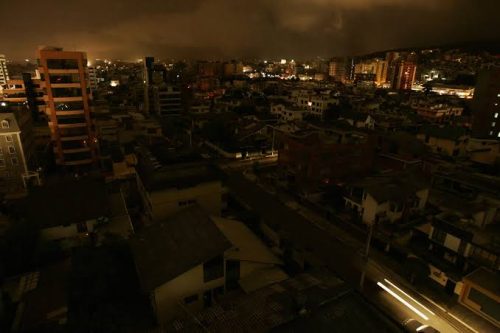
Ecuador turns to industrial power cuts to protect Mazar and keep homes from going dark.

Ecuador raises its 2026 growth forecast, but El Niño could spoil the outlook next year.
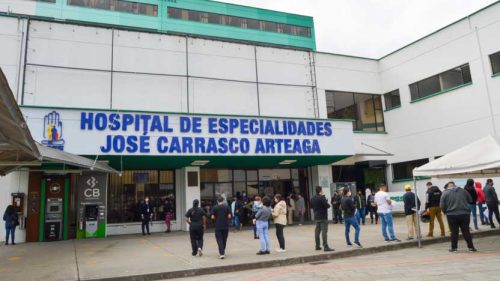
Cuenca retirees challenge medical and therapy changes at IESS senior center.
Fund Grace News