













Facing threats on his life in Ecuador, an investigative journalist finds refuge in Canada
By Danny Wiser
Andersson Boscán’s first serious threat while working as a journalist came about eight years ago, when he was 26 years old and reporting on corruption at high levels of the Ecuadorian government for one of the country’s newspapers. He was a new father, and the anonymous aggressor implied his three-month-old daughter would be in danger if he didn’t back off.
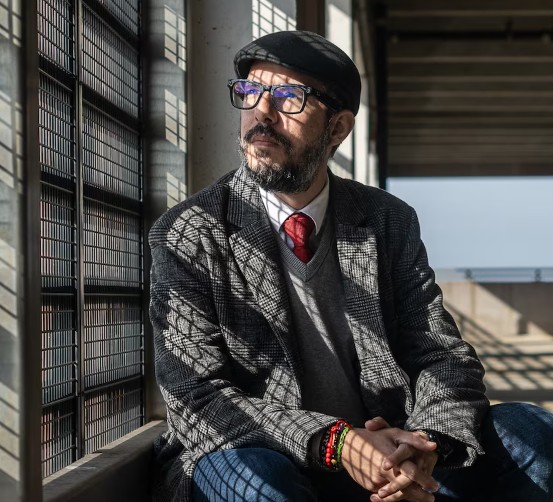
Andersson Boscán
In the ensuing years, other forms of intimidation followed as he made a name for himself exposing Ecuador‘s organized crime network, as well as continuing to uncover government corruption.
As organized crime groups and politicians become entwined in the Andean nation, transforming it into a narco-state, kidnappings and killings have become routine; the murder count in the first three months of 2025 is the highest on record. The journalists shedding light on this, find themselves not just documenting the violence but also trying to survive it.
After enduring years of persecution, a period of exile, and living in hiding in their own country, Mr. Boscán and his family last year sought asylum in Canada. They arrived last September, and he says they have finally begun to “enjoy the magic of family life.”
And for the first time, he is able to work as a journalist without fear of retribution.
The threat to Mr. Boscán‘s baby came after he published a story accusing former Ecuadorian vice-president Jorge Glas of receiving kickbacks in exchange for awarding public infrastructure contracts to the engineering company, Caminosca. Mr. Boscán was told by the aggressor that his daughter was too young for him to be “getting involved with these adult issues.”
Before then, Mr. Boscán didn’t receive such threats, but he and his colleague, Luis Eduardo Vivanco, grew accustomed to them after launching an independent digital multimedia channel, La Posta, in 2017.
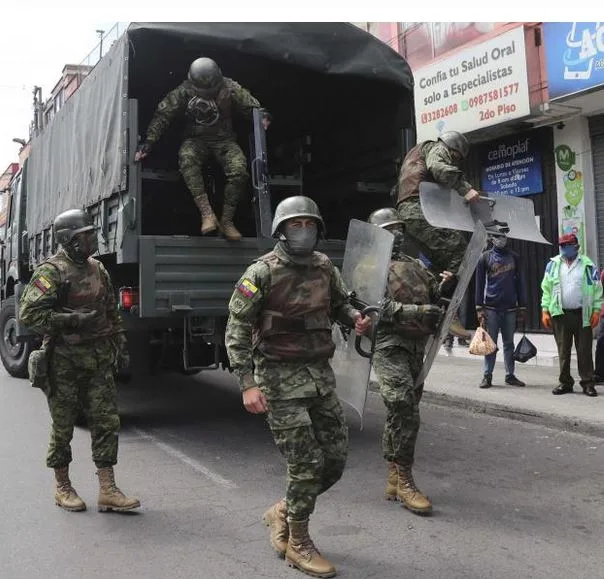
Boscán discovered that organized crime influence involves not just government officials but the military and police as well.
In 2018, Mr. Boscán planned to meet a source claiming to be a police officer with information for him. The source lured him to a café in Quito, where gangsters then hijacked him at gunpoint.
As part of Mr. Boscán’s reporting on Ecuador‘s organized crime groups, he built a relationship with one of the country’s most notorious drug kingpins, Leandro Norero, as a journalistic source – and in doing so gained many enemies from across Ecuador‘s wider gang network.
Over the next few years, death threats surged. One day, hooded men with rifles stopped him outside his house, warning: “Watch out, La Posta, we’re coming for you.” At the start of 2023, graffiti threatening Mr. Boscán began to appear all across Quito, though it was unclear who was responsible. By that point, La Posta‘s enemies were not just gangs, but also individuals in public office. Police officers even warned Mr. Boscán of a planned attack against him by their own colleagues.
“Each of the organized crime gangs work in a different way,” explains Mr. Boscán. “Some have contacts in the justice system. Some manage the police, some manage the armed forces, some manage political party representatives. Each of them is betting on its own path, so to speak, but it is unpredictable when you are going to affect their interests.”
Mr. Boscán’s first exile from Ecuador, in 2023, came after the publication of El Gran Padrino, in which the La Posta journalists investigated the Albanian mafia‘s infiltration of the Ecuadorean state – and exposed secrets about the nation’s own powerful internal narco networks.
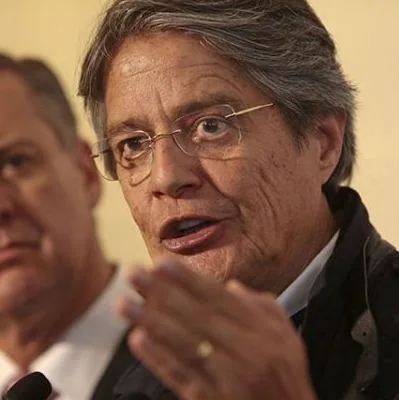
Former president Guillermo Lasso turned on Boscán after first promising to respect and protect his reporting.
Mr. Boscán and his wife, Mónica Velásquez, wrote the book believing they would be protected, because soon after president Guillermo Lasso came into power in 2021, the Attorney General’s Office had put him in Ecuador‘s victims and witnesses protection program. However, Mr. Boscán says it soon became clear that his state protection was conditional: he was protected as long as he did not investigate and expose wrongdoings by the Lasso government.
The revelations in El Gran Padrino were supported by extensive evidence, including phone records linking high-ranking government officials like Danilo Carrera (Mr. Lasso‘s brother-in-law) to Rubén Cherres, an Ecuadorian businessman with long-standing connections to the Albanian mafia.
La Posta‘s findings included testimony from whistle-blowers and leaked internal documents, revealing a network that reached into Ecuador‘s public institutions, and operated with impunity, implicating Mr. Lasso.
During a television and radio broadcast to the country, Mr. Lasso accused Mr. Boscán’s investigation of being a financially-motivated smear campaign against him, grounded in lies. Mr. Carrera, a major figure in Ecuador‘s most important economic institutions, attempted to financially cripple Mr. Boscán by bringing three lawsuits against him. The suits, which are still active, accuse Mr. Boscán of defamation and “moral damages,” seeking a total of $1.5-million in damages.
Media outlets that support Mr. Lasso piled on, publicly denigrating the journalist.
Then something even more sinister occurred, when Mr. Cherres, the businessman with Albanian mafia connections, was found shot dead in March, 2023, and Ecuadorian authorities seized his phone to investigate.

Mr. Boscán co-authored a book on organized crime with his wife, Mónica Velásquez, who is now seeking asylum with him and their children in Canada.
Four months later, Mr. Boscán says he received a visit from European intelligence personnel, who warned him that Albanian mafia in Ecuador were planning to retaliate for his investigations into their operatoins, but didn’t provide many details.
That same week, Mr. Boscán says he received a call from an Ecuadorian police contact, who mentioned in passing that photographs of the journalist’s family had been discovered on Mr. Cherres’ phone – concrete evidence of the planned retribution.
Mr. Boscán was in total disbelief. Despite being supposedly protected by Ecuador’s witness protection program, the government and the police knew he was in serious danger and had failed to warn him.
He believes this negligence was intentional. “If someone from organized crime is going to do the dirty work and kill you, the state can say, ‘Well we didn’t kill him, but rather organized crime did’.”
Mr. Boscán and his family escaped to Buenos Aires to let the dust settle.
Before they were due to return 10 days later, he received a message from a high-ranking police officer that included a photo of his wife and one of their three daughters in a café, as well as their location on Google Maps. The officer told Mr. Boscán his family was being followed in the Argentine capital.
Fleeing to another part of the country with just one suitcase, their 10-day trip stretched into five months. After Argentina, the family moved to Mexico, then to Taipei on a temporary invitation from the Taiwanese government.
The whole ordeal had a tremendous psychological impact on the family. Mr. Boscán said it was difficult to explain to his children – who were 17, seven and five years old at the time – why they couldn’t see their cousins, why they no longer had their toys and why they were bouncing from hotel to hotel.
In May, 2023, after Mr. Lasso dissolved government and resigned in disgrace amid allegations of embezzlement and ties to organized crime, Mr. Boscán and his family returned to Ecuador.
Following Daniel Noboa‘s election at the end of that year, Mr. Boscán was told by the government that the police persecution against him would end.
Despite the assurances, to be safe Mr. Boscán’s family continued living almost entirely inside their home. Destinations and activities were always carefully planned, with his daughters escorted to school by armed police.
Yet, even having private or public security does not ensure safety in Ecuador, made clear by the assassination of high-profile figures with far larger security details – including investigative journalist-turned-presidential candidate Fernando Villavicencio, who was killed in August, 2023, despite being protected by the state.
As Mr. Boscán says: “Here, nobody’s life is guaranteed.”
Early last year, Mr. Boscán obtained a report drawn up by Ecuador’s state intelligence agency detailing evidence that he had been, and still was, a target of continued surveillance by Mr. Cherres and his connections. It included detailed notes about family routines, including photos of his daughter’s kindergarten.
Most alarmingly, the report contained explicit assassination recommendations, suggesting the exit of his house as the ideal location to execute the plan, because of its narrow streets and limited passing traffic.
Mr. Boscán believes it’s likely that the police assigned to protect his family were used to create this plan, as it contains information about their movements only they would have.
Fearing again for their family’s safety, Mr. Boscán and his wife decided they must leave. They applied for asylum to Canada and, in September, 2024, it was granted.
Mr. Boscán’s colleague Mr. Vivanco remains in Ecuador, now as La Posta‘s enduring presence on the ground. His safety remains precarious.
Last January, the TC Televisión studios in Guayaquil were raided by hooded gunmen who took journalists hostage during a live newscast. And yet, after that most alarming attack on the press in the country’s history, there does not appear to have been a concerted effort to protect journalists.
In March, Patricio Aguilar, the editor of newspaper El Libertador, was killed.
Since then, Ecuadoreans re-elected Mr. Noboa.
As Mr. Boscán put it, “Ecuador is the metaphor of the lobster in cold water, which as it gets warmer does not realize that it is dying.
_________________
Credit: The Globe and Mail



Hogar Esperanza News

Fabianos Pizzeria News

The Cuenca Dispatch

Week of September 20
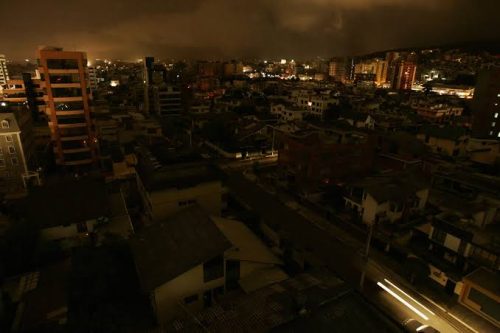
Ecuador turns to industrial power cuts to protect Mazar and keep homes from going dark.
Ecuador raises its 2026 growth forecast, but El Niño could spoil the outlook next year.
Cuenca retirees challenge medical and therapy changes at IESS senior center.
Fund Grace News