

















Fifty shades of gray
There are people alive today who genuinely cannot imagine a world without television. To them it is like asking somebody to imagine life without weather. Television simply exists and as far as we know has always existed. It lives on walls in airport lounges, above bars in Cuenca, inside taxis, inside telephones, and possibly one day inside the human bloodstream.
But when I was born, television was still a novelty and most people did not own one. Some families rented them by the week.
Some children watched through neighbors’ windows like Dickensian street urchins hoping for a glimpse of cowboys and Indians, cops and robbers, or soldiers fighting a war that had ended only a decade earlier and still echoed in every bomb-site soccer pitch and air-raid shelter play-house.
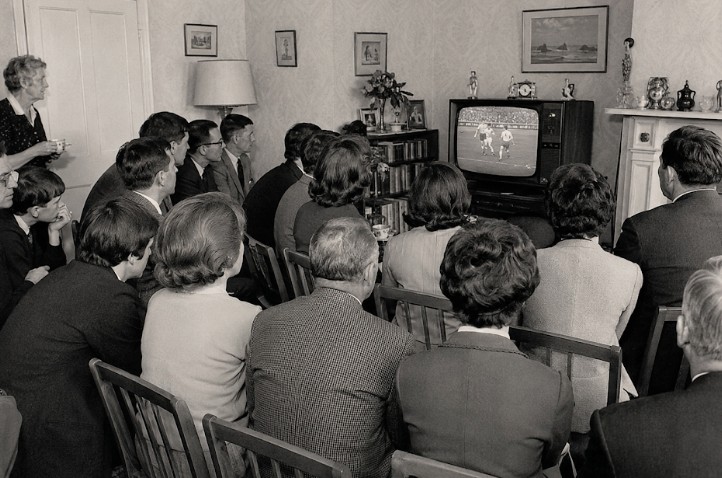 And if a family on the street did actually own a TV set, the neighbors would sometimes be invited in for major broadcasts like coronations, cup finals, and state funerals — lined up on dining chairs in rows as though the front room had briefly become an off-street cinema.
Television itself still had the air of an experiment and was still black and white.
This fact sounds trivial until one remembers that black-and-white television did not merely affect the appearance of programs but also affected how people thought about and remembered reality itself.
The news was black and white. Football was black and white and the only soccer team on TV that played in its natural colors was Newcastle, known as the Magpies for its black and white striped shirts.
The Queen always dressed in gray, except on her wedding day, of course. Winston Churchill appeared to belong naturally to a world of gray fog, gray suits, and gray skies. And President Kennedy was wearing a gray suit and riding in a gray car on a gray road on a gray day in a gray city called Dallas when he was assassinated. A gray day for humanity.
Even race looked different in those days. People were not white or black so much as pale gray or dark gray, and even if they were described as ‘colored’ they were just a darker shade of gray.
Memories themselves were stored in brains in monochrome. Many people of my generation recall the 1950s mentally in black and white, because much of what we saw of the world outside of our homes and classrooms arrived through a flickering cathode-ray tube sitting in a corner of the room.
The TV set was a piece of furniture, a commode, not electronics. It often stood on spindly splayed legs like a sideboard or cocktail cabinet. Some models had wooden doors that closed across the screen at bedtime. Families arranged armchairs around it with the solemnity of worshippers positioning pews in a chapel — which, in a sense, is exactly what the TV became.
The BBC in particular approached broadcasting with near-religious seriousness. Before television, BBC announcers sometimes wore dinner jackets and bow ties while reading the news on the radio, despite nobody being able to see them. This sounds absurd until one realizes the Corporation regarded broadcasting almost as a branch of the civil service mixed with the Anglican Church. One did not go on air–one addressed the nation.
Even as a teenager I was myself faintly suspicious of color television when it was about to arrive. It seemed slightly vulgar. Football perhaps would benefit. Cricket and lawn tennis and golf too, I supposed. But the news? Serious things surely belonged in black and white.
This was not entirely irrational in the context of the time. Black-and-white television possessed a curious authority. It forced concentration on voices, faces, words, and tone. Modern television news often resembles a branch of the entertainment industry, with dramatic graphics flying around like a video game designed by a committee of teenagers in Miami. In black and white, a man in a gray suit and tie sat behind a desk in a gray studio and solemnly informed you that the Russians had invaded Hungary in gray tanks.
And somehow that made it seem more believable.
England won the FIFA World Cup in London in 1966 entirely in black and white.
Younger readers now often imagine it in color because documentaries and modern football coverage have recolored the memory, and of course even in 1966 there were color photographs in magazines and books showing England players in red shirts. But to those of us who watched on live TV, the pitch was gray, the shirts were pale or dark blobs, and Wembley Stadium was seen in all its monochrome glory with gray flags flying from its gray towers.
Then color came along, and like many tech revolutions it immediately made the old world look incomplete.
The grass was greener. Not theoretically greener — genuinely, shockingly greener. Mexico in the 1970 World Cup looked like a different sport on another planet. Footballers appeared for the first time to belong to actual countries with flags, rather than playing for competing monochrome laundries. And once you had adjusted to color, black and white looked impoverished, even though it had seemed more than adequate five years earlier.
This pattern has repeated throughout my lifetime and perhaps yours too, if you are of retirement age.
People once insisted nobody needed a calculator in their pocket because there were calculators on desks. Nobody needed a camera built into a telephone because proper cameras already existed. Who on earth would want to read newspapers on screen, when you couldn’t use them later to light fires or make papier mache models of train layouts? Nobody needed a home computer any more than they needed a blast furnace in the kitchen. Nobody needed the Net or was it the Web, when you already had network TV and radio, for goodness sake.
Now I live in Cuenca, where a chola in the Feria Libre can hold up her phone and use automatic speech translation and AI while discussing avocado horticulture with a Canadian retiree in short pants large enough to shelter a family of alpacas.
The message may stay the same, but the medium keeps on changing.
What remains constant is that every generation assumes the technology it grew up with is the natural shape of reality itself. Young people today probably believe vertical video is normal and that human beings were always meant to communicate through small yellow faces weeping beside animated aubergines but one day they too will sound ancient.
They will sit in public liquid rehydration centers that used to be known as cafés complaining that the latest immersive holographic neural implants lack the warmth of primitive TikTok videos from back in 2026.
And some old fart in Ecuador will nod understandingly, watching a restored and colorized and downloaded episode of some black-and-white cowboy show featuring a masked man and his indigenous assistant named “Idiot” in Spanish on a rollaway tablet computer thinner than a sheet of kitchen foil.



Hogar Esperanza News

The Cuenca Dispatch

Week of September 20
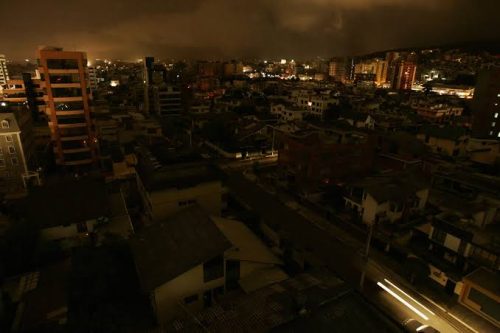
Ecuador turns to industrial power cuts to protect Mazar and keep homes from going dark.
Ecuador raises its 2026 growth forecast, but El Niño could spoil the outlook next year.

Cuenca retirees challenge medical and therapy changes at IESS senior center.
Fabianos Pizzeria News

Fund Grace News