










The cost of living for the typical Ecuadorian family is 90% less than for a U.S. family
An average family of four in Ecuador lives on $520 a month, according to the Ecuadorian Institute of Statistics and Census (INEC). In the United States, based on the U.S. Census service, that four-member family has an income of $4,950 a month.

According to census data, 64% of Ecuadorian families classified as middle class own their own homes.
The difference in the cost of living between the two countries is dramatic – even shocking,” says Universidad Central de Ecuador demographer Andrés Rodríguez, adding that comparisons with other Latin American countries show similar results. “The difference is even greater in about a third of the countries we looked at.”
There are many explanations for the vast difference, Rodríguez says. “The simplest is that Ecuador and most other Latin American nations have developing economies while the U.S. is well-developed with a mature economy. Another notable factor, and it’s a function of developing economies, is that a large percentage of Ecuadorians live in poverty.”
Based on INEC figures, a family classified as lower class in Ecuador has a monthly income of $280.
The cost-of-living difference shrinks slightly if you compare middle-class families in Ecuador and the U.S., Rodríguez says. “It is still 600% or 700% higher in the U.S.,” he points out, adding that some of the gap is explained by the definition of middle class in the two countries. INEC determines the designation in Ecuador while the Bureau of Labor Statistics defines it in the U.S.
In Ecuador, the average middle-class family lives on $925 a month compared to $6,100 in the U.S.
“There are important similarities in what is considered middle class in both countries,” says Rodríguez. “Families in both countries have plenty to eat, live in comfortable housing, have access to health care, transportation and can afford to send their children to public universities,” he says. “The rate of home ownership is almost the same, 64% in Ecuador and 65% in the U.S.”
Martin Ameson, a researcher at the London School of Economics who worked with Rodríguez on the cost-of-living project, says that a middle-class family in Ecuador “has all the basics and can enjoy a healthy and fulfilling life.” The cost difference, he says, is in what he calls “all the extras.” “The average middle-class household in Ecuador has one car. In the U.S., that family has 2.3 cars,” he says. “And then there are the services and products that are astronomically more expensive in the U.S., such as health care and a college education.”
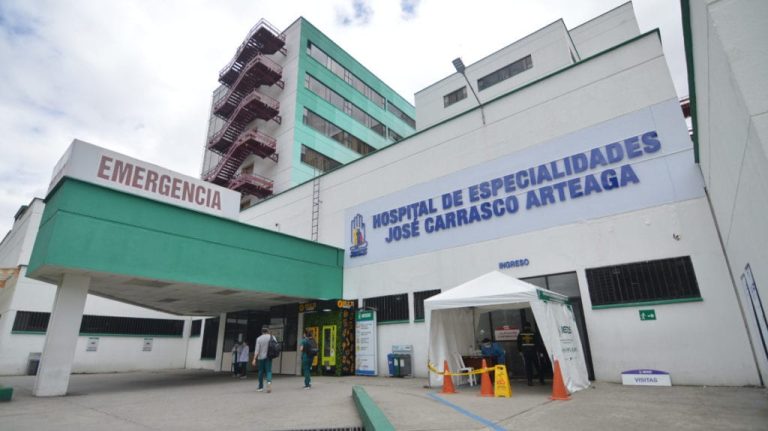
According to Ameson’s research, health care for a U.S. family costs almost 20 times more than for an Ecuadorian family. “This includes the cost of insurance as well as direct-pay for medical services,” he says. He compared the recent cost of the same CT scan in private hospital emergency room visits in Ecuador and the U.S. The scan cost $275 in Quito and $4,900 in Miami.
“It is no mystery why many middle-class Americans go broke paying for medical emergencies,” he says, noting that U.S. health care costs are an “outlier” even among other developed countries.
The cost of college is another very expensive proposition in the U.S., according to Ameson. “A public university education in the U.S. costs an average of 14 times more than in Ecuador,” he says, adding that the percentage of children in middle-class Ecuadorian families who go to college is only slightly below the U.S. average, 35% compared to 43%.
Beyond the “high-ticket” cost categories, Rodríguez points out that there is much more incentive to buy consumer products in the U.S. than in Ecuador. “Because they have more money, people simply have more stuff up there because they live in a consumer society that encourages consumption — and this includes pressure to buy to keep up with the neighbors,” he says, adding, “I know. I lived in Miami for seven years and was exposed to it.”