
















From algorithms to fiction: A Cuenca data scientist’s journey into the ethics of AI and loneliness
By Mario Navas
I’m Mario Navas, a data scientist currently working at Kriptos, a startup that uses artificial intelligence to classify and protect sensitive documents. I’ve been with the company for two years, focusing on research and development — designing and testing machine learning models to better understand unstructured text. It’s the kind of work I enjoy most: hands-on, technical, and full of difficult but rewarding challenges.
My journey into AI began more than 20 years ago, when I was an undergraduate student in Ecuador working on my thesis about artificial intelligence. That early research helped me during graduate school at the University of Houston, where I joined the data mining lab as a PhD student. Although I chose to return to Ecuador before completing the program, the experience shaped how I think about problems, models, and the intersection between code and real-world impact.
 In the years since, I’ve worked as a consultant in machine learning and collaborated with several startups, both locally and internationally. My career has always sat at the intersection of experimentation and practicality — trying to make AI not just smarter, but more useful. Eventually, I found myself in Cuenca, and what I thought might be a temporary stop became home.
But the idea for a novel didn’t come from a lab or a client meeting. It came from a conversation with my wife.
Like many in tech, I’ve spent years building side projects: apps, experiments, tools to test ideas. Most didn’t go anywhere. But one day, I found myself studying the rise of AI companionship apps — virtual services marketed as emotional support or even synthetic relationships. I pitched the idea half-seriously to my wife: “What if we built an AI girlfriend app?”
What followed was not a business plan — it was an ethical interrogation. As I tried to justify the business case, I realized I was sounding more like a character in a story than a real person. I was patching flaws, defending design choices, and avoiding the deeper question: Should we build this at all? That conversation stuck with me, and over the following days, a narrative began to take shape.
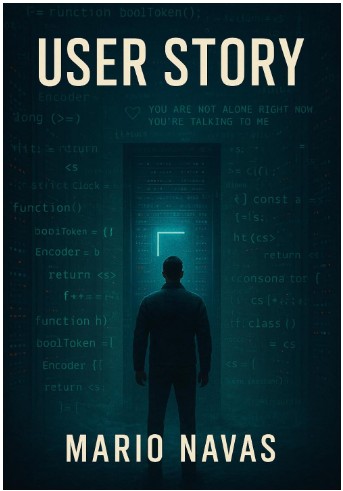
The result is User Story, a novel about a tech developer who creates an empathetic AI and must confront the human consequences of his creation. The story begins with a startup failure and evolves into a deeper meditation on loneliness, ambition, and the seductive power of artificial connection. I initially planned it as a script, then considered co-writing the novel with my wife — but I realized that would place a heavy revision burden on her. So I turned to something I know well: AI.
As someone whose first language isn’t English (I’m originally from Riobamba), I used AI as my writing assistant — checking grammar, flagging plot inconsistencies, and helping me tighten the narrative. It didn’t write the book, but it helped me finish it. The result might still have its rough edges, but the ending is exactly what I intended — and I hope it lands with readers the way I imagined it.
You can find the book on Amazon here: https://a.co/d/iuFpTex. If you’re interested in how empathy, algorithms, and moral uncertainty can collide inside a startup office, I think you’ll enjoy it.
One message I hope resonates through the book is this: technology needs more “positive patchers.” People who don’t just optimize for profit or growth, but who actively care about improving systems for the common good. We understand that gain is important for the economy. But we also need people — developers, researchers, product thinkers — who are willing to ask hard questions and push back when a product crosses an ethical line. People who fix not just the code, but the culture.
This book was a side project — written at night, between work, family, and a small zoo of pets. I don’t have a promotional budget or a team behind me. If the story resonates with you, I’d be deeply grateful for your help sharing it. Recommend it to a friend, post a review, or simply spread the word.
_________________
Mario Navas lives and works in Cuenca.



Hogar Esperanza News

Fabianos Pizzeria News

The Cuenca Dispatch

Week of September 20
Ecuador turns to industrial power cuts to protect Mazar and keep homes from going dark.
Ecuador raises its 2026 growth forecast, but El Niño could spoil the outlook next year.
Cuenca retirees challenge medical and therapy changes at IESS senior center.
Fund Grace News