













Highways remain blocked in Imbabura Province as talks begin; Most roads in Azuay are open
Talks between indigenous leaders and the government began Tuesday in Imbabura Province, which has become of the epicenter of the national strike called nine days ago by the Federation of Indigenous Nationalities. Mayor of Ibarra, Álvaro Castillo, urged negotiators to come to quick resolution.
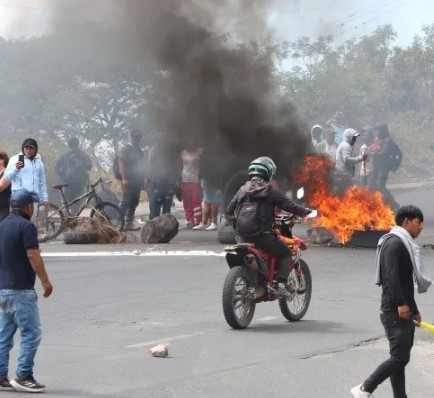
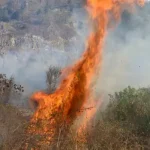
Indigenous protesters maintained roadblocks at several locations Tuesday in Imbabura Province.
“Our roads remain blocked and we are beginning to experience shortages of food, gasoline and cooking gas,” he said in an interview with Teleamazonas. “We desperately need a speedy solution to this conflict so we can return to normal. Most of all, we do not want a repeat of violence we witnessed over the weekend.”
A protestor was killed and 12 soldiers were injured as the government temporarily cleared the Pan American highway between Cotacachi and Otavalo to allow supply trucks to pass late Saturday night. In addition, 17 soldiers were taken hostage by protesters, four of which were released Tuesday badly beaten.
Although police and military personnel cleared the highway several times on Monday and Tuesday to escort supply trucks, the roadway was quickly reclosed by protesters.
On Tuesday, Government Minister Zaida Rovira said talks with more than 30 Imbabura indigenous organizations were ongoing but did say if progress has been made. “As we have said repeatedly, we are open to dialog but the president has made clear the issue of diesel prices is not open for discussion.”
Late Tuesday, Rovira said talks had been suspended and did not know when they would resume.
In Cuenca and Azuay Province, highways were open Tuesday night although the Cuenca- Molleturo-Guayaquil highway through the Cajas Mountains was reduced to one lane. The highway was blocked by protesters for two hours Tuesday morning before police and soldiers removed rocks and other debris.
North of Cuenca, in Cañar Province, highways were closed in several locations, blocking access north and to the coast.
As of 8 p.m. Tuesday night, ECU911 reported the following blockages:
• El Tambo: About 100 protesters closed the Cuenca-Cañar-Alausí road (E-35); at 6 p.m. Tuesday it remained blocked.
• Suscal: About 50 protesters obstructed the Zhud-Cañar-El Triunfo road (E-40); at 6 p.m. Tuesday it remained blocked.
• Cañar (Juncal-Yaculoma): About 100 people blocked the passage on the Cuenca-Cañar highway (E-35), using tires and stone material. This road also remains closed.
South of Azuay Province, the Pan American highway has experienced sporadic roadblocks by protesters at Saraguro. Authorities said the highway was open Tuesday night and was being monitored by police and soldiers.
On Tuesday, the Union of Indigenous Communities of Azuay said it is “losing its patience” at the lack of government response to the strike. “We have been very moderate in our response so far but this could change if the government does not reinstate the diesel subsidy,” said union president Gonzalo Morocho. “We are considering radicalizing our protests in the coming days.”



Hogar Esperanza News

The Cuenca Dispatch

Week of September 20
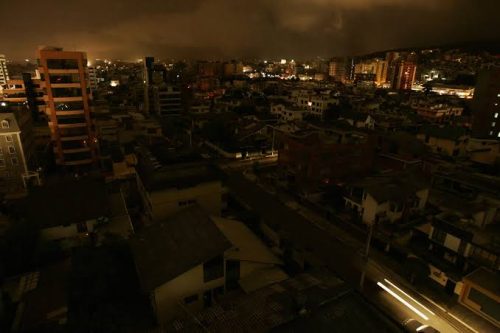
Ecuador turns to industrial power cuts to protect Mazar and keep homes from going dark.

Ecuador raises its 2026 growth forecast, but El Niño could spoil the outlook next year.
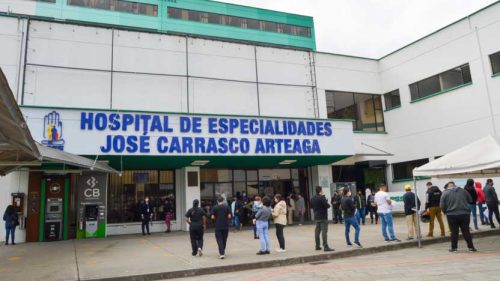
Cuenca retirees challenge medical and therapy changes at IESS senior center.
Fund Grace News

Fabianos Pizzeria News
