







How I learned to read the news after writing 3,500 stories
Sometimes readers leave a link in a comment under one of my columns in the belief or hope that it settles some kind of disputed fact or argument. Sometimes I follow these links in good faith, and all too often they lead to a disappointing website or social media account with no named owner, no editor, no email, and no address, or occasionally to a crank site whose banner promises revelations and whose online store sells the organic cure that doctors are supposedly hiding — if you send a few bitcoins.
My own education in navigating the news began some years ago when I retired from real work and took a part-time job working from home and writing daily regional and global news stories for an online publication with a worldwide English-language readership.
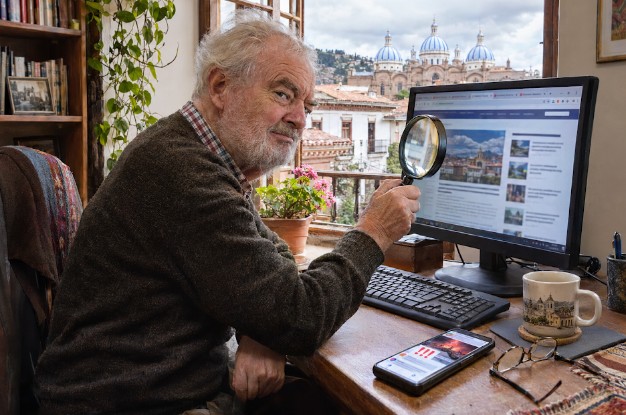 At first I had no idea where to start, and my instructions were simply to “use government information services as sources and public domain images with each story.” I no longer do that work, but over those years I produced about 3,500 stories on subjects ranging from wars, earthquakes and volcanoes to obituaries, vaccines, and movie reviews, a spread that teaches a person to find a reliable source quickly, since the volcanic eruption and the movie review tend to be due on the same morning.
The habit stayed with me, and the result is that I have about a hundred Google Chrome bookmarks for news sources, which may sound excessive for a retired civil servant in Cuenca, although they do occupy a lot less desk space than a hundred newspapers and do not have to be taken downstairs for recycling. They include government press offices, major news agencies, newspapers and broadcasters on different continents, and United Nations websites, whose publications can make one nostalgic for the brevity of an ETAPA water bill.
The point is not that I believe everything they publish. It is that I want to know where a story came from before deciding what to make of it, which mattered most when someone would occasionally write to me to let me know that the entire world has been deceived and that the truth is available exclusively on Instagram from a person using a pseudonym and represented by a picture of a cat.
Two questions are worth asking about any startling report: who is telling me this, and how do they know?
Begin with the first, which is whether the website identifies its owner, publisher and editor, and whether a real organization stands behind it, with contact details and people whose previous work can be examined, or whether its “About us” page merely explains that it is committed to freedom, truth and enlightenment. Admirable ambitions, no doubt, but they do not tell me who is responsible when a bit of research shows the photograph that illustrates the story turns out to be from another country.
Ownership matters because it helps us understand interests. A newspaper may belong to a billionaire, a broadcaster may be funded by a state, and an apparently independent grassroots campaign to allow cigar smoking on the Tranvia may be financed by an industry. None of these facts automatically disproves a report or a campaign, but I would like to know who is paying for it and why.
Nor should we confuse an anonymous social media operator with a journalist protecting a confidential source. In the latter case there should still be an identifiable publication taking responsibility for the story, whereas in the former we may have no idea who has selected the material, written the caption or invented the explanation.
At this point, an observant reader may notice that I write as Charlie Larga. A pen name is not evidence of dishonesty, any more than a full name is evidence of competence. The question is whether there is an accountable publisher, a body of work that can be examined and a way to challenge what has been written. On this point I can assure readers that the Editor knows exactly who I am and will not hesitate to dash off an email long before an article is published if he has a question about accuracy of information in a proposed article.
Additionally there is the benefit that there is only one Charlie Larga on the planet, as far as I know, so all Google searches using that name plus relevant keywords will lead to Charlie Larga articles.
The next thing to consider is the history of the publication, and whether it has been reporting for years or appears to have materialized last Tuesday with exclusive knowledge of a worldwide plot to exterminate the human race. Search for its name elsewhere, including criticism of it, instead of relying entirely on its own account of its achievements. Asking a website whether it is trustworthy is like asking a real estate rental agent whether the apartment is conveniently located.
Internet registration tools can sometimes show when a web address was registered, and archived pages may help establish what it used to publish. These are clues and not certificates of good character, since an old address can acquire new owners, a new publication can do excellent journalism, and privacy protection in a registration record is not proof that someone is hiding in a bunker.
Ownership looks different from one outlet to the next, so here are eight sources I return to often, with a description of each and of who owns it. These are not specifically recommended, but I have found all of them to be useful at times, so I provide them as examples.
MercoPress is a news agency based in Montevideo, Uruguay, that covers Mercosur and the South Atlantic, including the Falkland Islands, which makes it useful for English-speaking readers who want news from the southern half of this continent. Its website does not clearly state who owns it, and sometimes it seems to copy from elsewhere without attribution, so I treat it as a quick source of leads to current South American stories, and confirm the details elsewhere, which is the standard I am recommending to everyone else.
The Jamaica Information Service is an executive agency of the Government of Jamaica, established in 1956 to publish the government’s policies, programs and announcements. It belongs to the Jamaican state, and it is the place to learn what the government of that country says it is doing.
US Southern Command press releases come from one of the eleven unified combatant commands of the US Department of Defense, based in Doral, Florida, and responsible for military activity in the Caribbean, Central America and South America. The owner is the American government, and the releases show what the military says about its own operations in the region.
Reuters is an international news agency that forms part of Thomson Reuters, which is majority owned, at about 70 percent, by the Woodbridge Company, the holding company of Canada’s Thomson family.
The Associated Press is a not-for-profit cooperative founded in 1846 and owned by its member American newspapers and broadcasters. It has bureaus in more than ninety countries and publishes in English, Spanish and Arabic.
The BBC is a British public service broadcaster created by Royal Charter and funded mainly by a TV license fee charged to households. It has no shareholders and no owner in the ordinary sense, and it answers to the public through the charter.
Agencia EFE is Spain’s national news agency, founded in 1939 and the largest in the Spanish language, which makes it valuable for Latin American coverage. The Spanish state owns all of it through the holding company SEPI.
UN News is produced by the Department of Global Communications of the United Nations Secretariat, which means that the owner is the United Nations itself and that the reports describe the organization’s own work as well as the world’s.
Of the eight, three belong to national governments, one to the United Nations, one to a Canadian family company, one to a cooperative, one to the British public through a charter, and one declines to say. None is disqualified by this, and each tells me whose interests to keep in mind while reading the news.
The second question, how do they know, is the more important of the two.
If a story refers to a report, can I read the report? If it quotes a government minister, is there a full statement? If it announces a court decision, does it link to a judgment, or merely to another website which links to a video of a man discussing a screenshot?
A genuine document can also be used to support a thoroughly misleading conclusion. A lawsuit establishes that someone has made allegations, not that a judge has found them true, while a proposal is not a law and an announced project is not a completed power station. Ecuadorian readers should have little difficulty understanding the last point.
Government websites are useful precisely because they let us see what the government actually said, which is why my old instruction to use government information services was sound as far as it went, besides which government web sites are in the public domain, so there are no copyright issues to negotiate.
If a ministry announces the opening of a vaccination campaign, a visa requirement or an electricity restriction, I would like to read its announcement before relying on somebody’s recollection of a WhatsApp message casually recounted in the Coffee Grounds cafe five years ago.
But a government press release is the government’s account, and a minister announcing success may not be unbiased. The same applies to companies, campaign groups and international organizations, because a primary source gets us closer to the original material without relieving us of the obligation to examine it.
Here in Cuenca there is a further complication. An announcement that a service is available does not tell you whether a particular clinic has supplies that afternoon, or whether the relevant office closes for lunch. There is room for both an official announcement and a first-hand report from the waiting room, provided we explain what each actually establishes.
Next I look for confirmation, which is less straightforward than counting how many websites carry the story. Ten publications repeating the same agency report represent one reporting chain, and ten social media accounts repeating the same anonymous claim may represent no reporting at all. Repetition is good at creating familiarity, which can then be taken or mistaken for accepted truth when it is far from it.
What helps is independent evidence: another reporter making inquiries, a document that supports the account, or witnesses whose information can be checked. Different countries and editorial outlooks can provide useful perspectives, so although I would not necessarily give too much credit to sources from Qatar, China, Russia, North Korea, or Cuba, sometimes they do provide different perspectives.
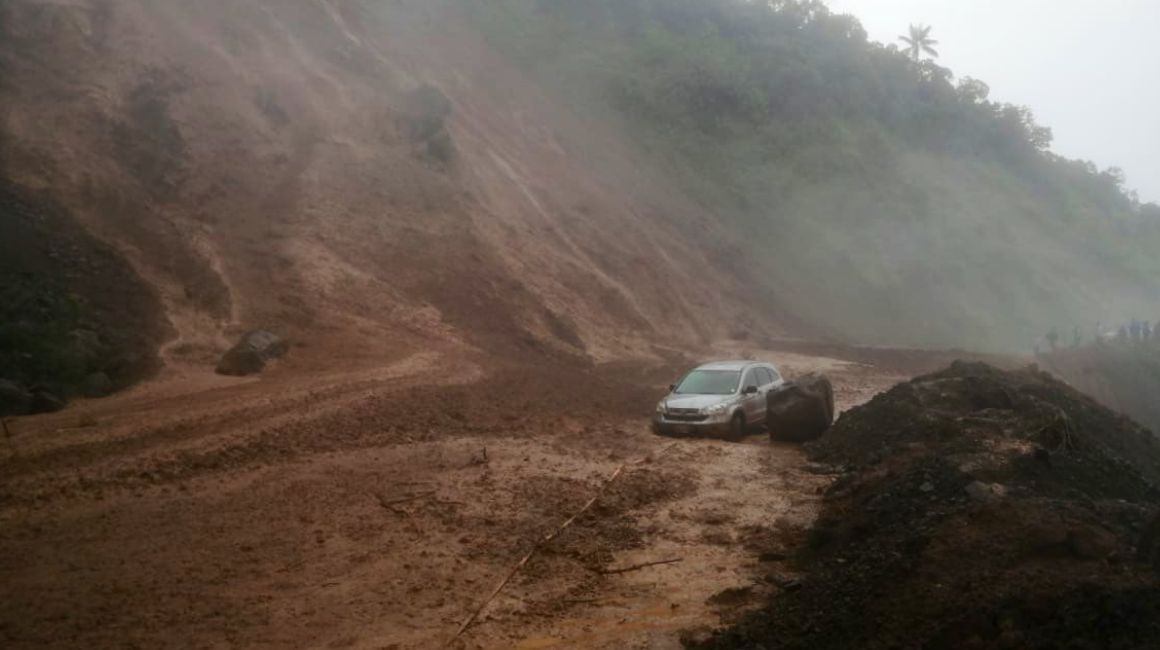
Dates deserve attention too, since an authentic photograph of a flood can become fake news when presented as yesterday’s flood somewhere else, and an old speech can acquire a new meaning when its date and surrounding sentences disappear. Search for the original image or full recording where possible, and check whether the headline describes what the article actually says.
I am also interested in what happens when a publication gets something wrong. Does it publish a correction and explain the change, or does it remove the post and proceed directly to its next revelation? A correction is an admission of fallibility, which is a quality shared by all bona fide news organizations.
Social media can carry valuable eyewitness material, especially in the era of cell phone cameras, and can draw attention to local stories larger organizations have missed. An unfamiliar reporter should be allowed to establish a reputation, and an established newsroom should be required to maintain one. What I would question is the idea that having no named editor, no disclosed ownership and no visible method of checking information makes a person reliable.
The more sweeping the claim, the more substantial the evidence needs to be. When every contrary fact is dismissed as part of a conspiracy, this is a bit like discussing Noah’s Ark with a Jehovah’s Witness, and cannot lead to a satisfactory compromise.
There is one final check: would I find this evidence convincing if it supported a conclusion I disliked? A story that makes me feel wise, vindicated or furious deserves an extra reading before I forward it to anyone.
My hundred plus bookmarks do not make me immune to mistakes, and I certainly don’t open every one before breakfast, but they provide a starting point beyond whatever an algorithm has decided will annoy me today. Readers who send me links are welcome to keep doing so, provided they are ready for my next question, which will be can I write to a named person who owns it if I have a question?
We are under no obligation to reach an immediate verdict on every alarming claim. Sometimes the most accurate thing we can say is that we do not yet know, which may not help to garner more social media clicks, but has the advantage of being true.