










How the ‘Living Forest’ concept makes the Sarayakus the guardians of life in the Ecuadorian Amazon
By Riki Cevallos
The Sarayaku are a group of original inhabitants of the Ecuadorian Amazon who have successfully resisted oil, mining and industrial agriculture in an area rich in natural resources. Here I explain why I chose them as the destination for my next excursion.
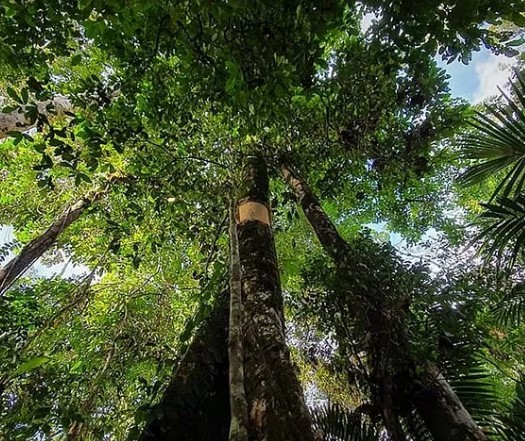
Sarayaku boasts one of the largest areas of untouched Amazon jungle in the whole Amazon basin. Photo: Vice
In 1992, when I was in college I wrote a paper about the Indigenous national movement in Ecuador, which was in its first years. I went to a big First Nations Gathering in Guayaquil, and I had the luck to meet the president of the national movement. He gave me a long explanation of why the indigenous ways to manage democracy was better than the West`s.
By that time I was inspired by some Latin American thinkers who were critical with the resentment of Native American thought against anything related to Western Civilization. So, the conclusions of my paper were that the ideals of the indigenous movement were great but they were incoherent because the values of freedom and respect for the human being and nature had already been stated by Western thinkers for many decades.
What? Did I Write that?
Yes, I did. And I do still agree that any kind of resentment against anybody does more harm than good. But now I think they were right in their assessment. Western civilization has proven not to be a good reference of how to live a sustainable, harmonious life. And yes, now I understand that those beautiful concepts do belong to their culture. Those ideas do not come from university educated indigenous young people, as I thought back in 1992.

Part of the philosophy of the Sarayaku is that houses should use natural materials. Photo courtesy of Ñan.
The Sarayaku created some years ago the Living Forest (Kawsak sasha) Manifesto. It’s a comprehensive guide for different spheres of human life. It’s a document full of ancestral wisdom, very well expressed in Western languages. Check out this extract:
The principles are to entertain and maintain community life and the family unit. Have a consolidated institutional organization and governance with collective decisions and gender participation. Practice and perpetuate traditional, cultural and spiritual knowledge in all freedom. Have adequate human settlements and infrastructures typical of the Kichwa culture. Ensure the food sovereignty of the population. Develop its own economy that is not based on the accumulation of goods but rather a solidarity economy, strengthening sustainability and sustainable production initiatives respecting natural and human resources, practicing Kichwa development technologies.
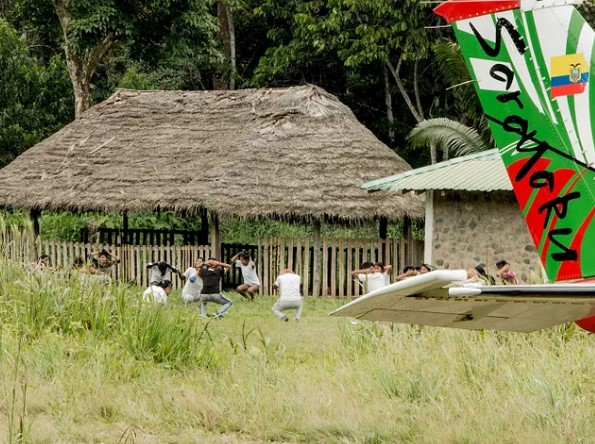
Sarayaku people are famous for being great planners. After they won a suit against the Ecuadorian government, instead of using the money earned, they chose to make the first indigenous community airline in the World. Photo courtesy of Vice.
Their spiritual / political value system is based on the concept of Sumak Kawsay. Sumak means (according to the Sarayaku Manifesto) “the inner thought, original driver of order, the harmony of the human being with nature and with the sacred spirits”. Sumak could translate as “Connected”, or “Centered”, or “Spiritual”. And Kawsay means something like “Lifestyle”.
According to the Living jungle manifesto, he way to implement and keep Sumak Kawsay happens by working in three areas: Spirit, Land and Community. The above extract is the definition of the “Community” aspect (Runakuna kawsay).
The political and legal structures of most countries in the World define development as economic growth. Usually measured with the Gross Domestic Product index (GDP), as a reference of how “developed” a country is. In the late 70’s, Bhutan was the first country in the World to uphold a different way to measure its progress with the introduction of the concept of “Gross National Happiness” (GNH).

Amazonian activist Nina Gualinga and her mother Noemi, in the Uhchuputu tree, a symbol of life for their culture. Photo courtesy of Alice Aedy.
A smarter way to define national priorities
The concept of Sumak Kawsay inspired a group of intellectuals, politicians and activists elected to write the new Constitution of Ecuador in 2007, to insert it as the new path for development.
The 2008 Ecuadorian Constitution designs Sumak Kawsay as the model towards which the state will guide society to. The ideals are quite inspiring, and it’s great to have those concepts in the constitution of a country. However, I don’t think many Ecuadorians, let alone politicians, even understand the depth of these concepts.
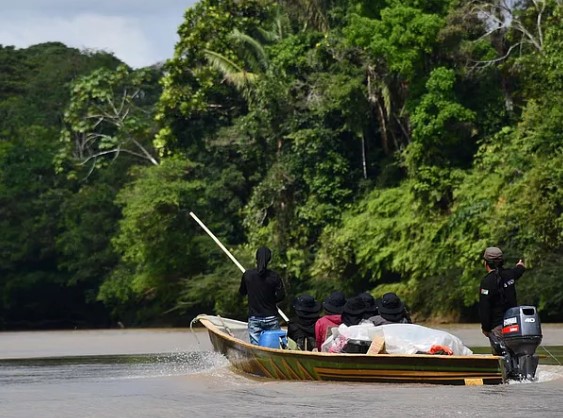
A group of young Sarayaku did an expedition following the steps of their ancestors, who traveled the big Amazonian rivers seeking salt. They went to an Indigenous identity encounter in Peru. Photo: Jose Santi.
Therefore, it’s not been easy to ground these beautiful ideals to legal bodies. For example, Ecuador has even today a Pharmaceutical health system that has nothing to do with Sumak Kawsay. The industrial agricultural model promoted by the Ecuadorian state is way different from the respectful, sustainable model proposed by Sumak Kawsay.
On the positive side, thanks to all this, Ecuador boasts the first constitution in the World to grant Rights to Nature. And not only that. It also forbids GMOs, guarantees Food sovereignty, meaning the rigts of people and communities to retain the right to manage their food system. Which is exactly what Big Ag doesn’t want people to do. In Colombia there has been unrest in the countryside as a consequence of seed laws that restricted the people’s right to collect and store their own seeds, forcing them to buy the commercial ones.
Jose Gualinga, former president of the Sarayaku people (center). To his left, Sabino Gualinga, his father, a shaman widely respected for his deep wisdom, and activist Patricia Gualinga (green dress). Jose Gualinga is one of the organizers of my excursion to Sarayaku land. Photo courtesy of Sarayaku.
The 2008 Constitution also grants the right of the people to maintain their own belief systems and their ancestral healing practices (Art. 57 and 362). That was not put in practice during Covid, but it was used by activist lawyers to make some resistance to the orders that came from overseas to force people to vaccinate and comply with the official ways to halt the virus.
In general, optimists tend to think that even if the principles of Sumak Kawsay have not really penetrated the state and its every day actions, at least it’s a good starting point to have all those concepts in our Constitution. But others complain. They see it as a double standard to have one vision in the Constitution and a different one in reality.
The Indigenous wisdom enters the political scene in Ecuador
In 1986, the National Confederation of Indigenous Nationalities was created. Probably they didn’t expect their work to grow so fast so that twenty years later, a new constitution would adapt as the main guiding light for the country an entirely indigenous concept.
So 30 years after the indigenous movement started, and I naively concluded that those beautiful concepts were borrowed from the West, I concluded once and again that those ideas are theirs. Or should I say, they belong to the Perennial Philosophy of the World’s ancestral wisdom. And so far they have shown to be much better than us Westerners in having an aligned vision for a sustainable future and a harmonious life today.
This year I started to organize excursions to support community projects in special places in Ecuador, Perú and Colombia. And I chose Sarayaku as a must point of visit. The itinerary I crafted with some valuable Sarayaku leaders is a mix of deep contact with nature, practical learning about their daily life, and conversations with community leaders.
The Sarayaku have brought their cosmovision and their organizational model beyond their borders. They have won court cases against the Ecuadorian government. And instead of spending the funds earned, they preferred to expand their network of community projects, to support their lifestyle aligned to the Spirit, their Sumak Kawsay.
Those of us who believe that Mother Earth has to be respected no matter what, have a big space for awe and amazement to see this intelligent people in their daily lives.
As opposed to what I used to think, there is a lot the West can learn from these incredible human beings.
If you are interested in knowing more about my excursions to Sarayaku territory, check www.RikiCevallos.com/Excursions or watch the video.
Credit: Reposted from Medium