















International Labor Day marches attract thousands
Friday’s International Labor Day marches in Quito, Cuenca and Guayaquil continued a long tradition of protesting government policies and demanding the ouster of the president. An estimated 12,000 marched in Quito while 2,000 to 3,000 joined marches in Cuenca and Guayaquil.
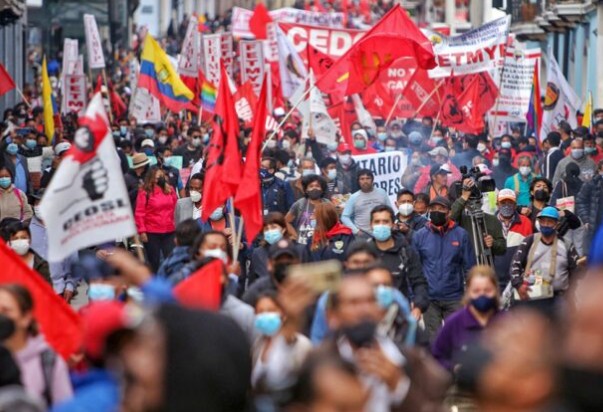
The International Labor Day march Friday in Quito.
Smaller May Day marches were held in Riobamba, Ibarra, Loja, Ambato, Loja and Machala.
With banners and chants, marchers denounced government efforts they claimed reduced the rights of workers, including new rules allowing workdays of more than eight hours without overtime pay. Other protest issues included the lack of full employment, the rising cost of living, poor public health care and high crime rates.
President Daniel Noboa was targeted frequently as “Fuera Noboa, fuera” signs were prominent in all marches. In Cuenca, members of the National Union of Educators carried a banner titled “Heading for zero,” showing a chart of the president’s declining poll numbers.
Although all marches were peaceful, some protest leaders criticized the large number of police and military personnel posted at public buildings and in parks. “The heavy-handed deployment of troops as well as the display of armed military vehicles is clearly an effort to intimidate a peaceful parade,” Geovanni Atarihuana, president of the Unidad Popular movement said in Quito. “It’s a reflection of how this government attempts to restrict and control freedom of speech.”
He added: “The emphasis on police and the military is a smokescreen to cover up deteriorating conditions in Ecuador.”
In addition to national and regional labor unions, environmental, womens’ rights, indigenous, teachers and health care organizations joined the marches. In Cuenca, members of the Cabildo por el Agua carried banners attacking new government rules allowing faster approval of mining projects while public health doctors and nurses protested the government decision to fire 1,300 public hospital employees.
Many of the groups participating in the marches plan to join a “national day of mobilization” on May 28.