












Is Correismo ‘unraveling’? Internal leadership disputes go public as party expels an Assemblyman
”It hurts to see what Citizens Revolution has turned into,” Guayas Province Prefect Marcela Aguiñaga said Thursday. “The movement we built with a commitment of hope for all Ecuadorians is today dominated by big egos and personal agendas.”

Guayas Province Prefect Marcela Aguiñaga
Aguiñaga’s comments, posted on X and repeated in a Friday interview, highlight the internal conflicts that have broken out in the Citizens Revolution movement since Luisa González was defeated in the May presidential runoff election.
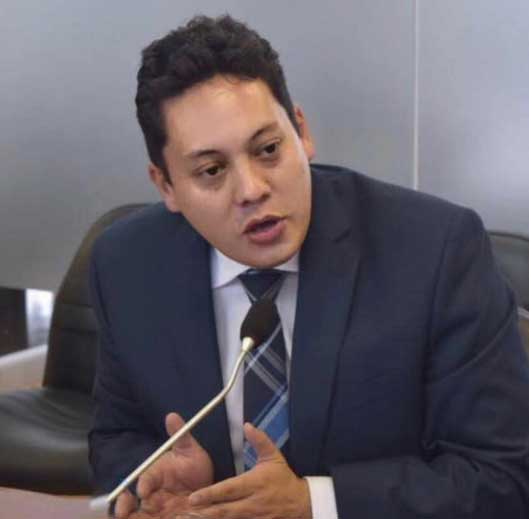
On Thursday, the party formally expelled Sergio Peña for supporting President Daniel Noboa’s National Security bill currently being considered by the National Assembly. RC leaders González and Andrés Arauz, who announced the expulsion, called Peña a “traitor and saboteur” in comments following the party decision.
“He lied to the country, betrayed our movement’s principles and wanted to undermine the Revolution from within,” RC said in a statement. “We will not tolerate traitors, no more bad apples, and those who betray us will be separated from the party.”
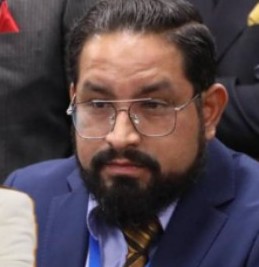
Sergio Peña
Peña and others, claim the order for his suspension came directly from Rafael Correa, party founder and fugitive from justice in Belgium. “He is the foreman of the hacienda, and he delivers all the orders,” Peña said Friday. “He punishes the campesinos who break the rules on the farm.”
Correa responded to Peña, calling him “a piece of human vomit.”
Aguiñaga, who has been a member of RC for 18 years, serving as vice-president of the Assembly and party president, is one of several prefects and mayors who have broken ranks with RC leadership. “The movement is approaching a breaking point due to the anger at losing the election,” she said. “Today, instead of positive guidance from the top, we are only getting threats and insults.”
In addition to Aguiñaga, Guayaquil and Quito Mayors Aquiles Álvarez and Pabel Muñoz, have criticized party infighting and lack of leadership. Both have recognized Noboa’s victory over González, saying it is time to focus their attention on their cities, not on party politics.
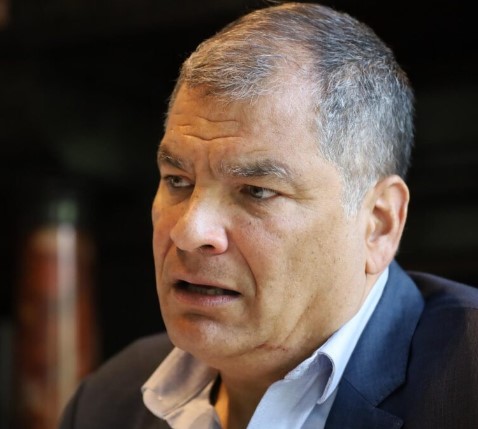
Rafael Correa
With the expulsion of Peña, RC has lost two Assembly members as well as its 67 to 66 advantage over Noboa’s Democratic Action party. Mónica Salazar resigned in early May, citing “intimidation and threats” from party leaders. Some RC members say three to four other Assembly members may leave the party in coming weeks.
In an interview on Teleamazonas Friday, Peña claimed that RC will never control the government as long as it takes orders from Correa. “Everything is about obeying and protecting Correa and three or four other party members,” he said. “No one is allowed to think independently and diverge from the party line. They act like they are running North Korea.”
In his interview, Peña also claimed that some RC members have “connections” with criminal organizations.
Former RC strategist and political analyst Jacobo García says that the movement continues to experience “shock and non-acceptance” following the presidential defeat. “Rafael Correa is extremely angry and this anger is trickling down to his acolytes in Quito,” he said, saying Correa is the party “pope” while González and Arauz are his “bishops.”
García says that after an electoral defeat, most parties initiate a process of internal renewal and healing to rebuild their strength for the future. “With RC, however, there is no internal discussion or even healthy debate about the path forward, only orders and threats from thousands of miles away.”
The central problem, says García, is Correa. “The party cannot win with him at the helm,” he said. “He is the chief reason they lost the last three elections and since he doesn’t seem to understand this, it is up to party leadership on the ground in Ecuador to send him his retirement papers.”
García added: “Unfortunately for the RC and the center left movement in the country, this is not happening.”