
















Israeli and UAE intelligence will assist Ecuador in its war on drug cartels, Noboa says
President Daniel Noboa said Thursday he had sought assistance from Israel and the United Arab Emirates to combat the drug cartels that are terrorizing Ecuador. The iron-fisted 37-year-old who won re-election last month said Israel and the UAE had agreed to provide intelligence “to help” fight cocaine traffickers.

French President Emmanuel Macron shakes hands with President Daniel Noboa during ceremonies marking the 80th anniversary of the end of World War II in Europe on Thursday.
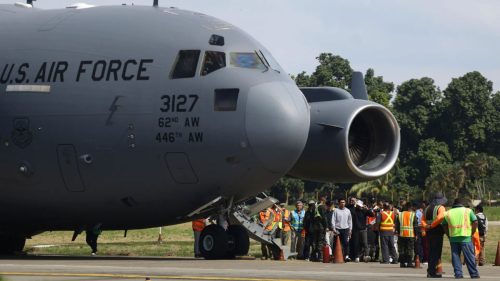
Ecuador is averaging a killing every hour in its coastal provinces since the start of the year, as cartels battle for control over cocaine routes that pass through the nation’s ports. During presidential campaigning, Noboa suggested U.S. special forces might be deployed to Ecuador to tackle the violence, and floated legal reforms to allow a U.S. drug surveillance base to reopen.
Over the past week, Noboa travelled to Italy, Spain, Britain and France − some of the European countries experiencing rocketing cocaine consumption − to develop further security alliances, as well as to Israel and the United Arab Emirates. He said he spoke to Israeli and Emirati leaders about “cooperation on security at ports and borders (…) since the violence is there, in the areas or on the routes to the ports.” But he admitted that “there is not much interest so far” from foreign powers in establishing military bases in the Andean country.
In March, Noboa announced a security alliance with Erik Prince, founder of the controversial American security company Blackwater, whose employees killed and wounded dozens of civilians in Iraq. Asked about the pact, Noboa said Prince was merely acting in a “consultancy”
After a close-run race in the first round of Ecuador’s election Noboa easily defeated left-wing lawyer Luisa Gonzalez in April’s run-off. While Gonzalez had pitched herself as a political everywoman who would improve the lot of poor Ecuadorans, Noboa − heir to a banana export empire − staked his political fortunes on his war on the cartels.
In March, he announced a preemptive amnesty for security forces fighting gangs in the violence-wracked port of Guayaquil, despite allegations of gross rights abuses by the military. His tough talk appeared to pay off, with the incumbent winning by 11-points over his rival. Gonzalez rejected the results as fraudulent, without providing proof of her claim. Noboa said his win was a “vote of confidence” in his policies.
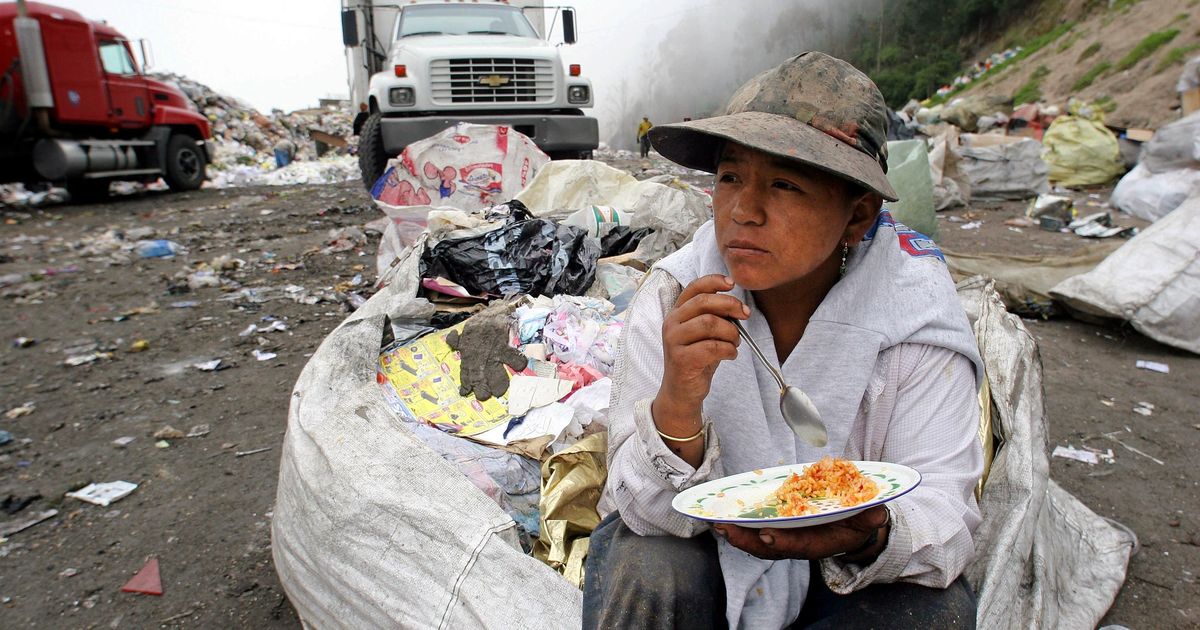
He faces a tough task to unite a country grappling with its dramatic decline in fortunes. Rampant bloodshed has spooked investors and tourists alike, fueling economic malaise and swelling the ranks of Ecuador’s poor to 28% of the population.
“More than anything, we need to attract foreign investment,” Noboa said. But in order to access bond markets, the government needs to lower his country’s risk factor. Noboa assured that Ecuador’s economic fundamentals were “not bad,” citing low inflation and record bank deposits, among other indicators. “Our focus is job creation,” he said.
________________
Credit: Le Monde