










Jan Topic campaign accuses Noboa’s party of ‘dirty tricks’; Noboa acknowledges blackout ‘hardship’; Development Bank delivers an anti-crime loan
SUMA party president Guillermo Celi is accusing the Daniel Noboa presidential campaign of “dirty tricks” for attempting to disqualify Jan Topic, the party’s candidate. “The Electoral Council (CNE) has unanimously rejected the claims against our candidate and now Noboa’s people ware working behind the scenes to take the case to the Contentious Electoral Tribunal (TCE),” Celi said.
Celi claims that Judge Ángel Torre, who heads the TCE, is a “bishop” of the government and has, in the past, supported its objectives. “This is not simply an issue of justice or rights, but a political one as well,” Celi says, pointing out that Torres’ son-in-law is provincial director of Noboa’s Democratic Action party in Loja.
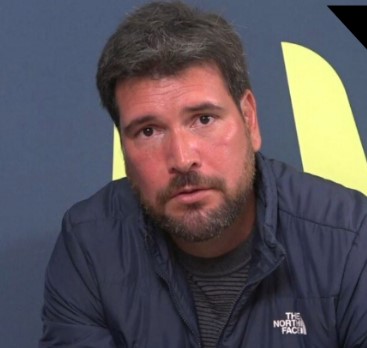
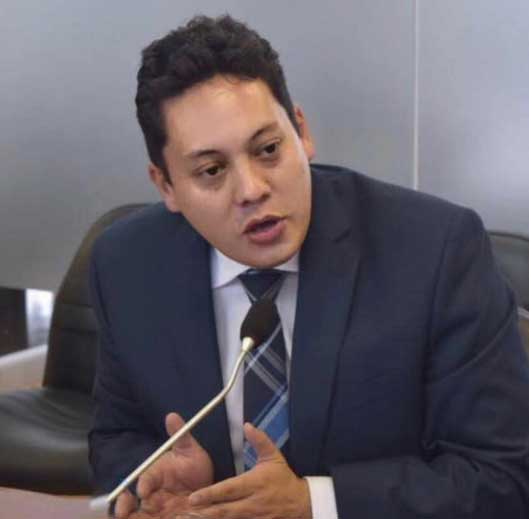
Presidential candidate Jan Topic
Topic’s presidential candidacy was challenged two weeks ago based on contracts he allegedly had with the city of Manta. Under the law, a presidential candidate is prohibited from having contracts involving financial transactions with any public entity.
Topic claimed the contracts for security services are not in his name, a position accepted last week by the Electoral Council.
According to Celi, Topic is the presidential challenger that Noboa fears most. “The polls show Jan Topic is the only candidate who can defeat the president and that’s why they want him off the ballot,” Celi said.
According to social media posts, Noboa was angered last week by comments made by Topic. In an interview, Topic called Noboa “a rich boy who has not worked a day in his life, and who was given the country to play with.” Topic also claimed that Noboa “has no plan and no ideas” and that the country is paying the price.
Noboa acknowledges blackout ‘hardship’
President Daniel Noboa said Tuesday that the government is carrying out “many urgent measures” to reduce and end power blackouts. Speaking at an event in Manabí Province, the president acknowledged the “terrible hardship” blackouts have imposed on Ecuadorians.
Noboa said blackouts are the result of inaction on energy projects by previous governments combined with the worst droughts in the country’s history. “We never thought this would be easy, but it is important that citizens know we are taking actions to achieve the fastest resolution possible to the crisis,” he said.
He added that the Energy Ministry will release a three-week blackout schedule on Thursday. “This will allow people to make plans further in advance, not based on schedules announced every week.”
Development Bank delivers anti-crime loan
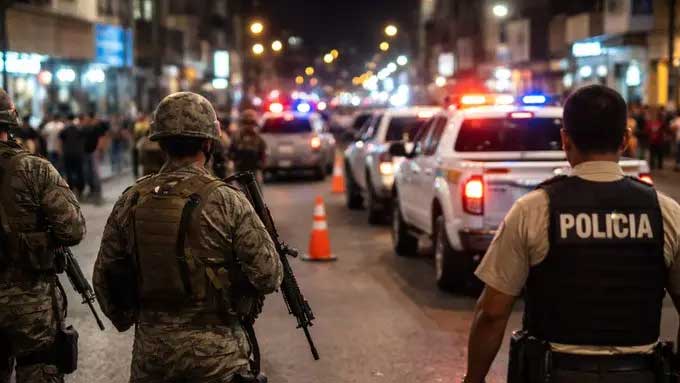
The Inter-American Development Bank (IDB) has approved a $150 million loan and a $5 million grant to support Ecuador’s fight against organized criminal groups. In addition to crime prevention, the loan focuses on assisting vulnerable populations affected by crime.
The IDB loan, called the Program for the Prevention and Response to Violence and Crime in Ecuador, provides funding to “strengthen security management,” particularly in the area of intelligence gathering.
The IDB said that despite current anti-crime initiatives, the country’s lack of fiscal stability has hampered efforts to develop a “comprehensive plan” to fight transnational drug crime. “The Bank recognizes the difficulty the country faces confronting multiple challenges and this funding is intended to assist in the development of a targeted response,” said IDB President Ilan Goldfajn.
He added: “This is an innovative operation to enhance the country’s effective presence in critical areas, protecting vulnerable communities, preventing recruitment of the youth by criminal elements, and strengthening financial and forensic intelligence to reduce financial crime.”