









Local communities react angrily as Ecuador restricts border crossings with Colombia and Peru
Ecuador has closed all but two of its border crossings with Colombia and Peru for “national security reasons.” The measure was announced Friday by the Ministry of Foreign Affairs on official social media accounts.
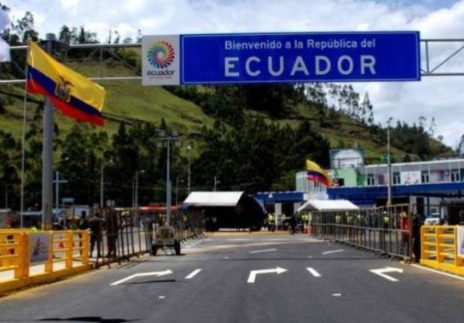
The border crossing with Colombia, at Rumichaca, is one of only two that will remain open under a new government order.
The move has sparked criticism in several communities that will lose official border crossings and criminologist say it will have little effect on reducing the flow of illegal drugs or the access of criminal gangs to the country.
The government said the restrictions are part of President Daniel Noboa’s security strategy amid rising violence linked to drug trafficking, smuggling and using informal crossings in border areas. The government said the Rumichaca crossing on the northern border with Colombia and Huaquillas on the southern border with Peru will remain open.
Prior to the new policy, there were nine crossings controlled by police, customs and immigration officers.
Situated between the world’s two largest cocaine-producing countries, Ecuador shares a long and vulnerable border of about 370 miles with Colombia to the north and nearly 930 miles with Peru to the south, linking Pacific and Amazon regions. These border areas, marked by rivers and dense forests, are highly permeable and include numerous clandestine routes frequently used to traffic drugs, weapons and explosives. The routes are also used by illegal gold mining operations.
According to the foreign ministry and security authorities, the decision aims to concentrate the movement of people and goods at crossings with greater control capacity, strengthen migration and customs oversight and reduce risks associated with illicit activities operating in areas with limited state supervision.
Peru’s Ministry of Foreign Affairs said it has contacted its Ecuadorian counterpart to “adopt measures to manage the current situation and jointly strengthen the fight against transnational organized crime and the control of irregular migration,” according to Peruvian news organization RPP.
Colombia questioned the border crossing closures, saying it will “unnecessarily restrict access of citizens of the two countries.”
Officials in the communities where border crossing are closed reacted angrily to the announcement. “We received absolutely no advance notice about this,” said Verónica Íñiguez, Loja Province National Assembly member. “Closing the crossing at Macara will have a profound impact on people on both sides of border. People depend on the access for business and tourism and other economic activities. In addition, many families have members in both Peru and Ecuador and now they will have to travel 100 kilometers even though they live only a few hundred meters apart.”
The mayor’s office in Macara has asked the government for “clarification” of the new policy and has asked for an exception to the closure.
Former government security advisor Leste Cabrera also questioned the closures and said its effect could actually be counterproductive. “If we are talking about citizen security, this measure is not going to reduce crime, because drug trafficking, smuggling and illegal mining do not pass through the legal border crossings, it goes through the hundreds of illegal crossings that Ecuador does not police or control,” he said. “We might even see the number of these routes increase.”
An unstated objective of the closures, Cabrera says, is to reduce the movement of Venezuelan refugees through the country. “This will not work either,” he says. “Word will spread among traveling migrants and they too will use the informal routes into the country.”
He added: “I am afraid this new policy was not well considered by the government.”