















Making sense of bird flu; Although not an imminent danger, it could pose a deadly threat in the future
By David Leonhardt
Good morning. We’re covering what you should know about bird flu — as well as South Korea, Bangladesh and California.
Birds, cows, people
 By now, you’ve probably seen some alarming headlines about bird flu, and you may be wondering how worried you should be. I understand the uncertainty.
On the one hand, we have all spent decades hearing alarming stories about strange viruses — like MERS, Ebola, dengue and Zika — most of which don’t end up having a big effect on the U.S. On the other hand, one of those recent viruses turned into the life-altering Covid pandemic.
In today’s newsletter, I want to help you make sense of bird flu, using four questions.
1. What is bird flu?
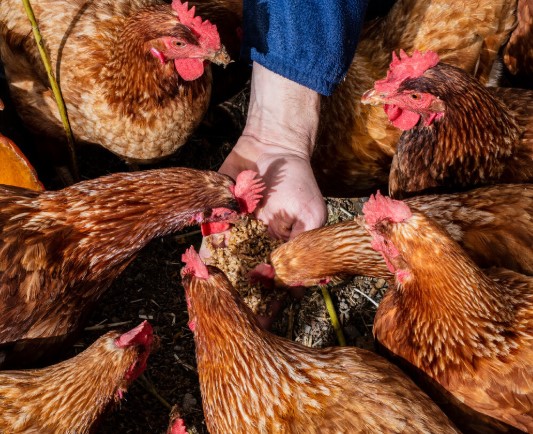
It’s an influenza virus officially known as H5N1 (and sometimes called avian flu). It has been circulating for decades, and it attracted global attention in the late 1990s after an outbreak among chickens in southern China.
That outbreak was especially worrisome because it included the first documented human cases of the virus. At least 18 people were infected, six of whom died.
 2. Why the recent concerns?
The virus has recently expanded in two ways: across regions and across species. Rather than being concentrated in Asia, bird flu has moved across much of the planet. And it has infected a wider variety of animals, including mammals. (This Times story explains.) Dairy cows in many parts of the United States have tested positive.
Most concerning, at least four people have tested positive without evidently having had contact with a sick animal. One is them is a teenager in British Columbia who has been in critical condition. These infections raise the possibility that the virus can move from one human being to another, rather than only from an animal to a person. Human-to-human transmission can lead to much more rapid spread of a disease.
“I’m more worried about bird flu than I have been for a really long time,” Jennifer Nuzzo, director of the Pandemic Center at the Brown University School of Public Health, told me.
3. What are the reasons to be hopeful?
There are a few. First, it’s not yet clear whether those four recent cases stemmed from human-to-human transmission. Even if they did, such transmission might remain rare, involving extremely high levels of exposure to the virus. “Right now, H5N1 does not spread easily between people,” said Caitlin Rivers, an epidemiologist at the Johns Hopkins Center for Health Security.
Second, H5N1 seems to have become less severe in human beings recently. The reasons aren’t clear, Nuzzo says, but one possibility is that a different flu that emerged in 2009 — H1N1 — may confer some immunity for H5N1. Millions of people have since had H1N1.
As my colleague Apoorva Mandavilli says, “Very few people known to be infected with bird flu in the United States have become seriously ill, and none have died.” Still, she notes that viruses evolve, often in ways that lead to more infections. And the upcoming winter could give bird flu more opportunities to mix with seasonal flu and mutate. If bird flu were to spread widely, even a low fatality rate could mean tens of thousands of deaths in the U.S.
4. How can the U.S. reduce the risks?
More testing — of birds, cows and farmworkers — would help. “We know very, very little about how far this virus has spread and how many people and animals have been infected,” Apoorva said. Testing could allow farms to isolate infected animals and people.
What about a vaccine? A vaccine for bird flu exists, but the supply is modest. Nuzzo believes the government should help expand production and make the vaccine available to farmworkers who want to receive it. More research on the vaccines also seems important, especially if the virus is evolving.
The bottom line
Rivers, the Johns Hopkins epidemiologist, recently published a book on preventing outbreaks called “Crisis Averted.” In it, she argues that one of the most effective public health strategies is honesty: Experts should level with people, rather than telling selective truths intended to shape behavior in paternalistic ways (as happened during Covid).
When I spoke with Rivers this week, I asked for some truth-telling about bird flu. “As an epidemiologist, I’m worried,” she said. “I’m not worried as a mom or a member of my community. It’s not a threat that is imminent.”
But H5N1 bears watching. It is changing and spreading in uncertain ways, and it already presents a threat to many animals and to people who work closely with them.
________________
Credit: New York Times Morning Letter