














Martial law in the suburbs
Most mornings in Cuenca I drink my coffee, listen to the dogs on the corner sharing the latest canine gossip, and wonder why two presidents on two different continents have both decided that soldiers in the streets are the answer to everything. 
Trump talks about martial law as if he is choosing a new golf resort. Noboa talks about it because he is dealing with a real problem, but the difference is simple. Trump has a Supreme Court that opens doors for him. Noboa has a Constitutional Court that keeps slamming them shut.
Trump knows that if he calls in the troops, his Court will invent a legal theory to make it respectable. Noboa knows that if he tries the same trick, the judges will wave a legal stop sign. This is why Trump speaks with swagger while Noboa marches against his own judiciary. One man pushes against a system that licks his hand, but the other pushes against a sharp-toothed system that snaps it off.
 What is striking is how voters respond. In the United States people are numb. After years of political theatre and news loops about carjacking in cities and school massacres, Americans talk about militarizing their own streets the same way they order a six-incher with Caesar dressing at Subway. The debate is more about whether the idea might work.
Ecuadorians are not numb. They are worn out. Noboa declared an internal armed conflict, sent the military into prisons, raised taxes, cut ministries, but there is still no sign of a falling murder rate. People want safety, but they also see the cost. They see empty drug drawers in government pharmacies, impending taxi price hikes, the police tape around yet another crime scene. So when Noboa asked for more power to fight crime in the referendum, voters said no, not because they like the gangs, but because they do not trust blank checks.
Here the comparison becomes less tidy. In Ecuador there is a grim logic to Noboa’s escalation. The police are outgunned. Mayors, prosecutors, journalists and police chiefs have been assassinated. The gangs operate like small armies. When a president calls them terrorists, he is not playing a word game. You may disagree with Noboa’s methods, but you can understand the underlying mathematics of murder.
The United States is somewhat different. There are assassinations and people take potshots at presidents, but they tend to come from among the unstable and the unhinged rather than from cartels establishing control over courts, ports, and dockyards.
American crime is violent, but it is rarely coordinated. You can put National Guard troops on the streets if you want, but the streets themselves are mostly empty. The suburbs stretch for miles. The crimes happen indoors, in parking lots, on basketball courts, or in schools and college campuses. It is hard to see what a footsoldier with a rifle does to prevent crime in a country built around interstate highways and parking lots. I suppose they can help to enforce curfews by setting up roadblocks, but that is about it.
Which raises another question. If Americans were handed a referendum ballot on martial law, how would they vote. Nobody knows, because the United States has no national mechanism to put that question on a ballot. The country that loves to talk about the consent of the governed does not have a tool to measure it directly. It is an odd contrast with Ecuador, where voters can and do tell presidents exactly what they think of their plans.
This is even stranger when you consider the national mythology of the USA. Many Americans believe the Second Amendment that allows personal guns exists so that citizens can overthrow a tyrannical government. It is a romantic idea, passed down like a family heirloom.
Yet there is no peaceful way to express the public will on matters as serious as policing by soldiers. The system relies on elections held every few years, and on a Supreme Court that often feels like a modern Delphic oracle, issuing rulings that read like riddles. Everyone claims to understand them, yet nobody agrees on what they mean.
Which leads us right back to the original divide. In Ecuador the problem is capacity. The police cannot deal with the gangs without backup, so the government calls in the military. In the United States the police forces do not seem to be outgunned by cartels, but they cannot handle demonstrators at the Capitol effectively. They are stretched, and maybe incompetent at times, but they are not collapsing. Martial law seems like a Hollywood sci-fi movie fantasy rather than an emergency response to organized violence.
Two countries, two crises, two very different realities. One president reaches for the armed forces because he has no choice. The other reaches for soldiers because it pleases his supporters. And voters in both countries have a pretty good idea of what they are in for, regardless of whether they are allowed to vote on it or not.



Hogar Esperanza News

Property Manabi

Fund Grace News

Fabianos Pizzeria News

The Cuenca Dispatch

Week of September 06

U.S. sinkings of Ecuadorian fishing vessels trigger court scrutiny after 28 crew members are released.

Cuenca targets a November launch for its first new international link to Chiclayo.
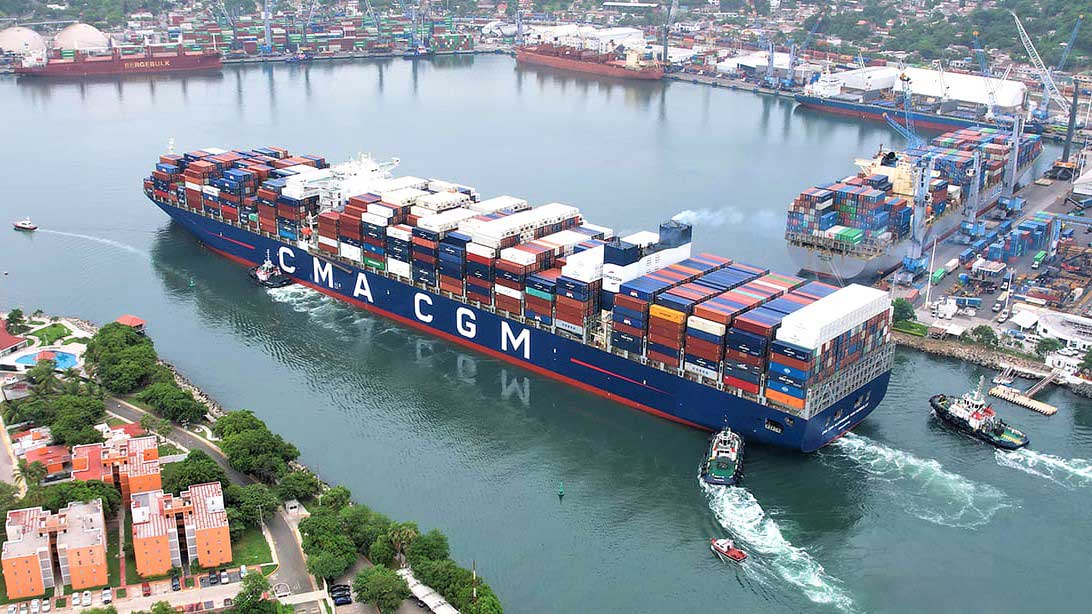
Exports hit a quarterly record, but Ecuador’s import bill is rising even faster.