












Measles vaccination campaign is underway; New mining law faces challenges; Kimsacocha protected area is expanded; Galapagos visitor fees defined
Curious? –
(De El Mercurio del martes, 24/2) El MPS inicia una campaña de vacunación contra sarampión (The MPS launches a measles vaccination campaign) – Responding to the warning issued by the Organización Panamericana de la Salud (OPS) about the exponential increase in measles cases in the Américas and the loss of the región’s status of elimination of the disease, Ecuador has started a massive vaccination campaign. María José Pinto, VP of Ecuador and in charge of the Ministerio de Salud Pública (MSP), announced that the Government has invested $2,600,000 in 460,000 doses of the safe and free vaccines. The campaign prioritizes the first dose for babies from 6-11 months, and will supervise that the booster be completed by 6 years of age.
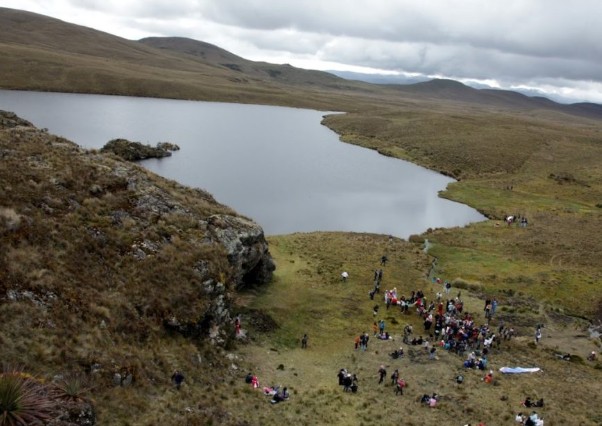
New land purchases by the city of Cuenca expands the Kimsacocha protected area.
(De El Mercurio del martes, 24/2) 100 hectáreas se sumarán a la protección de Kimsacocha (100 hectares will be added to the Kimsacocha protected area.) – The manager of the City Business ETAPA EP, Verónica Polo, was interviewed about the conservation actions and other environmental projects in Cuenca canton. She reported that about $280,000 was raised at an urban music concert during Carnaval which allowed the purchase of several properties. The first cost $180,000 and contains over 1,000,000 sq. meters. The land is located in the watershed of the Río Yanuncay in the Can Can and Pimo sector, in a well conserved zone at over 3,500 meters in altitude. This limits human activities, and is also near Kimsacocha. ETAPA’s goal is to consolidate property in this strategic area where ETAPA EP already owns land. She answered a question about what happened to $3 million given during Rafael Correa’s term to acquire land for conservation. ETAPA EP invested about $1 million to buy land in Kimsacocha, but there were problems related to land ownership, and the other $2 million couldn’t be used since the agreement supporting the project ended in 2022 and wasn’t renewed.
To date, about $2.5 million has been invested. In the last 2 years, ETAPA EP bought more than 1060 hectares and is currently finalizing the payment for 330 more, with another 100 hectares to be bought with the proceeds from the concert. ETAPA has a technical process for prioritizing which lands to buy. One of the main criteria is the quantity of wetlands per sq. meter as well as the ownership of the lands. Prices per hectare range from $400 to $1,000.
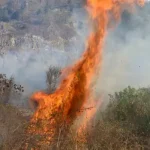
She was also asked about the progress of the new wastewater treatment plant in Guangarcucho which is at about 7-8% complete. The project will take about 2 years at a cost of $68.5 million. She was asked about ETAPA’s position on the reform to the mining and energy law, especially as it relates to the Loma Larga mining project in Kimsacocha. ETAPA is worried that the requirements for the mining concern have been made more flexible. MIning always generates environmental impacts. It opposes mining in the zone as do Cuencanans defending the páramo.
(De El Mercurio del miércoles, 25/2) Cuenca ya tiene vía libre para volar a las Islas Galápagos (Cuenca now has green light to fly to the Galapagos Islands) – The Mariscal La Mar de Cuenca Airport passed the technical evaluation by the Agencia de Bioregulación y Control de Galápagos (ABG) to operate flights to the Galápagos. The offices where passengers pay the entry tax to the islands and get their luggage inspected are close to the check-in counter. The ABG has a detailed list of products that are not allowed into the islands due to the risk to its fragile ecosystem. These include products of animal origin including fresh cow, sheep and pig meat, flours of animal origin, and fermented, fresh or pasteurized milk products. Also restricted are products of plant origin such as coffee, sugar cane, fresh flowers, medicinal and ornamental plants, and fruits. <So if you’re nibbling on a ham and cheese sandwich, or have a café con leche in hand in the airport, better finish them before you get to the ABG office.>
(De El Mercurio del miércoles, 25/2) Viajeros pagarán dos tasas (Travelers will pay two taxes) – Travellers going from Cuenca to the Galápagos will need to pay 2 mandatory taxes. The first is an entry fee which varies according to your nationality. Ecuadorian tourists <Google says this includes foreigners who are permanent visa holders.> will pay $30, citizens of South American countries will pay $100, and foreigners of other nationalities such as North Americans and Europeans will pay $200. The 2nd tax needs to be paid upon arrival at the Baltra airport in the Galápagos and is about $20.
(De El Mercurio del miércoles, 25/2) Puntos de venta de tarjetas del Tranvía con otros servicios (Tram card sales points include other services) – After el 2/3, the locations that sell Tranvía cards will be changed to multi-service windows. People will be able to make various payments and do paperwork corresponding to the Tesorería Municipal (Municipal Treasury) including collection of taxes, fees and contributions. These services will be offered in El Arenal (in the Feria Libre underpass) and in the Terminal Terrestre (on av. España) from lunes a domingo from 8-13:15 and 14.00-16:45. Hours at the sales points in 9 de Octubre (Calle Gaspar Sangurima), the ETAPA office (Calle Tarqui y Gran Colombia), and the Mariscal La Mar Airport (Av. España) will be from lunes a viernes from 8-13:15 and 14.00-16:45. This measure is part of the promise of the municipality to modernize and optimize collection processes, expand customer service channels, and bring city services closer to the population, making complying with your obligations safe, fast and efficient.
(De El Mercurio del viernes, 27/2) Eliminación de la licencia ambiental (Elimination of the environmental license) – One of the most controversial issues over the reform to the Ley de Minería which was approved ayer, was the elimination of the environmental license which was replaced with an authorization. The argument was that the reform sought to facilitate the procedures, although, as specified in the project, it does not imply a reduction in the standards of protecting the environment.
For Yaku Pérez, former prefect of Azuay, the elimination of the environmental license rejects a rigorous process which requires environmental impact studies, a management plan, an evaluation of impacts, a baseline, and previous consultation. All of these have been reduced to a simple administrative permission. <And I wonder how much that costs, formally, and more importantly, under the table?> According to Pérez, the last word on the approved law has not been said yet. The results of the protective action with precautionary measures presented to the Corte Provincial del Azuay is being awaited, and there are plans to bring the case to the Corte Constitucional (Supreme Court). However, for Adrián Castro, Assemblyman for Azuay, the environmental license has not been repealed. It is still in Articles 41 & 45 of the Ley de Minería which have not been modified. <So the law includes two different permit processes? Lots of lawsuits coming, probably favoring the deeper pockets. And maybe more marches with a whole lot of voters turning out.>



Hogar Esperanza News

The Cuenca Dispatch

Week of September 20
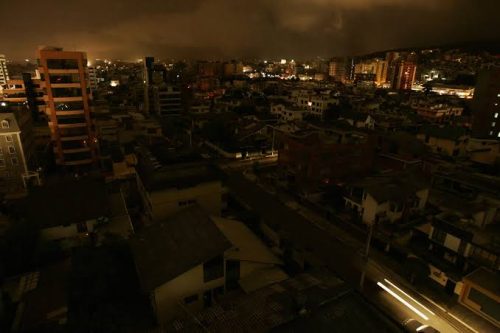
Ecuador turns to industrial power cuts to protect Mazar and keep homes from going dark.

Ecuador raises its 2026 growth forecast, but El Niño could spoil the outlook next year.
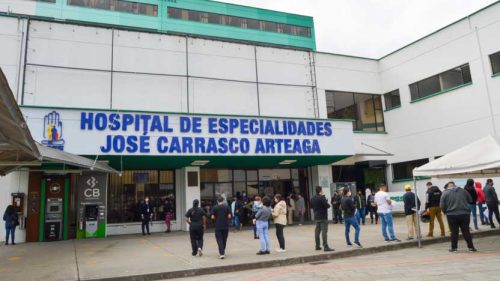
Cuenca retirees challenge medical and therapy changes at IESS senior center.
Fabianos Pizzeria News

Fund Grace News