














Miske, tequila’s ancient cousin, has earned the distinction as Ecuador’s native aguardiente
By Elisabet Juan Roca
The agave plant is mostly associated with the arid landscape of Jalisco, Mexico, and with its most famous beverage: tequila. But not many people know that 2,209 miles south of there, on the equator, another ancient agave beverage is produced.

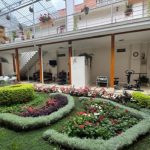
Agave garden at Casa Agave on the equator.
Distilled from chawarmishki — a Quechua word meaning “raw-sweet” — mishqueras create tequila’s southern cousin, miske — the only beverage in Ecuador to hold a designation of national origin.
For thousands of years, agave sap, or chawarmishki, was the sweetener of choice in the Andean region of present-day Ecuador. In this land of volcanic soil and strong sunrays, women cultivated Agave americana to harvest and distill its juice. A tradition almost lost after Spanish colonization, as it was denigrated for being “Indian” and substituted by sugarcane — a foreign plant stained by the triangular trade.
While in Quito, I visited a small distillery which is trying to keep this ancient tradition alive — making solid spirits at latitude 00º 00′ 00.
Brewing in the Middle of the World
Very close to the famous monument in Quito that represents latitude 00º 00′ 00″ — the so-called middle of the world— stands Casa Agave. It’s tucked in an inconspicuous street, so you must know where you are going to find it, but it’s well worth the visit.
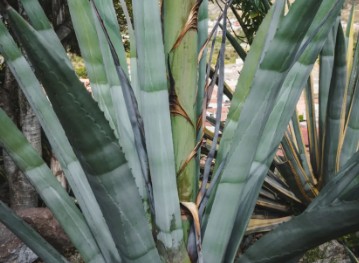
Miske is produced from the blue agave plant, which is native to dry regions of Ecuador’s central valley.
In Casa Agave they are happy to tour you through their agave garden, their small museum representing the history and importance of the plant, and through their factory, where they explain the process of miske creation.
Miske is made from blue agave, the same plant used to produce tequila. Although the process is slightly different. In Jalisco, the harvested plant is broken down and the piña roasted to destill tequila. Miske is made with the raw nectar extracted from the center of the living plant, which continues living for months after the draining begins. This sweet sap, chawarmishki, is especially sweeter at this latitude, where plants receive more direct sunrays than the ones up in Mexico.
“Not a lot of people are brewing miske nowadays, as the tradition got almost lost after the Spanish colonization, but the ones who are doing it, still do it like in the old days;” we are told during the tour of the garden. There’s no global demand of the drink, as it happens with tequila, so the harvesting practises don’t yet demand a quick process.
According to Nature and Culture International, currently only 5% of tropical dry forests remain intact. But by sustainably harvesting agave on lands otherwise destined to agriculture, Casa Agave and other small distilleries are helping preserve them.
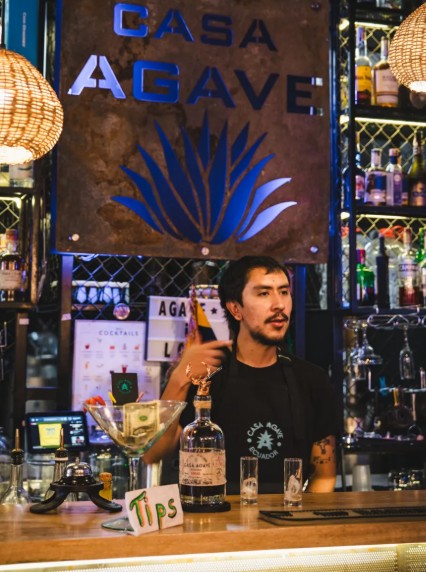
The tasting room at Casa Agave.
You need to wait at least 10 years to start draining the plant, which can produce nearly 4 liters of chawarmishki daily for up to 200 days before drying out. A slow process which protects tradition and the landscape.
In addition to areas near Quito, chawarmishki and miske are also grown and produced in an arid valley south of Cuenca, near the town of Oña.
A women’s drink
Harvesting the plant the way they still do it in Casa Agave today has always been a women’s job. For millennia indigenous women in the Andean hills of Ecuador have harvested the agave plant to make textiles with its fibers, soaps with its roots, medicines and crafts. Chawarmishki sweetened their culinary preparations; and once fermented, it became guarango (similar to Mexican pulque) and was consumed during celebrations like the Summer Solstice.
Elizabeth Guagrilla, head distiller of Chawar, told Atlas Obscura:
The word chawarmishki comes from Quechua, with chawar, meaning “raw,” and mishki, for “sweet.” Notably, in between the two is warmi: “That means woman,” says Guagrilla. “This tradition, or profession, has been done by women since the old times, and they have always been the ones dedicated to cultivating and harvesting the agave.”
Nowadays, also some men are harvesting and distilling the plant, but for many women of the region, this is still an important source of income, and many are organized in co-ops like Mishkita de Cayambe. In Chawar’s destillery, located in Yaruqui, near Quito’s international airport, they receive a minimum of 20 liters daily of chawarmishki from mishkitas. “This steady revenue stream has enabled many of the women to become the primary earners in their families,” says Atlas Obscura.
The commercialization of the spirit has not only helped promote the traditional drink in the hip bars of Quito, Guayaquil and Cuenca, but it has also helped empower rural communities in the Andean valleys near Quito.
Searching for a national beverage
At the end of the tour of the garden and factory in Casa Agave, we are presented with a tasting. We start with the most basic: chawarishki — which is earthy and sweet. We also taste white miske and oaked one, complex and smooth. “This is not Ecuadorian tequila; this is not Ecuadorian mezcal; this is miske, and it’s its own thing,” tells us Diego Mora, the distillery’s founder.

The finished product.
Then, they take us to the bar area, and ask us to help them decide on the perfect cocktail combination to spike with miske. “We are looking for our drink”, says Mora. The Mexicans have margaritas, the Peruvians pisco sours, the Brazilians caipirinhas. All featuring their national spirit. We must make miske famous by promoting a cocktail that everyone can recognize.”
Since 2022, miske holds a designation of national origin, but it hasn’t yet made it into any specific drink yet. Without a national official drink, miske doesn’t have enough symbolic strength to draw tourism and real investment in the region.
“We want to change that,” says Mora, “This is the most cultural drink in Ecuador and even the most South American of all. Most neighboring liquors are made from sugar cane, which is not native. Agave has always been here.”
After trying three cocktails with miske, most of us conclude the same as Casa Agave’s own choice. Proudly Andean and Ecuadorian, in Casa Agave they opt for giving a new life to their Andean hot toddy: Canelazo. Traditionally made of cinnamon, naranjilla citrus and a sugarcane spirit called aguardiente, it’s the drink of Quito’s fiestas and often served as a welcome beverage in haciendas. But by making it cold and substituting sugar cane aguardiente for miske, Casa Agave is hoping for this renovated canelazo to stick.
After the tour, we stayed a bit longer for lunch and I tried some empanadas served with agave flowers as capers, and local fruit juices sweetened with chawarmishki. I also bought one of their awarded miske bottles to take home.
Far away from the Pomasqui Valley, back at home in Massachusetts, I now behold this bottle which captures the spirit of an ancient plant, the embodiment of a nation and a silent feminine revolution.
________________
Credit: Substack



Hogar Esperanza News
Fund Grace News

Fabianos Pizzeria News

The Cuenca Dispatch

Week of September 20
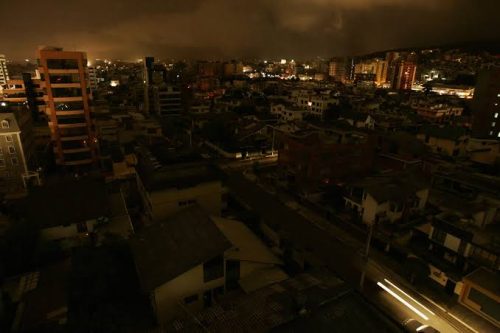
Ecuador turns to industrial power cuts to protect Mazar and keep homes from going dark.
Ecuador raises its 2026 growth forecast, but El Niño could spoil the outlook next year.
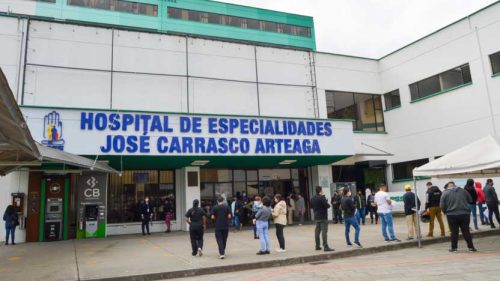
Cuenca retirees challenge medical and therapy changes at IESS senior center.