












More mega-prisons planned with construction of a 15,000-inmate facility to begin soon
Ecuador plans to build more mega-prisons to combat a surge in drug trafficking that has caused homicide rates to soar, Ecuadoran Minister of the Interior John Reimberg told reporters on Tuesday.
The country is attempting to deal with a wave of drug violence by constructing mega-prisons as part of Ecuadoran President Daniel Noboa’s anti-gang policies.
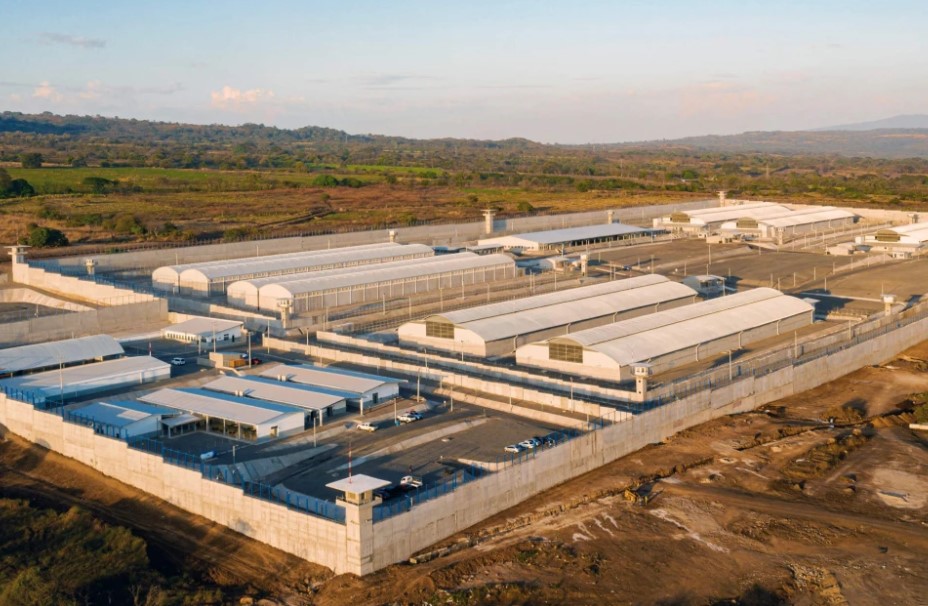
Ecuador is modeling new prisons on El Salvador’s “mega prisons” such as this one.
The first facility which opened in November last year, was modeled on El Salvador’s Terrorism Confinement Center and has capacity for 800 suspected gang members.
Reimberg said the prisons have prompted anger from gangs with ties to the international drug trade.
“We’ve had close to 600 drones attempt to reach the El Encuentro prison since the day construction began,” Reimberg said, referring to the first prison in southwestern Santa Elena Province, where inmates with shaved heads wear orange uniforms. “The drones are sent by organized crime gangs, but almost all of them have been shot down.”
The government is planning to start construction on a second prison for about 15,000 inmates next month, which Reimberg said would be completed within 18 months.
Authorities are keeping the location of the second facility confidential for security purposes. Late last year, however, the government said the prison would also be built in Santa Elena Province.
“A third prison? Yes, probably. And as many as are needed for these criminals,” Reimberg told reporters during an interview in the conflict-ridden port city of Guayaquil.
About 60 percent of the cocaine produced in Colombia and Peru — the world’s largest producers of the drug — transits through Ecuador to be exported via its Pacific ports.
The new prison is “essential,” Reimberg said, adding that it would be “very secure, just like the Encuentro facility is today.”
Clashes between gangs with links to international cartels have turned Ecuador into one of the region’s most violent countries, with a rate of 51 homicides per 100,000 inhabitants.
“We are not going to negotiate, we are not going to make pacts, we are going to attack them, we are going to weaken them,” Reimberg said, adding that 74,000 people were arrested last year.
The minister said that “highly dangerous criminals” who “must be held in isolation” would be transferred to the second prison, dismissing accusations about abuses from human rights organizations.
“I have to answer to the country with security,” he said.
Reimberg pointed to three factors as to why violent crime figures have yet to fall despite the government crackdown, blaming a corrupt judiciary and the actions of past governments.
The third factor was Colombia, amid simmering tensions between the two Andean nations that included sizeable mutual tariffs, he said.
“We have a neighboring country that is not working on the border, that is not attacking criminal groups … we are doing our part,” he said.
________________
Credit: Taipei Times