












Noboa attempts to explain his IESS health care plan following a ‘firestorm’ of public reaction
Members of Ecuador’s Social Security system (IESS) would continue to receive free health care under his proposed changes to the constitution, President Daniel Noboa said Tuesday. In what he called “a clarification,” the president said his Friday comment about removing health care services from IESS was “incomplete” and lacked context.

Ecuador Social Security Institute headquarters in Quito.
Noboa’s comment, made in an interview with Radio Democracia in Quito, has become a hot media topic and is being repeated by opponents of the November 16 referendum question that would rewrite the country’s constitution.
“IESS affiliates and their families will continue to receive health services under my plan,” the president said Tuesday in Guayaquil. “The medical services would simply be transferred to the Public Health Ministry but there would be no interruption for IESS members. As I said before, the primary function of IESS is to provide pensions and other support for retirees and workers.”
Noboa added that it is premature to discuss details of a new constitution, including possible changes to IESS services. “The issue has not yet been approved by the voters and if they do not approve it the question is moot. Let’s talk about this after the election.”
Economist and newspaper columnist Javier Suárez agrees it is premature to discuss IESS changes but says the “cat is out of the box” and that the issue cannot be ignored,” he says. “I believe he made a mistake in bringing it up and now he is covering his tracks.”
A major concern of Social Security system members, says Suárez, is if they would be treated like the other patients in the public health service. “The popular conception is that those who go to public health clinics and hospitals are charity cases, since they don’t pay for care. And despite the poor quality of IESS care, it is widely believed that public health care is even worse.”
Although Suárez says the discussion should focus on increasing funding and improving service for both the IESS and Public Health Ministry systems, he says IESS member prefer that they operate separately. “Yes, it is a prejudice, but it cannot be ignored,” he says.
According to Suárez, the root of the problem with IESS health services dates back to decisions made during the Rafael Correa presidency. “The decision in 2011 to extend services to the families of IESS members greatly expanded the demand as well as funding needs,” he said. “Then, four years later when the price of oil collapsed, the government eliminated the annual financial support it had been providing IESS. It was a double-whammy.”
Hospital consultant Jorge Diaz says one of Noboa’s motivations may be to ignore the 17-billion-dollar debt the government owes IESS health services. “Even today, almost everyone agrees that Correa’s decision to end support was illegal and that the debt is legitimate,” he says. “Most IESS members are aware that the non-payment is the reason that the system is in poor condition, why it lacks medicine and specialists.”
IESS members want the health care system fixed, not transferred to the Public Health Ministry, Diaz says. “If the shortfall in IESS health funding, which amounts to about $600 million a year, was covered as was originally intended, most of the system’s problems would not exist. Any attempt to sweep the debt under the rug could defeat the question of the constituent assembly next month.”



Hogar Esperanza News

The Cuenca Dispatch

Week of September 20
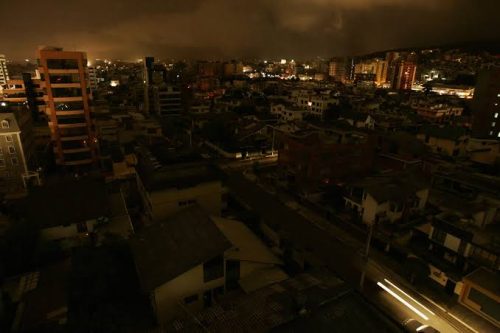
Ecuador turns to industrial power cuts to protect Mazar and keep homes from going dark.
Ecuador raises its 2026 growth forecast, but El Niño could spoil the outlook next year.
Cuenca retirees challenge medical and therapy changes at IESS senior center.
Fund Grace News

Fabianos Pizzeria News
