













Noboa reduces blackouts for residential customers but says mines must generate their own power
Periods of daily electric blackouts for residential customers will drop to eight hours next week, to six hours the week of October 28 and to four hours the week of November 6. To offset the cuts, President Daniel Noboa said that mining operations will be required to produce their electricity and will be temporarily cut from the national power grid.
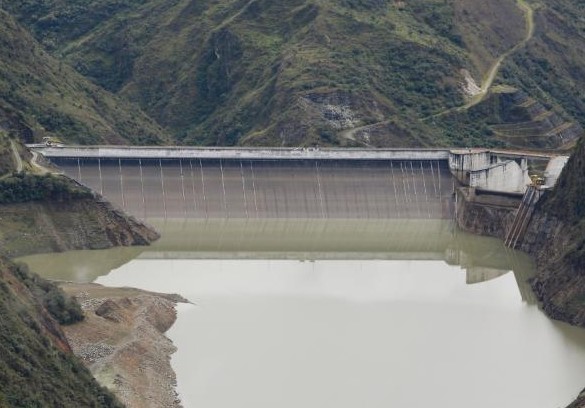
The water level at the Mazar reservoir in eastern Azuay Province has stabilized but remains below operational levels.
He said that blackouts will continue to be divided into two periods and that the current 10-hour a day blackout schedule for industry will remain in place,
Immediately after his video statement on Instagram, several mining companies and mining associations protested that the suspension of electricity will cripple the industry. Industrial representatives lodged similar complaints, saying they expected some relief following talks with new Energy Minister Inés Manzano.
The Energy Ministry reported last week that the industrial and mining sectors consume more than 50% of country’s electricity.
Noboa said help is “on the way” with the arrival of mobile energy units that are being delivered by air. Manzano announced earlier in the week that the mobile units are replacing the government’s original plan for more Turkish power barges in the effort to boost the national power supply. One barge is already in operation in Guayaquil, producing about 100 megawatts of electricity.
Although the government didn’t provide details, it is believed the mobile power units are being shipped from the U.S. and China.
In his video, the president said the country “faced an extremely complex situation in recent weeks,” citing the impact of the worst drought in recent history and inaction by previous governments to upgrade electric generation.
Prior to Noboa’s announcement on Thursday, several energy experts painted a bleak picture of Ecuador’s power crisis. “The rains forecast for October have so far failed to materialize, especially in Cuenca and the southern region,” said Edgar Castro, former president of the national electrical engineers’ association. “The level of the Mazar reservoir has recovered three or four meters but it is still below safe operational levels and will begin to drop again with the return of drier weather. Besides this, the Coca Coda Sinclair facility has dropped back to 500 megawatts production after briefly generating more than 1,000.”
Following Noboa’s announcement, Guayaquil radio commentator Marcus Muñoz said the president’s plan to reduce blackouts for residents is politically motivated. “Let’s not be naive,” he said, “This decision is aimed at voters ahead of the February election. In the short-term, he has decided to put the burden on industry and mining in exchange for making the majority of population happy.”
Muñoz added: “The question is, without rain, how long can he maintain this approach.”



Hogar Esperanza News

Fund Grace News

The Cuenca Dispatch

Week of September 20
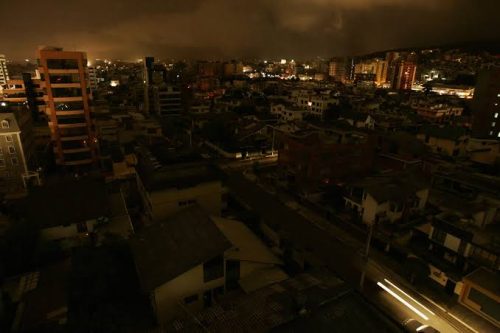
Ecuador turns to industrial power cuts to protect Mazar and keep homes from going dark.

Ecuador raises its 2026 growth forecast, but El Niño could spoil the outlook next year.
Cuenca retirees challenge medical and therapy changes at IESS senior center.
Fabianos Pizzeria News
