














Paying to be poorer: The hidden cost of tariffs and how they protect the monopolies
By Jonathan Mason
Tariffs are advertised as the iron shield protecting the local worker. In truth, they are an iron collar around his neck.
 Every government that imposes tariffs claims the same high-sounding motives: safeguarding national industries, preserving jobs, defending against “unfair” foreign competition.
This noble rhetoric masks a simpler reality: tariffs are taxes — taxes we levy on ourselves. The foreigner does not pay them. The wealthy manufacturer does not pay them. The common citizen, already weighed down by the state’s endless demands, is the one who pays, silently and daily, in the higher prices of food, clothing, tools, and shelter.
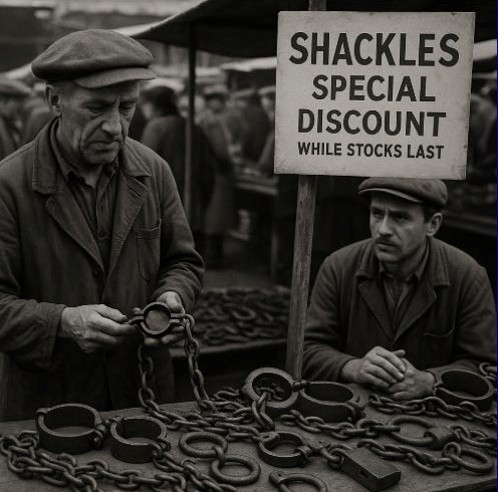 The real winners of the tariff system are not workers, but monopolists. It is a system of licensed robbery.
If you manufacture nails, and your government slaps a 30% tariff on imported nails, you are not spurred to greater efficiency. You are freed from the need for it. Your nails can be dear, shoddy, and late, and still they will be bought. Your competitors, who might have supplied better nails for half the price, are kept out by armed men at the docks.
Tariffs pretend to protect jobs. Often, they destroy them. For every factory saved by tariffs, another factory using its products struggles to survive. A tariff on steel inflates the cost of cars, washing machines, bridges, even the coins in our pockets.
The moment a government erects one protective wall, another must rise behind it. Tariffs breed tariffs, as rats breed rats. Each new tax on imports becomes an argument for another, until the entire economy is a labyrinth of barriers, contradictions, and absurdities.
The strongest justification for tariffs, at least among the better-informed, is that they are a necessary evil against foreign subsidies and sweatshops. It is not a foolish point. But it ignores the real villain, who is not the foreigner willing to work for little, but the local plutocrat who demands maximum profit while paying minimum wages.
Tariffs do not cure this disease; they conceal it. They allow the ruling class to boast of “defending the worker” while stuffing their own pockets behind the worker’s back.
In the age of empire, tariffs were often weapons of conquest. Britain forced its colonies to buy British cloth while forbidding them to make their own. The practice has changed its slogans but not its essence. Today’s tariffs, dressed in the gaudy colors of nationalism, still boil down to the same ugly principle: a few men grow rich by making many poor.
There is also the question of retaliation. Every tariff is a slap in the face to someone abroad. It invites another slap in return. Tariff wars are among the stupidest kinds of wars: each side hurts itself, out of spite for the other. In a shooting war, at least there is the excuse of survival. In a tariff war, there is only stubborn vanity, pursued until mutual ruin.
It is telling that few politicians actually live under the rules they create. They are chauffeured to tariff debates in cars assembled from foreign parts, using petrol refined from foreign oil, wearing suits stitched from foreign cloth. They wave flags while their pockets bulge with imports. Meanwhile, the ordinary citizen, prevented from buying a decent pair of sneakers at a fair price, is left to mutter about “making sacrifices for the nation.”
The lie of tariffs is one of the oldest and most persistent in political life. It endures because it appeals to two of the basest human instincts: fear and greed. We fear losing what little we have, and we are greedy for the illusion that by punishing others, we enrich ourselves. Until these instincts are named and fought, the tariff will remain a favorite tool of scoundrels posing as patriots.
A truly strong nation would compete openly. It would make better goods and sell them more cheaply, not by erecting barriers but by cultivating skill, honesty, and enterprise. It would have faith in its workers, not in its customs inspectors. It would recognize that prosperity does not grow behind walls, but on open roads.
Until then, we will continue the ancient folly: paying out of our own pockets for our own chains.
_________________
Credit: Substack
Follow Jonathan Mason on his Substack page.



Hogar Esperanza News

The Cuenca Dispatch

Week of September 06

U.S. sinkings of Ecuadorian fishing vessels trigger court scrutiny after 28 crew members are released.

Cuenca targets a November launch for its first new international link to Chiclayo.
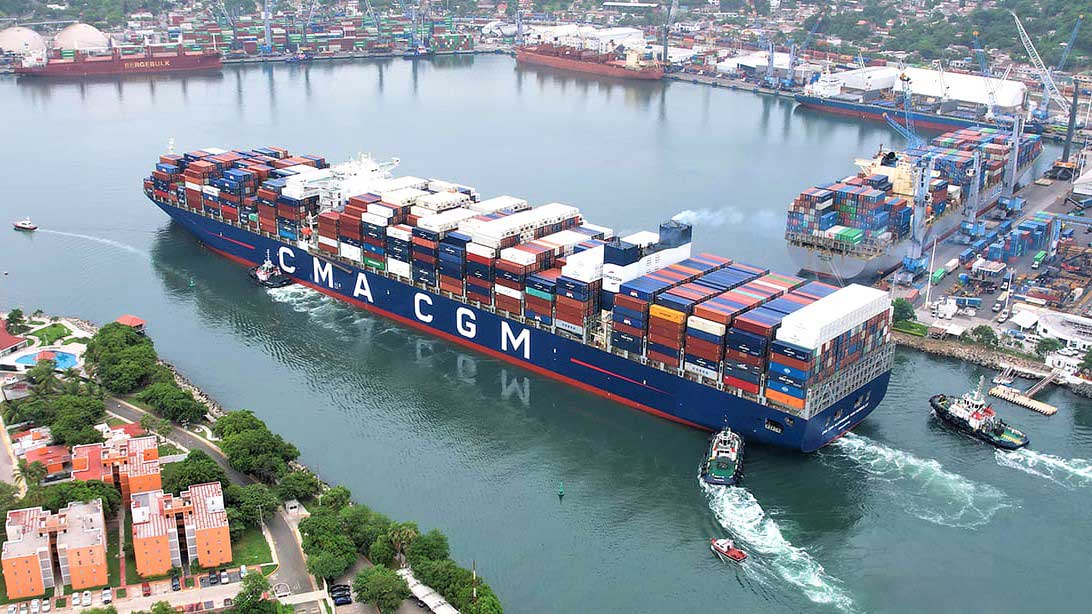
Exports hit a quarterly record, but Ecuador’s import bill is rising even faster.
Fabianos Pizzeria News

Property Manabi

Fund Grace News
