











Progress reported in first meeting to resolve conflict between Colombia and Ecuador
The Deputy Ministers of Foreign Affairs of Colombia and Ecuador say “substantial progress” was made following Wednesday’s meeting to resolve differences between the two countries. The conflict began February 17 when President Daniel Noboa imposed a 30% tariff on most Colombia imports, claiming Colombia had failed to stop the flow of cocaine and drug traffickers across the countries’ common border. Colombia responded with reciprocal tariffs which were boosted to 50% in March.
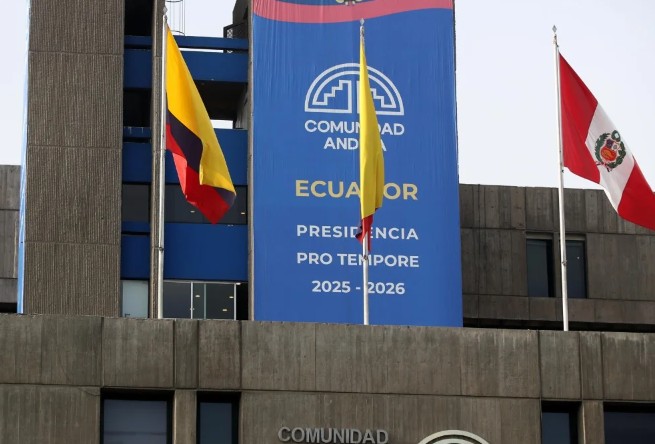
Headquarters of the Andean Community of Nations (CAN), in Lima.
The two sides plan to continue talks on Thursday at the headquarters of the Andean Community of Nations (CAN), in Lima.
“We made progress in today’s session and are dedicated to continuing the dialog with the objective of reaching a sustainable agreement,” negotiators said in statement. “We reaffirm our commitment to political discourse, cooperation and mutual trust.”
Specifically, negotiators reported making “concrete progress” on ways to confront transnational crime and agreed on three objectives: Strengthening strategies against illicit drug trafficking; combatting illegal mining in a coordinated manner; and curbing migrant smuggling.
The mutual tariffs have become a flashpoint in recent days as business and transport interests have protested on both sides of the border. The Colombia trade office reports a reduction of 75% of Ecuadorian goods entering the country while Ecuadorian numbers are believed to be similar.
“This dispute, which we do not understand, is killing us,” Juan Jaramillo, leader of an Ecuadorian truckers’ association said Sunday. “We demand that both sides put their selfish interests aside for the benefit of the people.” Other groups have issued similar statements, insisting on a quick resolution of the conflict.
The negotiations are especially important for Ecuador as the country is facing a severe shortage of electricity. Over the past year, Ecuador has purchased as much as 400 megawatts of power from Colombian utility companies to supplement its power grid. Colombia suspended the sales when the dispute began.