
















Pros and cons of allowing foreign military bases in Ecuador; Basic salary increase is analyzed; Public hospital needs glass jars; Election kits arrive
Curious? –
(lunes, 10/11)* Ecuador vota el regreso de las bases extranjeras (Ecuador votes on the return of foreign military bases) – This is the first of a series of articles from El Mercurio that analyzes the questions in the Referéndum and Consulta Popular 2025. Currently, article 5 of the Ecuadorian constitution adopted in 2008 prohibits the installation of foreign military bases. Pres. Noboa has promoted a constitutional reform in which Ecuadorians will be asked about the possibility of allowing these types of installations. The first question in the referendum proposes to eliminate the prohibitions.
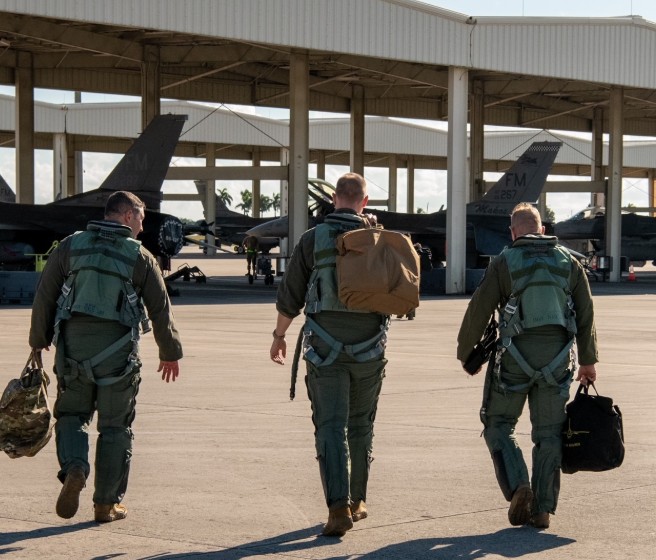
Ecuadorians will decide Sunday, November 16, whether or not to allow foreign military installations in the country.
The current constitution says, “Ecuador is a land of peace. The establishment of foreign military bases or foreign installations with military purposes is not permitted. It is prohibited to cede national military bases to foreign armed or security forces.” That is to say, no foreign force can install or use military bases in Ecuadorian territory. If the question passes, Article 5 will be reduced to a single sentence: “Ecuador is a land of peace.” This modification would remove the current prohibitions, and foreign bases could return.
The question for Box A, is: “Are you in agreement with eliminating the prohibition on the establishment of foreign military bases or foreign installations with military purposes, and ceding national military bases to foreign armed or security forces, partially reforming the Constitution to conform to the appendix of the question?” <It sounds like being in agreement could open the door to private security forces such as Blackwater operating from a US base should one be installed.>
International attorney Carlos Estarellas explained that if the citizenry votes “Yes,” it doesn’t mean that foreign bases will immediately be installed. The first step would be to sign a document that establishes the objectives and achievements of this cooperation. These negotiations would involve the Secretaries of State, the Fuerzas Armadas and the institutions of both countries related to this issue. Then the document would need to be approved by the Asamblea Nacional and the Constitutional Court.
There are different viewpoints on the issue. Security analyst, María Gallegos thinks that a foreign base could improve the country’s technical capacities in surveillance, intelligence, and training as well as generate employment and investment in local infrastructure. However, she warned that military presence would not eliminate structural causes of violence and that any agreement should include parliamentary and civil control, time and geographical limits, and transfer of technology to Ecuadorian Armed Forces.
For professor Jean Paul Pinto, if “Yes” wins, the Government should not follow the African model where France has bases in various countries. He argued that African countries have changed the bases for strategic defense agreements, and France’s cooperation is very specific: equipment and intelligence. He said that Ecuador needs more than foreign bases. His viewpoint is that military bases don’t stop all crimes. They can help in specific areas such as narcotics trafficking and illegal migration, but not in internal crimes such as robberies or extortions.
For former intelligence agent and security expert Cléber Carrión, foreign bases are necessary. The previous base was intended to help with coastal security and operate radars to fight narcotics trafficking and terrorism. He said the Ecuadorian police are part of Interpol and Europol through which foreign intelligence agents have already entered the country for investigations.
(lunes, 10/11) Las alternativas para las bases si gana el “Sí” (The alternatives for the bases if the “Yes” vote wins) – According to the Government, The US is not the only country interested in strengthening international cooperation on security. There have also been talks between Ecuador and Brasil and there is the possibility of establishing bases for joint cooperation with Brazil. As an alternative, cities such as Orellana and Sucumbíos are being analyzed since they are facing he problem of illegal mining. Noboa also mentioned the cities of Manta and Salinas as possibilities for the installation of bases.
(domingo, 9/11)* Alistan mesas técnicas para definir nuevo salario (Technical committees are being set up to determine new salaries) – <This is a civics lesson for today.> The Ministerio de Trabajo is asking for technical reports from the Instituto Nacional de Estadística y Censos (INEC), the Ministerio de Economía y Finanzas (MEF), and the Banco Central de Ecuador (BCE) to analyze a possible increase in the Salario Básico Unificado (SBU) which will take effect el 1/1/2026.The reports which should be submitted this week, will evaluate key indicators such as inflation for 2025-26, economic growth estimated at 3.4% by the BCE, employment data from INEC, and information from IESS about workers who receive the minimum salary.
Sessions with the Consejo Nacional de Trabajo y Salarios (CNTS) will take place when it receives the reports. This committee is composed of 10 representatives from labor organizations and 10 from productive guilds. Its function is to facilitate the dialogue between the Government, employers, and employees in deciding the SBU which is also used to calculate employment benefits, fines, and pensions. The process should end with an official resolution in diciembre, but without an agreement, the Ministerio de Trabajo will issue a decision. This has happened in recent years when there was no consensus within the CNTS. The salary proposed in 2024 by the Frente Unitario de Trabajadores (FUT) was an adjustment to $564.04, the same as the cost of the vital basket of goods which was an increase of over $100. During the protests, the Confederación de Nacionalidades Indígenas del Ecuador (Conaie) proposed an SBU of $650, an increase of $180. The current SBU is $470. 470,000 employees receive the SBU and are hoping for a raise. The cost of the canasta basica (basic basket) is $800 and is the number that unions have entered into the debate to demand a larger SBU.
(domingo, 9/11)* Llegarán kit electorales a Azuay (Election kits will arrive in Azuay) – <Another civics lesson> The election kits for the referendum to be held el 16/11 arrived in Azuay el domingo from the Consejo Nacional Electoral (CNE). They were transported y members of the Fuerzas Armadas (FF.AA. – Armed Forces) which is in charge of guaranteeing security of the election materials. The first kits will be used to receive the votes from Personas Privadas de la Libertad (PPL – prison inmates) and people in the Voto en Casa program who will vote el 14/11. 661 packages will be sent to overseas polling stations in 38 countries. <I wish the US would run its elections with the same transparency, inclusion, and integrity that Ecuador does.> <Remember that voting weekend is a dry weekend. You can’t legally buy or be served alcohol.>
Want to help? –
(domingo, 9/11)* Hospital pide donar frascos de vidrio (Hospital asks for donations of glass jars) – The Vicente Corral Moscoso hospital is asking for donations of clean glass jars with plastic tops and in good condition for their Banco de Leche Humana (Human milk bank). These jars will be used to store donated milk for feeding newborns in the neonatology unit. You can bring the jars to the information or patient service counter. They will be disinfected prior to use. <I imagine they could also use breast milk, but I rather doubt most readers of this article would be able to provide that.)
* The day and date in parentheses indicates the date of the newspaper.
__________________
Information in this column, including dates, times and locations, is courtesy of the El Mercurio newspaper. Comments between the carrots, or guillemets (< … >), are the personal opinions of the author and not part of the news translation.



Hogar Esperanza News

Fabianos Pizzeria News

Fund Grace News

The Cuenca Dispatch

Week of September 20
Ecuador turns to industrial power cuts to protect Mazar and keep homes from going dark.

Ecuador raises its 2026 growth forecast, but El Niño could spoil the outlook next year.
Cuenca retirees challenge medical and therapy changes at IESS senior center.