















Rain replenishes hydroelectric system but industrial disconnections are still required
Conditions continued to improve at the country’s hydroelectric plants over the four-day holiday weekend, with the water level of the largest reservoir at Mazar adding four meters of water. “The good news is that we have emerged from the critical stage, at least in the short term, and the prospect of blackouts is no longer imminent,” says Jorge Jaramillo, vice president of the Litoral College of Electrical Engineers.
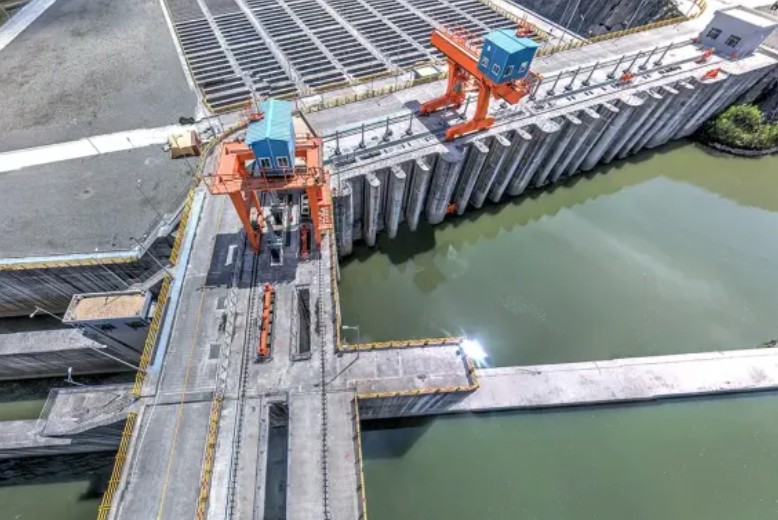
Recent rain at the Coca Codo Sinclair hydroelectric plant have increased power generation to as much as 1,200 megawatts.
The improvement is the result of rain moving into the inter-mountain valley from the Amazon, says Jaramillo, but also of the continuing electric disconnections of the country’s largest businesses, primarily manufacturers and mines. “The Energy Ministry believes the improvement in not sufficient to allow the largest energy consumers back on line,” he said.
He added that the rise in water level at the Mazar reservoir, which powers three generation plants, is due mostly to keeping its turbines idle. “If those were functioning at a normal level, there would probably be little or no increase in the water level.”
Since October 20, when the Mazar water level was 2,121 meters above sea level, it has risen to 2,128masl on November 5. “On average, the three facilities have generated less than 300 megawatts a day which is substantially below their capacity of 1,800. The strategy is to increase the water level.” Jaramillo.
Marco Acuña of the Ecuador Advisory Council of Engineering and Economics, agrees and says the Mazar-Paute plants have been “bailed out” but good conditions at Coca Codo Sinclar, Minas San Francisco and Agoyan plants. “After being barely functional three weeks ago by low flow of Rio Coca, the rains have restored generation up to 1,200MW, which has allowed Mazar to recover,” he says. “Rain has also allowed Minas San Francisco and Agoyan to operate optimum levels, some days putting out 500 megawatts.”
Like Jaramillo, Acuña says the continuing business blackouts are important to the current energy stability. “They are making the sacrifice to keep the lights on at home and function as a kind of safety value for the entire system,” Acuña says. “Obviously, the Energy Ministry is not comfortable that we are back to full sustainability.”
One of the red flags for energy officials, says Acuña, is the low flow level of the Rio Paute, which is currently a third of optimal level. “The reservoir level is going up only because Mazar, Molino and Sopladora are not operating, or operating at low levels.”
“We remain in a position of needing more rain near the generating plants, especially at Mazar,” Jaramillo says. “What we are getting are small and moderate showers, not the downpours like at the coast, so we need these to continue since they are providing critical short-term relief.”
On Thursday morning, the level at the Mazar reservoir was 2,128, 13 meters above critical level, while the inflow of the Rio was in “low” category at 44 meters. The three generation stations were producing a total pf 280MW.
At Coca Codo, water flow of the Rio Coca was in the “normal” range and the plant was generating 570MW



Hogar Esperanza News

Manabi property

Fabianos Pizzeria News

Fund Grace News

The Cuenca Dispatch

Week of October 25

Ecuador heads into a four-day November holiday built around Cuenca’s Independence Day.

El Niño’s early rains have already affected more than 30,000 people across Ecuador.

Exporters press Constitutional Court to move three major trade agreements forward