













Referendum question: Does Ecuador need a new constitution? Falconry Day at Pumapungo; ‘Parallel Bienal’ opens; Galápagos flights begin in March
Referendum –
(jueves, 13/11) Ecuador analiza si va por la Constitución 21 – If more than half of the 13.4 million Ecuadorians eligible to vote are in favor of installing an Asamblea Constituyente (Constitutional Assembly), Ecuador will start the 21st process to refound the country. It is one of the countries with the most constitutions in the world. The 2008 Constitution has passed 6 amendments and reforms, and will do so again if 3 referendum questions pass. In its 195 years as a republic, Ecuador has had 20 constitutions, each lasting an average of 10 years.
For Daniela Salazar, a former vice-president of the Constitutional Court, this constant change is not because there have been many occasions considered constitutional moments born from citizens’ actions, but because of the desire by a president to create a document tailored to his liking. She said we must ask if this Governmental proposal for a constitutional change stems from a social consensus or is more of an expression of authoritarian constitutionalism in which whoever is in power made the decision and is asking for our votes to legitimize their decision. For political scientist Sofía Cordero, the starting point of the possible new Constitution is the product of a whim of Pres. Noboa who called for the referendum question after the Constitutional Court put a stop to his proposed laws and reforms.
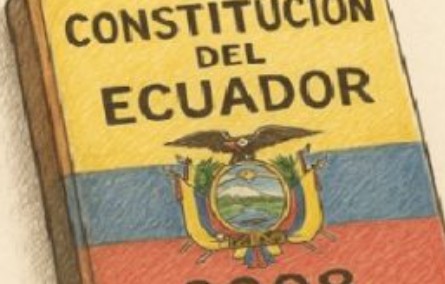 As to whether a new Magna Carta will solve Ecuador’s problems, experts think that it will first depend on the context in which it is called for, the quality of the constitutional assemblyists, the application of what is approved, and above all, the level of consensus in society. Constitutionalist Pamela Aguirre believes there is nothing more democratic than what the people decide at the ballot boxes. It’s important that Ecuadorians understand that the Constitution doesn’t immediately solve daily problems if it is not developed according to social needs, but based on the plans of each government. Sofía Cordero thinks that a Constitution can’t be limited to a specific issue which in this case is the fight against organized crime. And this issue has many facets that are structural, such as education and basic services.
For Enrique Herrería, an ex-constitutional judge and former assemblyman, the new Constitution should reform the justice system, considering that it allows criminals, even with enforceable sentences, to be released. This has contributed to the insecurity in which the country is living. The Asamblea Constituyente will have 80 members – 22 national, 50 provincial, and 6 for outside the country.
(jueves, 13/11) “Riesgo de ser como la Asamblea” (“Risk of becoming like the Assembly”) – What worries political scientist César Ulloa is the quality of the Constitutional Assembly members since the rules for participating are the same as the rules for electing the current National Assembly: anyone can be a candidate. We are part of a procedure where there is poor policy quality because we will probably elect the best of the worst in the 2 political forces that have the largest number of seats, President Noboa’s ADN and the Correistas. Henry Cucalón hopes that the Constitutional Assembly, if it is installed, will center on working to write a Constitution that will benefit the country and that it does not become, like the current National Assembly, “an electoral arena and a place for settling scores” between the two political organizations which will surely monopolize the seats.
(jueves, 13/11) Noboa plantea “reducir prohibiciones” (Noboa proposes “reducing prohibitions”) – For Pres. Noboa, the 2008 Constitution is excessively punitive in that it centers on punishing more than preventing or rehabilitating, and that is what he hopes to change if a new Constitutional Assembly is installed and he has a majority. <I think it’s time I read the Constitution to see just what’s in it.> Against criticism about possible changes, he emphasized that it would keep the protection of rights of nature, and insisted that the new Magna Carta would have at most 180 articles as opposed to the current 444. Regarding his refusal to give more details about the reforms he is seeking, Noboa said he first has to win the referendum, then hold the election for the constitutional assembly members, and they will prepare the new Constitution. He has been giving out names who will be on the slate of candidates for the ADN <Noboa’s party>. So far these will include Diana Salazar, former Attorney General and current ambassador for Ecuador to Argentina; Anabella Azín, current assemblywoman, and mother of the president; Nils Olsen, president of the Asamblea Nacional; Jaime Vela, former head of the Joint Chiefs of Staff; José de la Gasca, ex-minister of government; Nataly Murillo, a current ADN Assemblywoman. He hopes constitutionalist Rafael Oyarte and Enrique Herrería, a former Corte Constitucional judge will join the slate.
(domingo, 2/11) An interview with Fernando Vega Cuesta, a former Constitutional Assemblyman – The country is back to talking about a Constitutional Assembly, only 17 years after the current Constitution was debated and written in Montecristi. Fernando Vega, a former Constitutional Assemblyman and president of the Justice Commission in 2008 analyzes this political moment and warns against the risks of starting from zero without a clear national plan.
Question: 17 years have passed since the Montecristi Constitution. What is the significance of proposing a new one? Has the political text been exhausted/worn out or the model that was supposed to sustain it?
Answer: What’s been exhausted wasn’t the Constitution but the politics and politicians. If the Constitution had been applied by a democratic and sensible government, its merits would have borne fruit. But its gaps were used to concentrate power in the Executive branch. Today, Noboa controls all the powers of the State with a force equal or superior to that of former president Rafael Correa, who was in power when today’s Constitution was adopted. The current crisis doesn’t come from the text but in the way the country has been governed since 2014.
Question: You presided over the commission that addressed issues of justice and rights. Do the current problems come from faults in the Constitution or from failure to comply with its mandates?
Answer: The Constitution incorporated the most advanced international rights, such as due process. This is what makes Noboa uncomfortable since he is looking to eliminate these guarantees with the pretext of fighting crime. He wants a permissive Constitution that justifies persecution, espionage and internal militarization. The same is occurring with extractivism where the restrictions that protect natural resources against international mining bother him. What he wants is to open the country to these interests.
Question: Some argue that the 2008 Constitution was progressive, others that it concentrated power in the presidency. How would you evaluate this tension?
Answer: The text was a poem while the execution was disastrous. For example, the Consejo de Participación was supposed to promote the citizens, not become political booty. The subsequent corruption wasn’t the fault of the Constitution. As I always said, if you give a Tchaikovsky score to bad musicians, you can’t blame the composer.
Question: What risks do you see in convening a new Constitutional Assembly without a clear national plan?
Answer: Right now, there aren’t political persons capable of leading a serious Constitutional Assembly. The parties are dissolved or are personal businesses. Using the D´Hondt method, this assembly would be a reflection of the current Asamblea: improvisation, submission and under the table negotiation. Also, the government is using the idea as part of its electoral campaign. There is no clarity nor objectives; just political calculation.
Question: In 2008 there was mobilization and hope. Do you see the same civic spirit today?
Answer: No. Today what is prevalent is disorientation. Many say, “better to do something than do nothing,” even though no one knows what to do. This is dangerous. A Constitutional assembly dominated by Correismo and Noboismo won’t achieve consensus, but more polarization or a shady deal to remake the country.
Question: Which issues should be reviewed and which should be maintained as historical achievements?
Answer: “Novelties” such as the 5 powers of the State should be eliminated and go back to 3, but with clear criteria to designate supervisory authorities. Judicial independence should be strengthened, and rights of nature advanced. Mining in páramos and nature reserves should be prohibited. What should not be reversed are fundamental guarantees and environmental protection.
Question: Does this initiative seek an institutional renewal or a reconfiguration of political power?
Answer: Clearly the second. If mining is imposed on Quimsacocha and all the páramos in the Cajas, Cuencanans should revolt. Noboa acts with arrogance, feeding resentments and division. One can’t govern from violence nor contempt for indigenous peoples.
Question: What are the implications for starting a new Constitution?
Answer: It will be judicial chaos. All the laws would have to be reformulated and this takes years. The implementation of the 2008 Constitution has not been finished. For example, the right to free and informed consultation has not been complied with. Why wasn’t this done first? Because it isn’t in the government’s interest — they would prefer mining contracts without citizen participation.
Question: What conditions should exist for a legitimate and representative Constitutional Assembly?
Answer: First a big national debate on the development model we want. This country is sustained by its working people, not its elites. We have agricultural, cultural, and tourist wealth, but not a common vision. Without an educated, informed and conscious citizenry, democracy is not possible.
Question: Do we need a new Constitution or new political ethics?
Answer: What we need is ethics and education for the citizenry to elect honest and not improvised representatives. There will be a time for a new Constitution, but it’s not now. In this context, it would be very dangerous.
Bored? –
Muestra ‘Magentia’ – Cuencano artist Andrés Montesinos opened his ‘Magentia´exhibit today in the Casa de la Bienal, a parallel proposal to the XVII Bienal de Cuenca. The show combines sculpture, digital art, and augmented reality. In its first phase, you can discover virtual sculptures visible from your cell phone browser when scanning QR codes installed in locations such as the Puente Roto, Parque Calderón, and the Plaza e las Flores. <So if you walk around the locations looking at virtual sculptures your cell phone, you’ll be dodging sculptures that aren’t really there? A new way to look like you’re a few sandwiches short of a picnic.>
Día de la Cetrería (Falconry Day) – The Pumapungo Museum and Archeological park will commemorate World Falconry Day el 14/11 starting a las 9:00. The event will include talks, flying demonstrations and an open house with different institutions related to the protection of wild animals.
Curious? –
(jueves, 13/11) En 4 meses vuelos de Cuenca a Galápagos (Flights from Cuenca to Galápagos in 4 months) – A test flight on the new Cuenca-Galápagos route carried national and provincial authorities, presidents of tourist and transport associations, and media from Cuenca on miércoles, el 12/11. The fares will be $115 each way plus taxes. The round trip will be Cuenca-Quito-Galápagos and Galápagos-Cuenca with a 3 hour flight going, and less returning. At a press conference, officials from the Ministerio de Infraestructura y Transporte (MIT) <I think this used to be the Minsterio de Transporte y Obras Públicas – MTOP> announced that LATAM would start commercial flights on 1 marzo, 2026 with flights on los martes y sábados. Tickets will go on sale in 3 weeks.
__________________
Information in this column, including dates, times and locations, is courtesy of the El Mercurio newspaper. Comments between the carrots, or guillemets (< … >), are the personal opinions of the author and not part of the news translation.