











Retirement Abroad: When ‘rithmetic meets reality
There was a time, and it was not so very long ago, when the Republic of Ecuador would hand you a retirement visa if you could prove an income of about seven hundred dollars a month. That was back when rotary dial phones still worked and avocado toast had not yet been invented. Then someone in an office somewhere licked a pencil and decided that retirees should now earn about fourteen hundred and fifty a month instead.
This raises the rather interesting question: Did Ecuador suddenly become the Switzerland of South America? Or did it simply notice that a lot of people applying to retire here were earning less than the average Uber driver in Omaha?
 Because here is the uncomfortable arithmetic. The average American on Social Security in 2026 receives around two thousand dollars a month, according to authoritative sources. That is the mean amount, the financial equivalent of standing in the middle of a small bridge and looking down at the trout. Yet, depending on whose numbers you read, it costs about two thousand five hundred a month for a single retired person to live in Jacksonville, Florida. That is supposed to be the cheapest city in Florida, and this number includes one thousand for rental housing, though many will own their own homes and have to pay property taxes, hurricane insurance, maintenance, and lawn mowing instead of rent.
So the bottom line is that average Social Security retirees in Jax start each month five hundred dollars underwater before they have even bought toothpaste (if they don’t have other sources of income). And if they live in New York City or San Francisco, presumably they must live in the subway or on the sidewalk.
This is where Ecuador enters the scene with a plate of seco de pollo in one hand and a Tranvía card that costs almost nothing clutched in the other.
Now imagine you are that average retiree. You sell your modest American home and walk away with maybe two hundred and fifty thousand grand. (I am keeping these numbers low intentionally, and I am aware that in some parts of the US the number may be much higher, or lower.) In Ecuador with this sum you can invest enough locally to qualify for an investor visa, and perhaps earn around seven percent on your money at current rates. Or you keep most of it invested in a brokerage account in the United States where you might, if the financial gods smile on you, earn around eight percent in dividends in something relatively safe like JEP or some high return preferred stock.
Eight percent of a quarter million is about twenty thousand a year. Call it sixteen hundred dollars a month, give or take. That alone will probably pay your rent in Cuenca, your utilities, your health care insurance with IESS, and your transportation and groceries, with a little to spare for luxuries like bottles of rum, toothpaste, and toilet paper, while your Social Security remains largely untouched and available for life’s smaller pleasures, such as being able to add Bailey’s to your coffee or wear pajamas.
This is the rather large secret that many YouTubers fly straight past while filming each other’s behinds walking through the flower market. The question is not “Can you survive here on nine hundred dollars a month?” (which you can if you want to). The question is “Why would you choose to struggle to make ends meet in one of the crummiest parts of Florida when you can live comfortably in the Andes and swap Ramen instant noodles for popcorn in your soup?”
Which brings us back to that new visa requirement. If in 2026 you now need about one thousand four hundred and fifty a month in documented income, and the average Social Security payment is around two thousand, then anyone failing to meet the requirement must be at least several notches below the statistical center of the bell curve. I am not a professional statistician, but if you are four or five hundred below the mean, you are not strolling near the middle of the graph, but camping out somewhere near the rainbow end of the curve.
So when people say, “Fewer Americans are moving to Ecuador since they raised the income rules,” my instinct is to reply, “Yes, that makes sense. The people who no longer qualify probably could not reliably afford to live in Ecuador either.” It is like complaining that fewer people are entering the Boston Marathon ever since they asked runners to be able to jog across the street first.
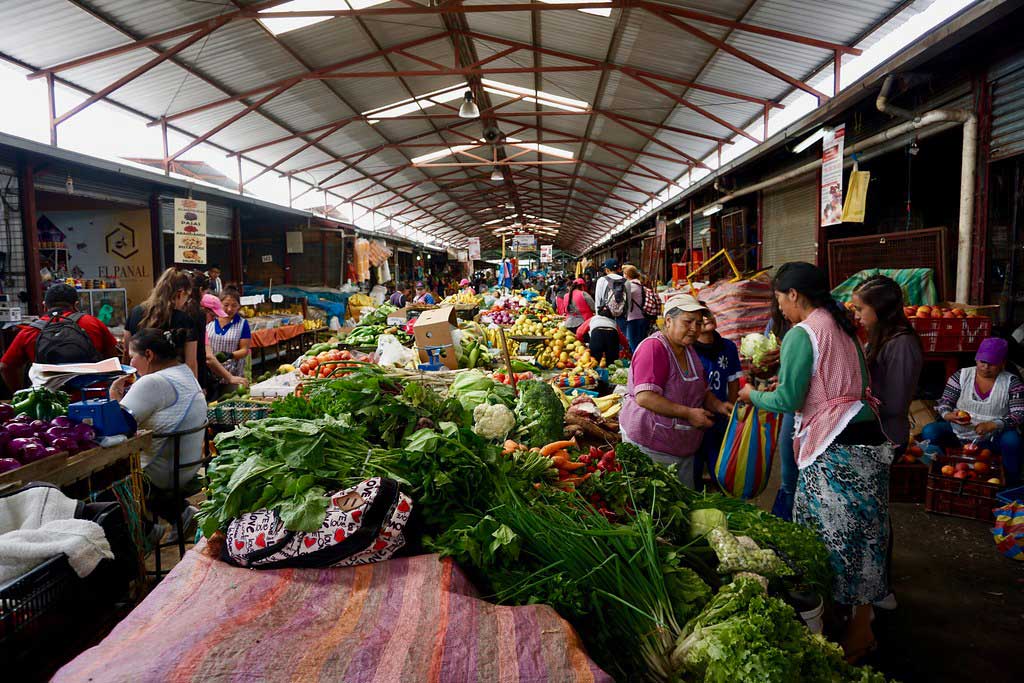
Cuenca is not a bargain basement for the indigent. It is a pleasant city where respectable retirees can stretch their pensions, join a gym, take the Tranvía to lunch, occasionally buy a new pressure cooker to compensate for the altitude, and perhaps even own more than one sauté pan. If the new rules mean that those arriving are slightly better resourced and less likely to end up sleeping on the piece of grass outside the Feria Libre, then perhaps everyone wins.
And before you ask, no, I will not be making a YouTube channel about it. There are already quite enough videos telling the world what a wonderful place this is, without any extra itinerant would-be documentary makers giving too much of the game away. Sometimes what happens in Cuenca should stay in Cuenca.