











Scenes from Asunción: Remembrance of things past, monuments to dictators, crumbling cemetery vaults
By Michael Torney
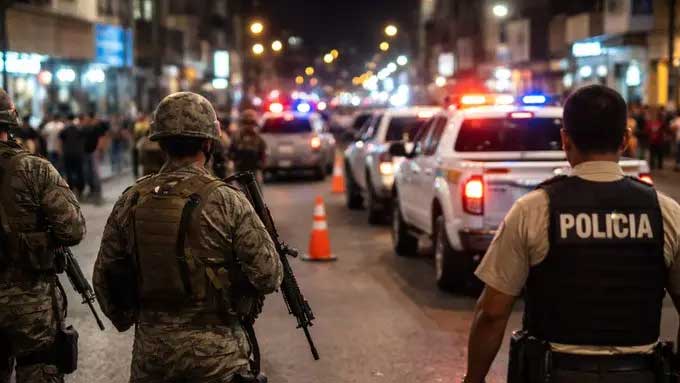
Asunción is in a pre-gentrified condition with new hotels beside old dirty concrete shells, it’s difficult to know if they’re being built or torn down. Construction blocks the cracked, tumbling sidewalks so I walk in the street. An old man in a shirt sleeps on a mattress under an awning. The streets smell of stale urine under 20 storey apartment buildings. Police stand in twos at the corners, the military with rifles at
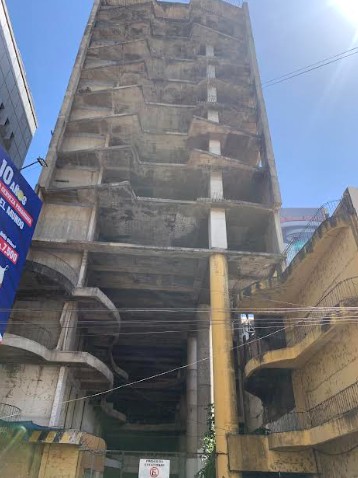
The shell of an unfinished building in downtown Asunción.
the Palacio de Lopez, the centre of government, opposite my lodging; I’m trying to decide if this is reassuring or concerning. My apartment on the 10th floor looks out on the redbrick Palacio de Lopez, named after its several Lopez dictators, and the home of the government which is apparently content to maintain the connection, and onto the Bay of Asunción carved out of the Paraguay River. This is easily the best view I have ever had or ever will have and the cheapness of the rent suggests a benefit of our digitalized moment until I realise that travellers thirty years ago had rents just as cheap but more difficult to book, the dangers of presentism.
La Recolleta, Asunción
All graveyards should be like this, wrecked, empty, a heap of wretched statues and hopes, broken, crooked lanes with rubbish and dead flowers in the brutal sweltering suffocating midday heat.
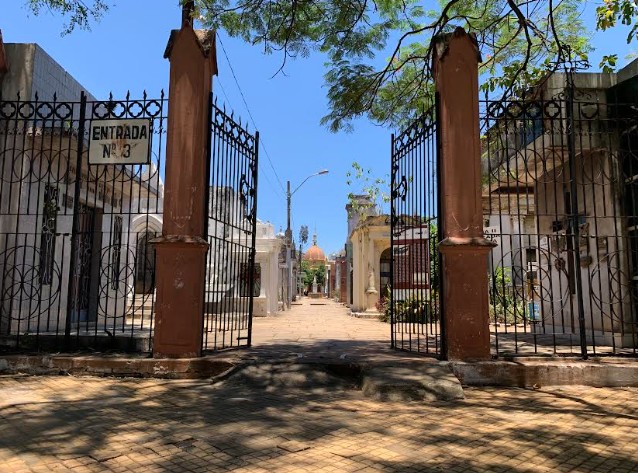
The entrance to La Recolleta cemetery.
The cemetery sits opposite a new shopping centre but the central avenue has no grandeur, simply other lesser lanes turning from it to even narrower paths where I rub shoulders literally with these dead houses, big boxes for the smaller boxes within. Some doors are locked, some with darkened glass, some simply lying open with ancient, webbed coffins tumbled on their dirty shelves. Who or what has dislodged them since they were so carefully placed here? The outsides are decorated with statues of angels with upraised arms or downcast eyes and crosses, the fronts a flurry of plaques hysterical with praise, desperately craving redemption, insistent on dates and details even the dead couldn’t remember about themselves.

Some cemetery vaults lie open with ancient, webbed coffins tumbled on their dirty shelves.
The main attraction is the tomb of Elisa Alicia Lynch Lloyd, a woman born in 1833 in Charleville, County Cork, and the consort of the dictator Francisco Solano López. Her story is fantastic even by Paraguayan standards. Working as a courtesan in the elite circles of Paris in the 1850s Eliza met Francisco, the son of the dictator, and they fell in love and although they never married they spent the rest of their lives together until the final battlefield. When he became dictator after his father’s death she became de facto first lady and quickly accumulated enormous wealth, and resentment from the local nobility who were disgusted at the elevation of this Irish upstart to the apex of their society. One writer estimates she owned property one and a half times the size of Ireland and was perhaps the richest woman in the world at that time. She had seven children by him and followed him during the great Paraguayan War which cost the country an estimated 90% of its adult males, the most devastating war in all of Latin American history. She was there at his death on the battlefield and the death of her son. After that defeat she was allowed to return to France but her remains were repatriated to Paraguay and her tomb in La Recoleta is the most dignified and the most famous. The plaque on her tomb lists her main accomplishment as accompanying the dictator, the ‘heroe maximo’, until his death in battle. The gravediggers this day were happy to lead me to her tomb. The taxi driver knew of her but didn’t know she was Irish and bonded with me over that as if she was my cousin.
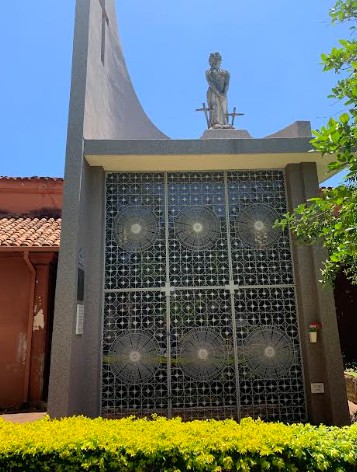
The tomb of Elisa Alicia Lynch Lloyd.
The crypts are houses on a smaller scale as if to enlarge the living in their brief encounter with death here, and perhaps after with life too. The lanes weave their crookedness round the tombs, life making way for the unplanned crookedness of death. There are no signposts, no named streets, no directions, just the scatter of small buildings and lanes that might continue or might come to a dead end. Here in this graveyard, the literalness of death is deeply refreshing, no mystical obfuscation, no veil promising secrets, only cobwebs, rotted wood, crumbling stone, plaques chipped by the decay they refuse and resist, flowers wilted by the sun that awakened them.
This graveyard is a monument to entropy, its truth captured not in its constancy but in its crumbling. Sir Thomas Browne in his 1658 tract on mortality compared humanity’s feeble attempts at self-commemoration to building “Pyramids of Snow”. Here even the stone melts like snow. There is nothing false here because the graveyard redeems no promises, answers no pleas. Death itself is reclaiming this necropolis, the graveyard itself is dying.
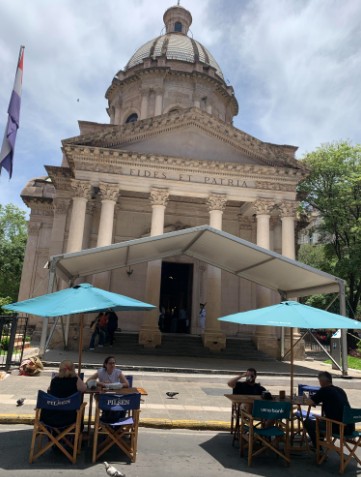
The Panteón Nacional de los Héroes
Panteón Nacional de los Héroes
The necropolis of the nobility is in rather better shape. The Panteón Nacional de los Héroes has “FIDES ET PATRIA” carved in stone above the portico and one suspects that Homeland was placed after Faith by convention not preference in this basilica of dictators. This Baroque blob of stone sulks like a monstrous beehive with four side chapels immediately abutting a central pit — to call it what it is — where coffins and urns of the dictators are displayed with pride of place given to a child-sized coffin of the Unknown Soldier who is, paradoxically, named. There is no central nave leading up to a grand altar; instead, the four chapels and their ensconced altars huddle together and peer over the balustrade into the sunken area with its scattered coffins.
The whole necropolis is a shrine of remembrance and nationalism or, to be more precise, remembrance of nationalism that still idealizes the dictators of two centuries past that leaves me with a bloated, nauseous feeling at the whole death-encrusted orgy of memory, all too familiar to someone raised in Catholic, nationalist Ireland. What is appropriate is that, unusually, we do not look up at these representations but look down upon them — literally — in the pit with that poor soldier’s remains — covered with the only flag — in the highest position overlooking his former masters. The two guards in white uniforms at the entrance look more ready to dine al fresco than discipline the unruly: with rifles on their shoulders they are noticeably relaxed and unmilitary, more like stewards at a football match than anything more frightening. Directly outside the Panteón on the roadway are the covered tables of a café where vociferous conversation — more football than politics — ripples along the sunny, empty street.
________________
Michael Torney was born and raised in County Tyrone, Ireland, studied literature at University College, Dublin and worked as a laborer in several countries in Western Europe before moving to the US and working in Las Vegas for thirty years as a Teamster. Now retired in Cuenca, he travels and reads cultural and political history, philosophy, and fiction and watches soccer and rugby union. (MICHAEL TORNEY © 2026)