













Taxis consider conversion to LPG power; Azuay adds charging stations; Monte Sinaí Hospital expands; Are pets replacing kids? Micro-mobility proposals
Bored? –
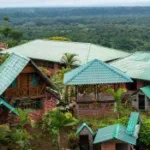
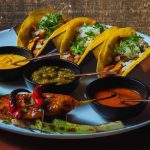
(De El Mercurio del domingo, 13/9) Baños celebra 174 años con gastronomía y cultura (Baños celebrates 174 years with food and culture) – Baños will celebrate its 174 years as a parish with an agenda including food, culture, sports and traditions. Sumak Serrano, director of tourism for the parish GAD said the program will include the 3d edition of Rural Chef, a livestock fair, the election of the Cholita Bañense and a civic parade. The Rural Chef has been organized with the Universidad Católica de Cuenca and will have an inter-high school competition for rhe best Locro de Papas, and chefs in the semi-professional category will compete for the best Mote Pata. The preliminaries will start el 17/9 with the final on el 3/10 a las 10:00 in the Salón del Sindicato de Choferes. On the 19/9 there will be the IV Feria Ganadera, Gastronómica y Artesanal and the election of the Cholita Bañense 2026-2027. The parade will be el 27/9.
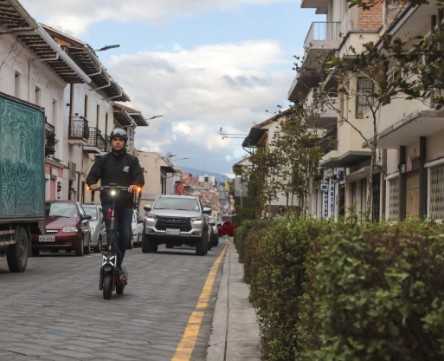
The city of Cuenca is asking the Agencia Nacional de Tránsito (ANT) to establish different rules for electric motorcycles and other micro-mobility vehicles such as stand-up scooters. (El Mercurio)
Curious? –
(De El Mercurio del sábado, 12/9) Monte Sinaí arranca la construcción de Torre V (Monte Sinaí breaks ground on Tower V) – The Corporación Médica Monte Sinaí placed the cornerstone for Tower V, a new medical services building in the sector of the roundabout at av. Solano and el Estadio. The project will have about 15,000 sq. meters, 6 floors, a “rooftop,” and 5 floors of underground parking. The construction will take a little more than 30 months with completion estimated for the middle of 2029. Emmanuel Coronel, president of the Monte Sinaí holding company said there will be 125 medical offices along with diagnostic services, a pharmacy, laboratories, an imaging center, MRI and emergency room. The hospital has also acquired a robot for surgeries, a new technology for the city. <I guess that’s OK since surgeons aren’t noted for the best bedside manners anyway.> 200 new professionals will be added to the existing 450 doctors to serve the demand from patients who come to Cuenca from other cities for specialized treatment. Leonardo Sánchez, general manager of Torre V reported that 95% of the 125 consultorios have already been sold.
(De El Mercurio del sábado, 12/9) Policía incauta cocaína en embarque de banano (Police seize cocaine in a banana shipment) – The Policía Nacional seized 200 kilos of chlorhydrate of cocaine hidden in a container of bananas for export with the final destination the port of Tangier in Morocco. The operation was carried out on the vía Progreso-Playas, Guayas Province, where agents intercepted a trailer headed for the Posorja port. They found 8 suitcases hidden among the pallets of bananas with 200 packets that tested positive for cocaine. Police estimated this would be enough for 2 million doses. <I know what y’all are thinking – whose bananas?>
(De El Mercurio del sábado, 12/9) Siete electrolineras más tendrá Azuay (Azuay will have seven more charging stations) – The modernization of the electric charging station at kilometer 65 on the vía Cuenca-Molleturo-El Empalme in the El Mestizo sector marks the start of a project to set up 7 charging stations at strategic points on the roads connecting Azuay with Guayas, El Oro, Loja and Cañar. The El Mestizo station will have rapid charge technology of 60 kW, an output voltage of 200–1,000 V, and 96% efficiency. It will recharge an electric vehicle in about 20-40 minutes. <Just about enough time to go and get yourself a cup of coffee and a doughnut or a burger and a cola.> The location is strategic since about 10,000 vehicles pass this point daily. Other locations are planned for Oña on the vía Cuenca-Loja; Zhud on the Biblián-Zhud highway; Challuabamba on the vía rápida; and on av. Ordóñez Lasso in Cuenca. This initiative is from the Empresa Eléctrica Regional Centrosur in alliance with Evinka, a company specializing in charging station infrastructure in Latin America. Diego Morales, executive president of Centrosur, said that the electric company is looking to increase coverage gradually, using private sector alliances.
(De El Mercurio del sábado, 12/9) Reformas para micromovilidad (Reforms for micro-mobility) – A proposal came from Cuenca to regulate new reforms to the Ley Orgánica de Transporte Terrestre, Tránsito y Seguridad Vial (Organic Law on Land Transportation, Traffic, and Road Safety), approved by the Asamblea Nacional on el 3/9. The initiative seeks to establish different rules for electric motorcycles and other micro-mobility vehicles such as scooters. These vehicles would be classified according to speed, weight, power, size and range.
In addition, the Agencia Nacional de Tránsito (ANT) will establish parameters for speed limits, conditions for use, and minimum safety equipment including approved helmets. Vehicles will be allowed to circulate on roads, spaces, or infrastructure in accordance with national laws and local municipal ordinances. The use of these micro-mobility vehicles is mainly for urban trips since they aren’t allowed on the national road network, perimeter roads, or restricted stretches. The local proposal which will be submitted to the Government, proposes a distinction between electric motorcycles and scooters due their different characteristics, dimensions, weight, specifications and uses. Electric motorcycles will need identification, registration, and matriculation procedures. Drivers will also need a valid license, although not necessarily one exclusively for these types of vehicles.
Also proposed is a process for free or low-cost vehicle registration as well as a creation of a registry for the batteries so they can be taken to authorized centers to be treated, recycled, and disposed of. This mechanism will strengthen environmental responsibility and establish economic incentives or benefits for promoting adequate delivery of the batteries. As for skateboard style scooters, a proposal would classify them into 2 categories — those with a maximum speed of 25 km/hour, and those faster than that. Both categories should comply with basic safety and road sharing obligations such as helmets, respecting signals and regulations, not driving under the influence, and speed limits.
(De El Mercurio del domingo, 13/9) Taxistas avanzan 60% en su proyecto para implementar el GLP (Taxi drivers are 60% of the way toward implementing their LPG project) – Patricio Padilla, president of the Frente Unido de Taxistas el Azuay reported that the project to convert taxis in Azuay to use GLP has advanced to 60% although it still needs authorizations, certification of equipment, workshops, and adjustment to the technical vehicle revision process. They are doing this for fuel savings since they are currently spending $18-20/day on gasoline. The union expects that the implementation will take at least a couple of months. The project is to install LPG in taxis at a cost of between $800-1200 per vehicle. It is also analyzing gas suppliers such as Agipgas, Austro Gas, and Duragas. <So are there going to be gas tanks rolling around in the trunk? I’m imaging a gas tank strapped in where the gasoline tank once was and rubber hoses running under the taxi to the carburetors. I’m assuming it will be more formal than that.>
(De El Mercurio del domingo, 13/9) Nuevas formas de vivir cuando las mascotas entran a la familia (New ways of living when pets join the family) – It’s not strange to see dressed up dogs in parks, cafes and shopping centers, wheeled around in strollers or with their caregivers during a good part of the day. Also not surprising are dog birthday parties, day care centers, beauty parlors, special food, or family photos with the pet in the middle. Behind these daily scenes is a deeper transformation which is a change in that way to understand what a family is. The article discusses changes to the traditional sequence of study, work, marriage, and children in which the decision to have children is often postponed. It asks if pets are a substitute for children, or do they have a new role instead of being a farm or guard dog. It talks about the psychological effects of having pets and cultural changes of “perrhijos” (perro-hijos/ dog-children). Aso discussed was the economic effect of having and maintaining pets – with a special market growing to attend to the needs of pets. The article also talked about the changing form of “family.” The contemporary family can be with or without children, one person families, extended families, and families where animals occupy a central position. The challenge is not to turn things into a debate about children vs. pets.



Hogar Esperanza News

Fund Grace News

Property Manabi

The Cuenca Dispatch

Week of September 06

U.S. sinkings of Ecuadorian fishing vessels trigger court scrutiny after 28 crew members are released.

Cuenca targets a November launch for its first new international link to Chiclayo.

Exports hit a quarterly record, but Ecuador’s import bill is rising even faster.
Fabianos Pizzeria News
