










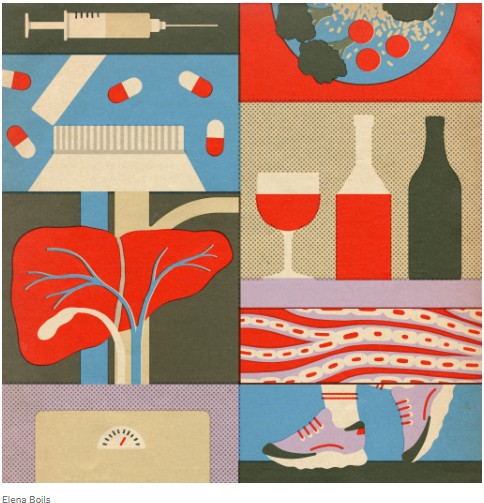
The best and worst habits for your liver
By Nina Agrawal
The liver is a powerful organ: It filters our blood, helps maintain sugar levels, stores energy and plays an essential role in digestion.
A poor diet, a lack of exercise and other medical conditions can contribute to liver disease and liver cancer, both of which are on the rise globally.
It’s often possible to prevent liver disease, or even reverse it, with diet and lifestyle changes alone. Here’s what can help, as well as which habits might be causing harm.
The Worst Habits
 Drinking too much alcohol
Regular alcohol consumption, metabolic dysfunction or a combination of both can contribute to something called steatotic liver disease. Fat accumulates in the liver and can lead to inflammation, scarring and cirrhosis, said Dr. Zobair Younossi, chair of the Global Center for Liver Outcomes & Policy Research at Georgetown University School of Medicine.
In people with metabolic issues like Type 2 diabetes, high blood pressure or excess abdominal fat, modest alcohol consumption can compound liver damage, Dr. Younossi said. Binge drinking (consuming five or more drinks on one occasion) is the most harmful.
For people with advanced liver disease, doctors recommend avoiding alcohol altogether. But with milder or no disease, up to one drink per day may be acceptable, though none is better, said Dr. Mary Rinella, director of metabolic and fatty liver disease at the University of Chicago.
Overdoing it on sugar
Sugar is a building block for fat formation in the liver. With too much of it, “the machinery gets overwhelmed,” and liver cells become stressed, Dr. Rinella said. Insulin resistance, which can occur with chronic overconsumption of sugar, also contributes to fat buildup in the liver.
There’s a wealth of evidence linking high sugar consumption, particularly from sugary beverages, to metabolic dysfunction-associated steatotic liver disease, or MASLD, said Shira Zelber-Sagi, a clinical dietitian and epidemiologist at the University of Haifa in Israel.
Added sugars like high fructose corn syrup, which is present in many ultraprocessed foods and sodas, are particularly damaging to the liver. Guidelines recommend women consume no more than 25 grams and men no more than 36 grams of added sugar daily.
Dr. Zelber-Sagi tells patients they can have the occasional slice of cake, but they should absolutely avoid sugar-sweetened drinks. “It creates a very strong habit and we don’t need it,” she said.
Relying on supplements
Dawn Anderson, a clinical dietitian at Virginia Commonwealth University, said patients often ask her about liver cleanses, detoxes and supplements like milk thistle and mushroom coffee. There is little evidence that these unregulated products have any liver benefits, experts said. “Your liver is already your body’s detoxification system. It does not need a cleanse,” Ms. Anderson said. And these products may cause harm if they contain unknown ingredients or excessive quantities of certain ingredients.
The Best Habits
Exercising and maintaining a healthy weight
Losing weight can help reduce fat buildup, inflammation and scarring in the liver. Just a 3-percent reduction in body weight can improve liver health markers, but 10 percent or more is needed to reverse scarring.
GLP-1 drugs like Wegovy, which are approved to treat an advanced type of MASLD, have been “a game-changer,” Dr. Zelber-Sagi said. But they must be used in conjunction with exercise, particularly strength training, because muscle loss can worsen outcomes in people with MASLD.
Engaging in at least 150 minutes of aerobic activity, and strength training twice a week, helps reduce abdominal fat and insulin resistance, Dr. Zelber-Sagi said.
Aiming for a Mediterranean-style diet
The Mediterranean diet, which centers on fresh fruits, vegetables, fish and legumes and is rich in healthy fats, has been shown to reduce the risk of cardiovascular disease, a leading cause of death in people with nonalcoholic liver disease. It is low in saturated fats, which are found in red meat, dairy and palm oil and can increase fat in the liver.
But it’s not always practical to stick strictly to the diet, experts acknowledged. Ms. Anderson said that while many of her patients follow a traditional Southern diet, they can incorporate Mediterranean elements. “We can have collard greens, cabbage, maybe a summer squash, a cucumber and onion salad,” she said.
For protein she suggests adding fish or white meat and cutting back on fatty cuts of red meat. She also encourages people to grill, rather than fry, and to use butter only for flavoring.
Lastly, coffee (up to four cups a day) has been shown in animal studies to reduce fat and scar formation in the liver, and is associated in humans with a lower risk of cirrhosis, Dr. Rinella said.
Staying up-to-date on primary care
Hepatitis B and hepatitis C are significant drivers of liver disease worldwide. The Centers for Disease Control and Prevention recommend that all adults be screened at least once for hepatitis B and hepatitis C. Both can be treated. Adults should also be vaccinated against hepatitis B if they weren’t as babies, Dr. Rinella said.
Primary care doctors can do these screenings. They can also estimate your liver disease risk with the help of routine lab results. If you have Type 2 diabetes, you should talk to your doctor about getting liver stiffness testing, which can show progressing liver disease.
_________________
Credit: The New York Times