












The Blue Footed Boobies of Cuenca: Camera in hand, self-appointed PR teams sing the city’s praises
I keep seeing the same couple in Cuenca. Or at least I keep seeing their online clones.
He is always about sixty-one and grizzled with a baseball cap that says something about life being a journey. She is fifty- eight with blonde hair, brown eyes, and that smile you only get from the frequent application of Botox and expensive dentistry. Together they walk through El Centro with the confidence of people who have paid big bucks for a camera stabilizer and drone and intend to amortize the cost.
They come equipped with the same starter kit. An expensive camera. A selfie stick that can reach the length of an interprovincial bus. A gimbal that has more features than their apartment back home. He carries the equipment in a rucksack like a sherpa. She floats ahead with one arm slightly extended like a documentary subject holding a script off-camera. The hubby specializes in filming her from behind as she walks in leggings along Calle Larga. This is presented as the authentic exploratory process.
 Their Spanish is universal and narrowly targeted. Gracias. Hola. Cuanto. Si. No. If they are feeling poetic, they add bueno and maybe even bonita. They explain to their viewers that you do not need much Spanish here. This is true as long as your world consists of coffee shops with banana bread, restaurants with menus in English, and a landlord who drove a taxi in New Jersey in 1994.
They always film a first impressions video. They say Cuenca is charming and colonial and safe. They admire the domes from Parque Calderon and film them until the rain starts. Then they walk up and down the steps near Parque de la Madre and tell their viewers the altitude is invigorating. Then they return to the hotel for a nap.
Next comes the cost-of-living video. They stand outside Supermaxi holding a pineapple. They announce its price and compare it to a genetically modified hurricane-resistant pineapple in Florida that cost the same as a minor medical procedure. They talk about the three-dollar almuerzo, film it dutifully, and say it tastes amazing or awesome. They rarely finish it.
Then there is the apartment tour. They find a bilingual realtor who shows them a modern place with a grubby white sofa and a view of Turi in exchange for promised YouTube exposure. It rents for twelve hundred dollars a month. They tell the camera this is an incredible value compared to Manhattan or Montreal. They do not tell the camera that most Cuencanos would rent the same space minus the sofa for a fraction of that. Their excited YouTube viewers declare that they are moving to Ecuador immediately.
At some point they film a segment about visas. This always features a bilingual visa application agent who appears beside them like an apparition. The agent smiles professionally and explains the process in slightly accented English while they nod solemnly. It is never clear if they are paying the agent, if the agent is paying them, or if everyone involved is simply hoping the arrangement will become clearer once the invoice arrives.
They tell their viewers that the agent makes everything easy. They do not mention that you must have no criminal record, although a youthful conviction for possession of marijuana may add a surcharge to your visa fees. They also do not mention the mysterious service charge or the additional cost for sending in the application, which seems to have no standard price. (My own provider charged $25 in Guayaquil). They only say that anyone can do it. You just need the right documents and a helpful professional who materializes at the exact moment the camera turns on.
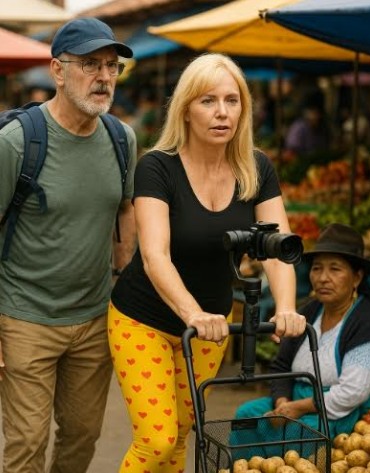
Their filming equipment sometimes becomes a thing of wonder. What begins as a gimbal soon evolves into a complicated rig that sits on top of a shopping cart like a mobile weather station. They push it proudly through Feria Libre, capturing endless footage of women in traditional dress who are simply trying to sell potatoes and plantains.
They never mention image release forms. They behave as though every merchant in the market has signed a document giving full permission to appear in a video titled Living Our Best Life in Cuenca on $5 a Day, where she makes a surprised face at the camera when informed that the potatoes cost exactly $1 and he talks about authenticity while dodging a man who nearly drops a crate of chickens on his foot. They do not mention that the rotten potatoes are usually found at the bottom of the bucket.
Their income sources appear in gentle hints. Some came on inheritance winds after selling a family home in Rhode Island. Some live on pensions that would soon flame out in the heat of Miami, but provide a slow burn in the cool air of El Centro. Others claim to live off investments, which sometimes turn out to be one solitary gold ETF.
Then there are the creators who live on YouTube royalties. These are the digital nomads with a gimbal and a dream. They film themselves walking around Cuenca while she walks ahead in tight shorts and he narrates like a man who has never seen a bridge before.
A few of them add a Patreon. This is advertised as a community but works mainly as a tip jar. Loyal supporters pay a few dollars a month for exclusive new content such as her walking a little more slowly or wearing a new hat, wig, or uplift bra. The couple thank their patrons warmly and mention how important this support is, though usually this means the drone needed a new battery.
They sometimes claim to work online for two hours each morning doing website maintenance. This appears to involve resetting passwords and approving Disqus comments while drinking instant coffee. They call it remote work. It allows them to remain fully mobile as long as they do not stay overnight in the Cajas.
Their reason for coming to Cuenca is always the same. You can drink the water from the faucet. They say this as if they have discovered the Tree of Life, but it never stops them from moving later to a country where the tap water is strictly for boiling or filtering. They simply buy locally bottled Dasani water and say it is all part of the adventure.
The wife often has a discreet mammary modification. This is never mentioned, but is carefully documented whenever she walks ahead on the cobblestones. The camera often lingers in a way that suggests the husband once considered a career with National Geographic.
Their misadventures are the best part. There is always a moment when the gimbal battery dies in Parque Calderon and both freeze like characters in a telenovela who have just heard shocking news. They pretend it is fine, but it never is.
They also attempt to say Tomebamba. This is always a highlight. They pronounce it Tumabamba in the morning, Tomembamba at lunch, Tumibumba in the afternoon, and finally Tumbabamba before they give up and point vaguely towards what they now call el rio.
Their comments section is a masterpiece of engineering. Anything that contradicts them disappears. If someone points out an error or questions a cost estimate the comment is removed before the digital ink is dry. Only the faithful survive. Inspiration! Great video! You have opened our eyes! We are selling our house in Boise! They respond with heart emojis and a link to the Patreon sign-up page.
You can easily spot these couples in the wild the way you spot blue footed boobies on the Galapagos and study them in the same way. They move in pairs. They tilt their heads toward the sun. They perform small courtship rituals involving a gimbal. They migrate across Latin America in predictable seasonal patterns. First Cuenca. Then Medellin. Then Antigua. Their plumage changes slightly from country to country, but the behavior remains constant. One partner walks ahead while the other records the rear view. Both believe they are documenting something important. It is their own ancient ritual, the solemn act of filming each other walking down the street, a tradition now observed across the hemisphere wherever ring lights bloom.
By the end of their stay they film something philosophical down by the river. They reflect on life being short. They encourage viewers to follow their dreams. Then they take a taxi to the airport. Their next video is from Medellin or Antigua or San Miguel de Allende. They say it feels good to be back in Latin America.
Cuenca breathes out. The river keeps on flowing. The cathedral domes remain in place.



Hogar Esperanza News
Property Manabi

The Cuenca Dispatch

Week of August 23

Ecuador’s economy grew 2% during the first half of 2026 compared with the same period a year earlier, according to new Banco Central del Ecuador data.

Cuenca gets a prime view of next week’s deep partial lunar eclipse.

Ecuador’s economy grows 2% in the first half of 2026.
Nice apartment banner
Fabianos Pizzeria News

Fund Grace News