












The daily rituals in Cuenca that quietly make you feel like you belong
Daily rituals in Cuenca rarely begin with dramatic moments. Most expats discover they belong through ordinary routines that quietly become part of someone else’s day. Long before they think of themselves as locals, someone else has already started treating them that way.
It was just after eight on a Wednesday morning.
David pushed open the door to the neighborhood bakery, as he had almost every morning for the past several months. The smell of fresh bread filled the room, mixing with the rich aroma of coffee drifting from the café next door.
Carlos looked up from arranging a basket of warm rolls.
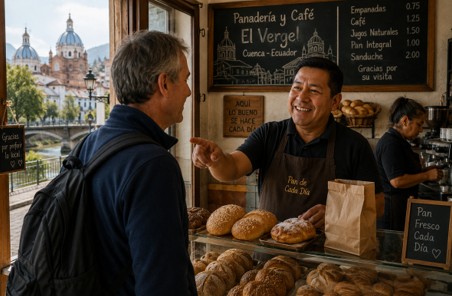 “¡Buenos días, David!”
Without waiting for an order, he reached for two whole wheat rolls and a small sweet roll.
“Lo mismo de siempre.”
“The usual.”
David smiled.
“I was thinking about trying something different today.”
Carlos laughed.
“No, you weren’t.”
The woman waiting behind David chuckled.
“He knows you pretty well.”
Carlos slipped the bread into a paper bag.
“Claro. Every morning.”
David paid, thanked him, and turned toward the door.
Behind him Carlos called out,
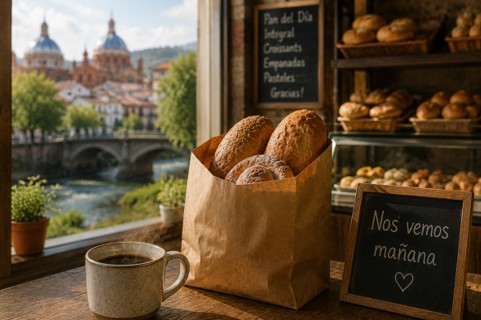
“¡Nos vemos mañana!”
See you tomorrow.
David lifted his hand without turning around.
“Hasta mañana.”
He didn’t realize it, but for the first time, the words came naturally.
He wasn’t translating them anymore.
He was simply answering.
David crossed the bridge over the Tomebamba River with the warm paper bag tucked under his arm.
The river flowed exactly as it had the day he arrived in Cuenca.
Cyclists passed.
A couple walked their dog.
The church bells marked the hour.
Nothing around him seemed different.
 Yet something quietly was.
Carlos hadn’t asked whether David would be back tomorrow.
He had simply assumed he would.
Somewhere along the way, David had stopped being another customer.
He had become part of someone else’s routine.
Why Daily Rituals in Cuenca Matter More Than Big Milestones
Many people expect life in a new country to change because of the big moments.
Receiving residency.
Buying a home.
Opening a bank account.
Learning enough Spanish to order lunch without hesitation.
Those milestones matter.
But they rarely create the feeling of belonging.
Belonging grows much more quietly.
It begins when the waitress starts pouring your coffee before you ask.
When the taxi driver already knows your address.
When the pharmacist remembers your name.
 When the fruit vendor tells you to come back tomorrow because the avocados will be perfect then.
None of those moments feels important by itself.
Together, they slowly change how you experience your new home.
Recognition Comes Before Friendship
Many newcomers arrive believing friendships will be the first sign they have settled into Cuenca.
Often, something else happens first.
People begin recognizing your face.
Then your routine.
Then your name.
Eventually they begin expecting to see you.
Only later do conversations become friendships.
Belonging often begins with recognition long before it becomes companionship.
That is why some people suddenly realize one day that Cuenca feels different, even though nothing obvious has changed.
The city hasn’t changed.
They have.
The Moment Most Expats Never Notice
When David reached home, he unpacked the bag.
There were three rolls.
He had only paid for two.
Carlos had quietly slipped an extra sweet roll inside.
No note.
No explanation.
Just a small gesture from someone who knew his customer well enough to think it might brighten his morning.
The pastry wasn’t really the gift.
Recognition was.
When Does Cuenca Finally Feel Like Home?
People often ask when Cuenca finally begins to feel like home.
Most expect the answer to involve residency papers, language classes, or finding the perfect apartment.
Sometimes it does.
More often, it happens on an ordinary Wednesday morning.
It happens when someone remembers your name.
When your usual order is already waiting.
When a neighbor waves before you do.
When “See you tomorrow” no longer sounds like a polite farewell.
You rarely notice the day you begin to belong. Someone else usually notices first.
Those daily rituals in Cuenca rarely attract attention, but they quietly transform visitors into neighbors, routines into relationships, and a new city into something that slowly begins to feel like home.
If that thought resonates with you, this week’s companion story at Next Cradle explores why we often recognize life’s biggest transitions only after they’ve already begun.



Hogar Esperanza News
Fabianos Pizzeria News

The Cuenca Dispatch

Week of August 23

Ecuador’s economy grew 2% during the first half of 2026 compared with the same period a year earlier, according to new Banco Central del Ecuador data.

Cuenca gets a prime view of next week’s deep partial lunar eclipse.

Ecuador’s economy grows 2% in the first half of 2026.
Fund Grace News

Property Manabi

Property Kuralt

Nice apartment banner