














The economics of appetite management in Cuenca
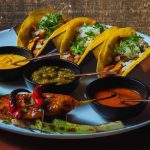
There are restaurants in the city center where for $3.50, a man in a white apron will place before you a bowl of soup, a plate of rice with something on top of it, a small salad of red cabbage, grated carrot, and papaya with half an avocado pressed into a rough dressing that has not been introduced to a blender, a small dessert, and a glass of guanabana juice made from frozen pulp and plenty of water, which is to say exactly as much guanabana as the economics of the situation permit.
You may sit there as long as you wish, though if the next customer is already hovering politely behind your chair, you may consider this to be a signal that it is time for you to move on.
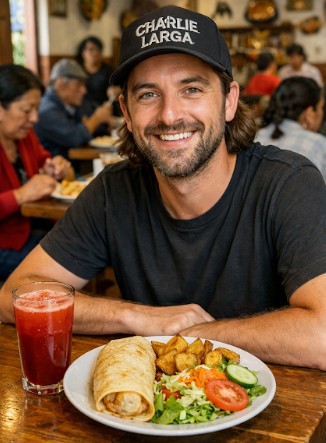 This arrangement appears, at first glance, to be mathematically impossible, because the numbers do not add up, or rather, they add up in a way that suggests either a charitable institution, a national misunderstanding, or a conspiracy to feed people at a loss, and yet the almuerzo exists everywhere in Cuenca, and indeed in Ecuador, where such a meal typically arrives in three to five parts as if assembled by a committee determined to prevent hunger by sheer persistence.
The question is not why it is so cheap, but how it is possible at all.
The soup arrives first, and it is doing considerably more work than it appears to. A bowl of potato soup with a little onion and a hint of chicken bouillon or a chicken foot costs almost nothing to produce in volume, particularly if the potatoes were bought not from a supermarket but from Feria Libre at six in the morning, where prices bear only a passing resemblance to what you pay at Supermaxi. More importantly, the soup fills you up before the expensive part arrives, so that by the time the second course appears, you are already halfway satisfied and therefore less particular about quantity.
It is a highly efficient system of appetite management, though nobody calls it that.
The meat, when it arrives, is approximately eighty grams, occasionally less, sitting in the center of the plate with the dignified composure of a visiting official who has agreed to attend but has no intention of staying long. In North America the meat is the meal and everything else is decoration, but in Cuenca the rice is the meal and the meat is the occasion. The plate looks full. The stomach agrees. And the math works.
Then there is the question of labor, which is where the arithmetic changes most dramatically. A restaurant in the United States spends somewhere between twenty and thirty percent of its revenue on wages alone, and that is before rent and ingredient costs begin their own work of destruction.
A restaurant worker in Cuenca earns somewhere between $232 and $431 a month, which means the person who cooked the soup, plated the rice, washed the dishes, and handed you the guanabana juice may cost the establishment less in a working day than a single hour of kitchen labor costs in an American city. The comparison is not flattering to either system, depending on which end of the equation you occupy, but it does explain a great deal.
The menu, or rather the near-total absence of choice, does the rest. You will eat what is being cooked today, and that is not a failure of imagination but the entire point. A kitchen that prepares one soup and one main dish can buy exactly what it needs, waste almost nothing, and move forty people through the door between noon and two with the efficiency of a lunchtime assembly line. Every additional menu item is a new opportunity for waste, delay, and the particular anxiety of a cook who is no longer sure what he is making. In Cuenca, the kitchen knows before you arrive.
If you sit down and calculate what a basic almuerzo actually costs to produce–and I have done this so that you do not have to–a reasonable estimate comes out somewhere between $1.50 and $1.80, depending on the protein and the size of the dessert. It is then sold to you for $3.50, which is not a large margin but is a workable one, provided the tables turn over at a reasonable rate, the menu does not wander, the rent is modest, and nobody has decided to create what is now universally described as an “dining experience”. (The type of “experience” provided by a restaurant is invariably one that will be paid for through the nose.)
A brief word on taxes, since the subject has a way of arriving uninvited. Prepared food in Ecuador is technically subject to IVA at fifteen percent, though in the smaller comedores and market restaurants the bill, when it arrives at all, rarely reflects this with any precision, because many operate under Ecuador’s RIMPE simplified tax regime, and the $3.50 is the $3.50 is the $3.50. The IVA, if it exists, has already been absorbed into the price and is not your concern.
Contrast this with the United States, where a comparable meal, if it could be assembled at all, would be $11.99, but this would be the base price plus state sales tax, which varies but runs typically between six and ten percent, plus a stunning table delivery charge of around twenty percent that is described on the menu as optional–but is not optional as will soon be discovered by unwary tourists who may or may not find this revelation to be a mystical experience.
So the end game is that what is advertised as a $11.99 plate will cost you more like $15, and someone will still stop by twice to ask how everything is going and whether you have your debit card ready and if you need a pen to add a tip.
The surprising thing about the Cuenca almuerzo is not so much that it is inexpensive, though it is that, but that it functions as a stable system, reproduced daily across the entire country, without branding, marketing, franchising or anyone appearing to find it remarkable.
It feeds people efficiently, predictably, and without complication, and it leaves the occasional visitor with a slightly uncomfortable thought: that modern franchise restaurants, with curated menus, dim lighting, and elaborately managed ambiance, are not necessarily the be-all and end-all of feeding people well and may in fact be simply a more expensive system of appetite management.



Hogar Esperanza News

Fabianos Pizzeria News

Fund Grace News

The Cuenca Dispatch

Week of September 20
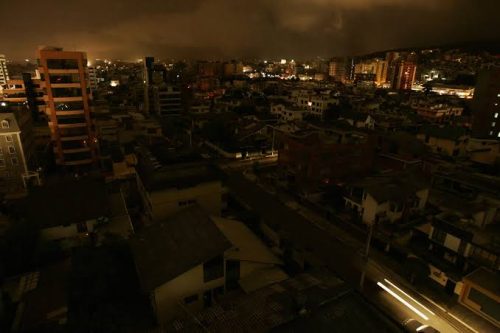
Ecuador turns to industrial power cuts to protect Mazar and keep homes from going dark.

Ecuador raises its 2026 growth forecast, but El Niño could spoil the outlook next year.
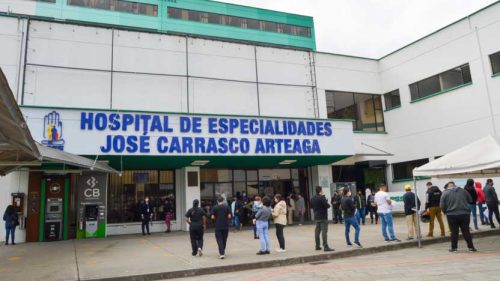
Cuenca retirees challenge medical and therapy changes at IESS senior center.