
















The global rush for second passports: In a politically volatile world many are looking for ‘plan B’
By
Traveling from country to country without restrictions. Shorter lines at the border. The right to live and work in your dream destination, or to reconnect with family roots. All that, and more, is the dream of those who seek dual citizenship. And that includes monsieur George Clooney, who celebrated the end of 2025 by acquiring French citizenship for himself and his family.
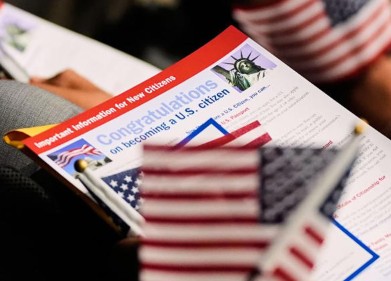
Republican senator Bernie Moreno says that people naturalizing as US citizens should renounce their previous ties. – Charles Krupa/AP
Dual citizenship — the ability to be a citizen of two (or more) countries — has long been popular with travelers, expats and dreamers. In a world of increasing red tape, who wouldn’t want to skip the long lines at passport control and breeze through with the locals? For those who, like Clooney, dream of living and working in another country, but don’t have an employer to sponsor them, acquiring another citizenship might be the key that unlocks that door. Even for those with no plans to move, it can be transformative.
But in 21st-century politics, the tide may be turning against dual citizenship. In 2025, several European countries tightened requirements for citizenship by descent and so-called “golden passport” programs, which grant citizenship to big spenders. And in the US, Ohio’s Republican senator Bernie Moreno has mooted an “Exclusive Citizenship Act” that would ban Americans from holding any other citizenships.
How common is dual citizenship?
There’s no way to know the precise numbers, says Peter Spiro, professor of law at Temple University. That’s because most countries don’t require citizens to declare whether they hold multiple nationalities.
One thing seems clear, however: dual citizenship is becoming increasingly popular. In the 2021 census of the UK’s population, 2.1% of England and Wales residents held multiple passports — around double the result of the 2011 census, in which 1.1% of the population self-declared as dual citizens. And in a recent YouGov poll of Americans, 6% self-declared as dual citizens.
What kind of people hold multiple citizenships?
For as long as migration has existed, many immigrants who naturalize in a new country have wanted to retain their citizenship of origin. In recent decades, the wealthy have also embraced dual citizenship as a way to expand global mobility.

Malta’s controversial ‘golden passport’ program was axed in 2025. – Dado Daniela/Moment RF/Getty Images
Now, as the world gets increasingly volatile, interest is broadening. A November Gallup poll found that one in five Americans would like to emigrate, including 40% of women aged 15-44 — a 400% increase on a similar poll taken in 2014.
That appetite for a new start abroad is reflected in an increasing number of applicants for second passports, says Dominic Volek, group head of private clients for Henley & Partners, which assists high-net-worth individuals in attaining dual citizenship around the globe. In 2025, they assisted clients of 91 nationalities, but Americans were top of the list.
“Three or four years ago we didn’t have a US office and now we have nine,” he says, adding that there’s been a “huge uplift” in the number of Americans seeking dual citizenship. They include those unhappy with US politics (from both sides of the political divide), and ultra-wealthy individuals who realized during Covid travel restrictions that a US passport couldn’t open as many doors as they’d thought. American clients now represent 30% of the firm’s business, he says.
British citizens have also surged into Henley’s top five, Volek says, after Brexit stripped them of freedom of movement across the European Union. He adds that tougher tax policies proposed by the current Labour government have prompted some wealthy Britons to look abroad.
These shifts marks a reversal of pre-pandemic patterns, when demand was driven by residents of emerging countries facing political or economic instability, says Volek. Today, Henley’s top five markets are the US, India, Turkey, China and the UK.
Volek says the trend is no longer predominantly about relocation. In turbulent times, having a second (or third, or fourth) passport becomes an “insurance policy.”
“There’s a lot of upsides and no downside,” says Spiro, who has written several books about citizenship. “And the upsides have certainly become better understood in the wake of political turbulence in the US.”
What are the main routes to citizenship of another country?
Most people qualify through one of three routes: descent, investment or naturalization. Citizenship by descent typically requires showing that your ancestors came from a particular country, with rules varying by nation on how many generations back can qualify, and whether an ancestor naturalizing in another country severs the line.

Grenada still offers citizenship by investment — but it’s trickier to turn that into a US visa now. – TravelKorner/iStockphoto/Getty Images
Citizenship by naturalization involves legally residing in a country for a set period — usually between five and 10 years — before applying. Requirements often involve criminal background checks, language proficiency, exams on history and culture, or proof of good character. Even after meeting the criteria, approval isn’t guaranteed and the process can take years. It’s not cheap, either — there’s a $2,335 fee to naturalize as a British citizen, for example.
Citizenship by investment is a different beast, created for high-net-worth individuals who can inject money into the local economy. Applicants invest in the country and either receive a passport or residency that can eventually lead to citizenship.
What are the benefits of dual citizenship?
They’re myriad. Dual citizenship can allow people to relocate to another country, open the door to work opportunities and unlock new educational opportunities for their children. “If your kids are interested in working or studying in the EU, you can do it hassle-free,” says Spiro of the ever-popular European citizenships.
Depending on the passport, it can also open up visa-free travel or the ability to buy property or start a business abroad. “It’s a no-brainer for those who are eligible,” says Spiro.
On an emotional level, acquiring a second citizenship can strengthen ties to ancestral homelands, or offering a connection to a long-admired country. Some diasporas, such as those of Ireland and Italy, have helped burnish the reputations of their mother countries around the globe. “It has fostered a transnational Italian cultural identity and reinforced the enduring value Italy places on familial connection,” attorney Adriana Coco Ruggeri, who specializes in Italian citizenship cases, says of Italy’s diaspora.
How about the downsides?
Surprisingly few, although they can be major. The US and Eritrea tax citizens no matter where they live, meaning dual nationals face obligations even after moving abroad. Other countries rely on residence-based taxation, which can still result in higher overall tax bills.

Such cases can draw criticism, but Volek says governments are increasingly formalizing pathways for exceptional applicants as traditional investment programs disappear. “The programs are falling away but being replaced by merit frameworks,” he says.
The risks don’t end there. Italy, which sharply restricted citizenship by descent in 2025, has proposed charging Italians living abroad an annual fee of 2,000 euros ($2,350) to access the country’s healthcare system. Citizens could opt out, but anyone seeking healthcare later would need to backpay unused years. The proposal mirrors a 2024 policy requiring non-EU residents in Italy to pay the same annual fee.
Military service can also present complications. When Russia invaded Ukraine in February 2022, Volek says he had clients of both countries living abroad. “If their passport expired, they’d be asked to return home to renew it,” he says. That, of course, ran the risk of being called up to fight.
“But if you had a Caribbean passport, you could let your Russian or Ukrainian passport expire, and you could still travel and do business and do what you need with your second citizenship.”
Another risk is the ability to renounce citizenship. Some countries, including Argentina and Iran, do not recognize renunciation. Turkey allows renunciation but, for men, only after completion of military service or payment of an exemption fee. Men under 45 who fail to meet these requirements are criminalized as draft evaders and cannot give up citizenship.
Finally, the value of a second passport isn’t fixed. Grenada’s citizenship by investment program has long been popular as Grenada citizens can acquire an E-2 investor visa to the United States, which allows residency. But in 2025, Washington tightened the rules, requiring applicants to have lived in Grenada for three years. “The receiving countries are getting wise to these calculated uses of citizenship,” warns Spiro.
What’s America’s Exclusive Citizenship Act?
In December, Senator Bernie Moreno, a Republican from Ohio, floated the Exclusive Citizenship Act of 2025. Moreno, who was born in Colombia and naturalized as a US citizen at age 18, has argued that Americans should owe “sole and exclusive allegiance to the United States.”
“If you want to be an American, it’s all or nothing,” he said in a statement announcing the bill.
Spiro dismisses the proposal as largely symbolic. “This is a non-starter for all kinds of reasons,” he says, predicting “vigorous” opposition from both political parties. “Lots of people have dual citizenship, including Donald Trump’s wife and child. It’s never going to come to pass,” he says. And even if it did? “It’s pretty clearly unconstitutional.”
Spiro says that the most interesting thing about Moreno’s proposal is the attention it has received — which he believes is partly down to the number of Americans with dual citizenship. “It isn’t a fringe thing anymore,” he says.
The response has been mixed. A YouGov poll conducted after Moreno’s announcement found that 45% of respondents believed people should not have to give up their original citizenship when naturalizing as Americans, while 31% agreed with the senator. Yet attitudes shifted when respondents considered their own status — 56% said Americans who acquire another citizenship should not be forced to renounce their US passport, and 65% said they wouldn’t renounce US citizenship if they themselves acquired another nationality.
Which passport do dual nationals use to travel?
Dual nationals typically use the passport of the country they are entering or leaving. George Clooney, for example, would exit the United States on a US passport, enter the European Union on a French one, then reverse the process on returning.
Do some countries ban dual citizenship?
Yes. Were Moreno’s bill ever enacted, the US would join a small group of countries that prohibit dual citizenship outright, including Iran, Cuba and North Korea. More than a dozen others follow similar policies, including Singapore, which Henley ranks as having the world’s most powerful passport.
China, India and Japan do not recognize dual citizenship, although India allows citizens who acquire another nationality to retain a limited status known as Overseas Citizenship of India.
Other countries restrict dual citizenship. Spain requires foreigners to relinquish their existing nationality — unless they’re from a former Spanish colony or a handful of other nations, such as Portugal or France. Spanish nationals who acquire a second citizenship (which isn’t from the list above) will see their Spanish nationality canceled unless they make a formal request to the government to retain it within three years.
The Netherlands also discourages dual citizenship, often requiring renunciation and, in some cases, automatically revoking Dutch citizenship when another is acquired.
Are countries tightening their requirements?
Yes, for all three routes to citizenship. “The demand is unstoppable, it just grows,” says Volek. “But on the supply side there’s a definite tightening.”
Several countries, notably in Europe, tightened their criteria in 2025.
Italy issued an emergency decree in 2025 limiting citizenship by descent to two generations, requiring the most recent ancestor in the line to have been born in Italy and to have died exclusively as an Italian citizen. Several judges have already referred the law to Italy’s Constitutional Court, which has scheduled a hearing for March 2026.
“The Court will likely strike it down or amend it, as it effectively constitutes a general revocation of citizenship acquired at birth, something only permitted under specific conditions (as confirmed by EU Court rulings), which are not present in this case,” predicts attorney Adriana Coco Ruggeri.
“It violates constitutional principles by retroactively revoking rights already acquired and safeguarded by the Italian Constitution, such as citizenship, family unity, and both individual and collective identity, lacks proportionality, and was enacted through an emergency decree lacking urgency, bypassing proper legislative scrutiny.”
Portugal has also sought to tighten its rules, proposing to increase the residency requirement for naturalization from five years to 10. The measure was blocked by the country’s Constitutional Court, which flagged unconstitutional elements and sent the law back for revision. Sweden has announced plans to raise its residency requirement from five to seven years, while Poland has proposed increasing its threshold from three to eight.
Some longstanding pathways are closing. Portugal’s fast-track route for descendants of Sephardic Jews expelled in the 15th century has been shut down, while Spain’s similar program has expired. Spain still offers a shortened naturalization route — two years instead of 10 — for applicants able to prove Sephardic ancestry.
For those affected by the Holocaust and Fascism, Germany has a separate pathway for those who lost their citizenship under Nazi rule. Italy, which stripped Jews of civil rights in 1938, does not have anything similar for those who fled Fascism.
What’s happening with citizenship by investment?
European authorities have moved aggressively to curb so-called golden passport programs, arguing that they reduce citizenship to a commercial transaction. Malta abolished its program in 2025 following a ruling by the European Union’s top court. Cyprus and Bulgaria had already done so, and Spain ended its golden visa scheme the same year, following in the footsteps of Ireland and the UK.
But other countries continue. Several Caribbean nations, including Antigua and Barbuda, Dominica, St. Lucia, Grenada and St. Kitts and Nevis, offer citizenship in return for investment, granting visa-free access to much of Europe and the United States. Volek says that many investors are Americans seeking to acquire a politically neutral travel document.
Is there any other way to qualify?
As George and Amal Clooney would know, it helps to have friends in high places. The couple and their children were awarded French citizenship at the request of the country’s foreign affairs minister under a “distinguished citizen” allowance. It happened late in 2025, days before language and civic requirements were tightened.
Tom Hank, Rita Wilson and their children were awarded Greek citizenship in 2020. The actors own property in the country and publicized devastating wildfires in 2018, Greece’s interior minister previously told CNN.
Such cases can draw criticism, but Volek says governments are increasingly formalizing pathways for exceptional applicants as traditional investment programs disappear. “The programs are falling away but being replaced by merit frameworks,” he says.
Anything else to know?
There’s a difference between what the rules say and what people can do in practice. Some people manage to hold multiple citizenships, even in circumstances that shouldn’t be allowed — perhaps because one country recognizes it and one doesn’t. Enforcement can also be inconsistent.
Governments may not advertise every available pathway. In Italy, for example, official guidance long stated that citizenship could not be transmitted through mothers before 1948 — a position that Italian courts have repeatedly overturned since 2009.
For that reason, if you have any kind of tie to another country, it’s always worth consulting with a specialist to evaluate your options.
What’s in it for the ‘host’ countries?
Governments cite different motivations. Italy has pointed to the political influence of its vast diaspora, while Spain cited housing pressures when ending its golden visa program. Others emphasize economic or demographic benefits.
Small or vulnerable states are experimenting with targeted investment models. Nauru, the world’s third-smallest republic in Micronesia, launched its Economic and Climate Resilience Citizenship Program in 2024, requiring a minimum contribution of $105,000 to the island’s climate resilience fund. A Nauruan passport allows visa-free travel to 85 states, including Hong Kong, Singapore and the UAE.
Volek, whose company worked on the project, predicts that new Nauruan citizens will raise around $50 million to “literally save the country… moving people into the middle of the island and putting climate change mechanisms in place.”
Are there any countries to watch?
Some nations are refining citizenship-by-investment schemes rather than abandoning them. Argentina is expected to launch a program requiring a minimum $500,000 investment this year, while El Salvador has introduced a citizenship pathway tied to Bitcoin investment. Neither require residency and an Argentinian passport achieves access to the powerful Mercosur bloc of South American countries.
Volek predicts that governments will continue narrowing eligibility while designing programs that direct money toward priority sectors.
And while Spiro says that EU, US, Australia and New Zealand passports are typically coveted, his current tip for dual citizenship would be a Gulf state.
Is it worth applying now even if I don’t need it?
Absolutely, according to those in the know. Spiro has German citizenship through descent, meaning that even though he doesn’t plan to emigrate, his son was able to study in Berlin. “If he wants to work anywhere in the EU, he’ll be able to do so,” he says.
For Volek, it’s about having a “plan B” in an increasingly uncertain world. A native South African, he also has a Montenegrin passport through investment (which should make him an EU citizen in 2028), a golden visa for Dubai, and residency in Singapore.
“Just look at the news — it’s a volatile time and not really going to change,” says Volek.
And the sooner the better, they say.
“The rules will change and the programs get more expensive and become a bit more onerous,” Volek says. “Regardless of financial capacity, if you can do it through descent or you have the money and you can do it, you should 100% go for it.”
Spiro agrees. “The Italy move has lent a new sense of urgency. There’s an understanding that even if you’re eligible today, you may not be tomorrow. Eligibility is not set in stone.
“Grab what you can.”
________________
Credit: CNN