














The gospel of good enough–electronics shopping in Ecuador
A curious thing happens after you have lived in Ecuador for a few years. You gradually stop lusting after the latest digital technology and begin evaluating it the way Ecuadorians often evaluate refrigerators, rice cookers, and umbrellas: Does it work, will it survive, can I afford it without developing chest pain, and will someone be able to repair it if it breaks? And perhaps most importantly of all, is it good enough?
I was reminded of this recently while standing in an Ecuadorian electronics store looking at a new local line of smartphones called ENV, short for Explorando Nuevas Visiones, which sounds either like a technology company or a self-help retreat in Baños. The phones had names like “Pro Max” and “Ultra,” complete with large camera bumps suggestive of moon landings and advanced military optics. One model offered 8 GB of RAM and 256 GB of storage for around $165.
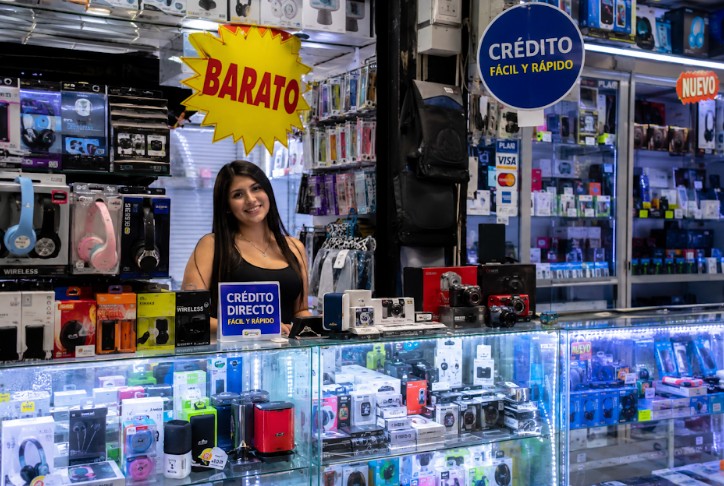 A younger version of myself might have sneered at such things. That younger version once believed that proper electronics came only from Japan, Germany, America, or perhaps a lab in Finland where engineers drank black coffee while designing stereo amplifiers the size of filing cabinets. Ecuador has a way of curing that particular snobbery.
The ENV phones came with a one-year local warranty, which alone already placed them several levels above buying a mystery phone online from Shenzhen called something like the DragonFire Turbo Note Plus Max. In Ecuador, a one-year warranty means you can actually walk back into the shop and complain to a real human being instead of conducting a six-week diplomatic negotiation with an automated chatbot in another hemisphere.
The truth is that modern cheap electronics are astonishingly good. My current phone, a Google Pixel 6a that cost me less than $300, is probably the best phone I have ever owned. The camera is excellent, it can connect to the internet on e-sims, the speakers are surprisingly capable, and I often use it as a kind of modern transistor radio or timer while washing dishes or brewing coffee. Yet even that phone now may be outmatched in a world where a perfectly competent Android digital pocket tool can be had for under $200.
When I first arrived in Ecuador six years ago, I bought a Xiaomi Redmi Note cell phone for around $350 and considered it one of the great bargains of the modern age. It did almost everything an expensive flagship phone could do for about half the price: maps, YouTube, WhatsApp, Bluetooth, video calls, camera, banking, music, flashlight, alarm clock, GPS navigator, portable cinema, translator, tape recorder, encyclopedia, weather station, and fingerprint unlocking. It seemed reasonable to ask what exactly the expensive phones were doing that this one was not.
The original iPhone from 2007 cost, as I recall, about $400 in the US and despite changing the world, would now seem quite primitive compared to many of today’s cheap Android phones.
In fact a modern budget Android phone can outperform it in almost every practical respect, which means that a $100 phone in 2026 is not merely “cheap” but often technologically superior to the luxury devices that seemed futuristic at a time that still seems like the day before yesterday.
The smartphone market today resembles the automobile market sometime around 1978: engineering problems have largely been solved, the improvements continue, but they become increasingly specialized and expensive.
One phone has seven cameras and artificial intelligence that can identify a humming bird on the wing from forty meters away. Another folds in half like an origami wallet. A third can communicate with satellites while underwater during a volcanic eruption or a typhoon. Meanwhile, most people merely want to call their daughter Veronica in Vancouver, watch YouTube, and check what time the rain starts tomorrow.
One reason Ecuadorian-market phones remain comparatively affordable is that they often omit features that sound exciting in advertisements, but don’t matter in Cuenca. Many lack eSIM capacity and most do not support 5G. They may use older processors or screens with lower resolution than prestige models sold in Miami or London. Yet Ecuador itself raises an awkward question for the whole tech industry, which is: If my phone already streams movies smoothly, connects to Bluetooth earbuds, takes decent photos, runs Whatsapp and maps, and lasts all day on one charge, how much extra happiness will be mine if I spend another thousand dollars?
I once owned a Nokia Lumia phone that cost me about $25 on Ebay. It was only 4 inches, but size didn’t matter. It was practically indestructible, its battery lasted for days, it could text and make calls, and it could navigate Jacksonville well enough not to drive off a bridge into the St. John’s River. As a work phone at that time, it was excellent, and there is a strange freedom in that phrase–good enough.
The technology industry depends upon making people feel perpetually dissatisfied. Your laptop is no longer thin enough, your camera no longer sharp enough, your television no longer large enough, and your smartwatch not yet smart enough to inform you that you appear to be walking.
Here in Ecuadorian Andes you encounter a more relaxed philosophy. A great many people simply continue using things until they stop working–and then they try to repair them. 1990’s-era refrigerators rattle and hum in kitchens. Taxis more durable than most marriages still climb the hills around Cuenca. Android phones with cracked screens provide faithful daily access to Facebook and Whatsapp.
I recently bought some inexpensive Bluetooth earbuds in Ecuador for about $17. They are not studio-quality masterpieces designed for audiophiles reclining in leather chairs while comparing jazz cymbal decay, but they work well enough on airplanes, buses, for podcasts, and news broadcasts.
The nice thing is that wires no longer tangle themselves into nautical knots in my pocket, which is technological progress of a very high order. Even the cheap tablet computers now appearing in Ecuadorian shops in malls would have seemed miraculous fifteen years ago. Some have enough onboard memory to carry entire libraries of films, maps, books, and travel reservations while also functioning as clocks, radios, and communication devices.
At a certain point, technology stops being about specs and becomes about utility. Can it do the job? Can I take it to the Galápagos Islands? Can I replace it without selling a kidney? Can I understand how it works without watching forty-seven YouTube tutorials issued by a teenager in Bangalore?
These are not irrational questions. They may, in fact, be the most rational questions of all.