
















The phantom shelf: Why local stores don’t have what you want but plenty of stuff you don’t
I walked into an cell phone store with an impressive window display in Cuenca a few weeks ago and asked if they had any phones that supported eSIM. The man behind the counter blinked slowly, as if I’d just asked whether they had unicorns in stock.
After a moment, he asked, “¿Para qué?”
“Para viajar,” I said. “Quiero tener una línea ecuatoriana y otra para datos internacionales.”
He nodded, looked thoughtful, and then brought out a Galaxy A04—possibly the least international device ever made. No eSIM. No second SIM tray. No hope.
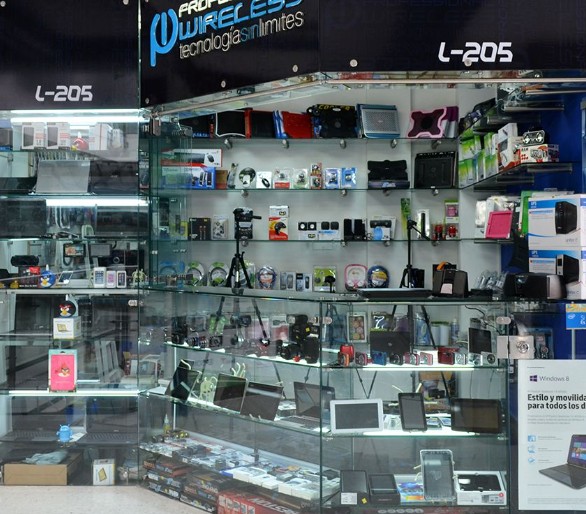 This is the modern paradox: local stores are going out of business, but they rarely sell the things people actually want. You go in with what seems to you like a clear, reasonable request — an eSIM-capable phone, a phone with dual physical SIMs, even something mainstream like a Pixel — and you’re met with confusion, followed by the gentle presentation of some dusty model optimized for WhatsApp and little else.
In theory, I might be able to find an eSIM-capable phone here in Cuenca. It’s not impossible. There are plenty of phone shops between Parque Calderon and San Blas, and one of them might just have what I need sitting in a drawer. But how many afternoons am I supposed to spend walking from one counter to the next, explaining what an eSIM is and watching blank expressions ripple across the staff like a slow-moving weather front?
So, what do you do? You go online. You search. You compare. You learn far more than you ever wanted to about 5G bands, bootloaders, and regional model codes. And eventually, you order something from Miami, Dublin, or Shenzhen and hope it arrives before your flight.
And in doing so, you feel a little guilty. Shouldn’t you be supporting local business? Shouldn’t you try to buy here?
Yes—but local business has to meet you halfway. It’s not enough to stock whatever the distributor happened to have that month. People don’t want to walk into a store in 2025 and choose between three off-brand models with 32GB storage and a camera that performs like a plantain.
In theory, the advantage of buying local is service. You can touch the thing, ask questions, get help. But that only works if someone at the counter actually knows the difference between an eSIM and a SIM tray ejector tool. Too often, they just smile politely, hand you whatever’s in the cabinet, and hope you’ll leave quietly with a case and a charger.
It’s not just phones. I’ve seen it with laptops, routers, even headphones. The good stuff — the stuff people look for — is either out of stock, overpriced, or simply not carried. So customers go online. And then the shop closes. And we all pretend it’s the fault of Amazon.
Of course, most Ecuadorian shopkeepers aren’t trying to shortchange anyone — they’re just trying to make a living in a difficult, low-margin market. They stock what they know will sell to their real customer base: people who need something simple, affordable, and available now.
The truth is, many of the gadgets we gringos ask for — eSIM phones, Zigbee hubs, brand-name routers you can program with VPNs — aren’t just hard to find here; they’re simply irrelevant to the daily lives of most locals.
But still, sometimes I think local shops were already on autopilot. They’ve become the retail version of a vending machine. And when vending machines don’t stock what you want, you stop using them.
So yes, I ordered my phone online. It took three weeks, two tracking numbers, and one failed delivery attempt because I wasn’t home when the guy came. Eventually, I got a call from a Servientrega driver called Maria who met me on the corner, handed over the box, and then took a photo of me holding it like a prizewinner. Proof of delivery, you see.
But I got what I needed. And when I passed the same shop again last week, the Galaxy A04 had been sold — probably to someone who would be absolutely delighted to buy it on weekly payments together with a cardboard Tuenti SIM card and a $2 silicone protector.



Hogar Esperanza News

Fabianos Pizzeria News

Fund Grace News

The Cuenca Dispatch

Week of September 20

Ecuador turns to industrial power cuts to protect Mazar and keep homes from going dark.

Ecuador raises its 2026 growth forecast, but El Niño could spoil the outlook next year.
Cuenca retirees challenge medical and therapy changes at IESS senior center.